
TikTok's newest pre-debut girl group, Aera, is drawing comparisons to Katseye - and a heated debate.
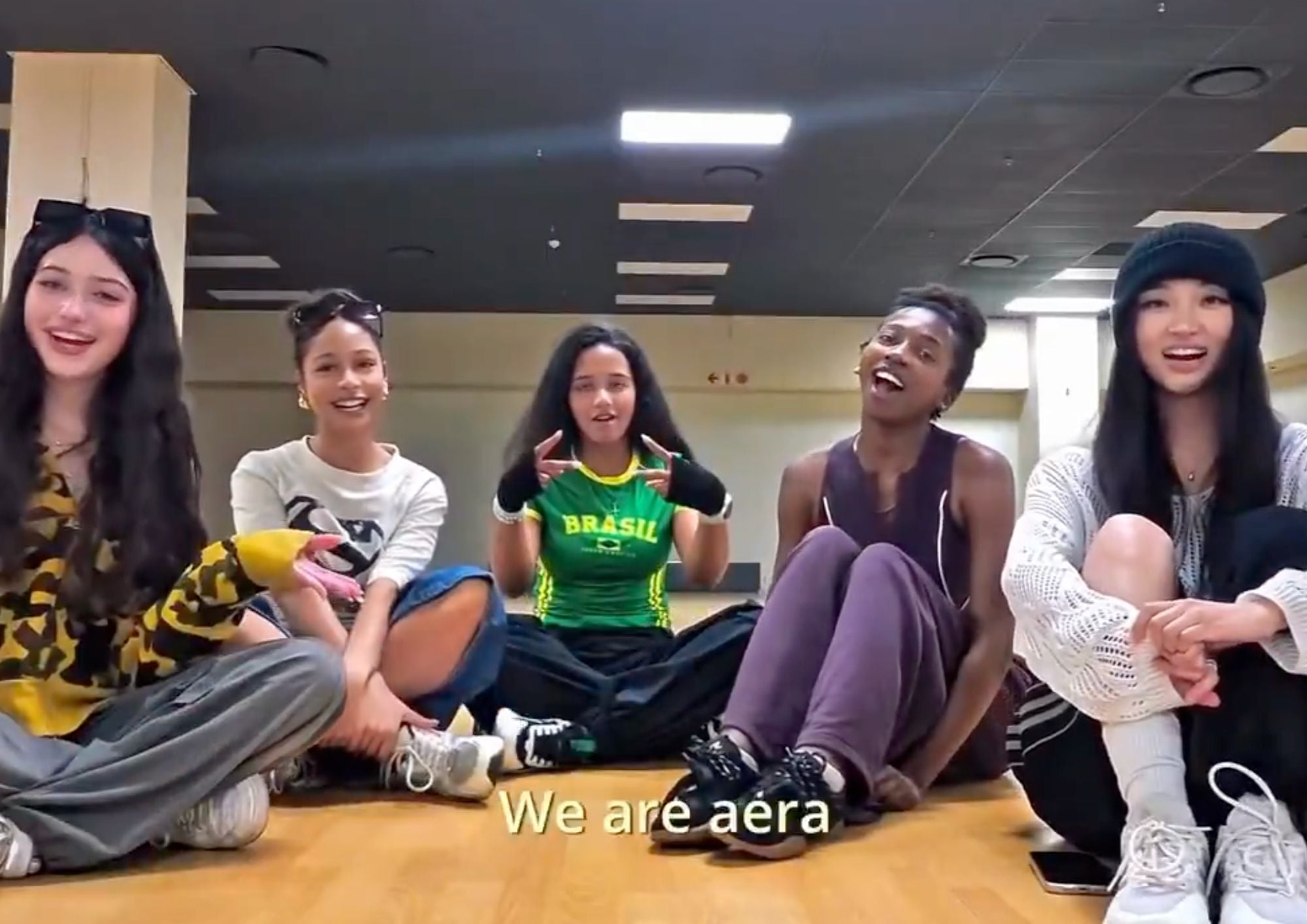
Aera, a South Africa-based aspiring girl group modelled on the “global girl group” format popularised by Katseye, has gone viral off the back of a member introduction video — and ignited a debate about representation along the way. Picture: Screenshot, TikTok/@aeras.era


There’s a new group hoping to be South Africa’s answer to Katseye and, sadly, not everyone is impressed with how they’ve chosen to introduce themselves.
Aera (going by @aera.era on TikTok and aeras.era on Instagram) is a small, independent, pre-debut girl group that has been building an audience on TikTok since around mid-February 2025.
Their bio simply reads “African Girl Group,” and their content borrows heavily from the multinational “global girl group” aesthetic made famous by Katseye – the HYBE x Geffen act known for pulling members from the Philippines, South Korea, Switzerland, and the United States.
Aera’s output so far has followed a familiar trend-hopping playbook spanning dance challenges, performance-style clips, and direct nods to Katseye itself.
Early rehearsal footage from December 2025 introduced three apparently shy members, while other posts have teased a bigger lineup.
The video that blew things up
The group’s biggest moment yet came in August 2026, when a member introduction video was filmed in a dance studio and featured five members greeting viewers.
On TikTok, the clip has racked up more than 537 500 views by the group’s own numbers. When it was cross-posted to X by the account @Globalpoprecs, it took off even further, passing 2 million views and pulling in thousands of likes and hundreds of comments and quote-tweets.
For a group with no apparent label backing, no released music, and a TikTok following of around 30 000, that kind of reach is a significant jump – but it’s brought Aera scrutiny along with it.
Reactions differ based on platform
The response to the TikTok video is generally skewed positively.
Commenters have focused on the performance itself, with many framing Aera as a homegrown answer to the global girl-group wave, calling it things like “our own homemade South African Katseye.”
On X, the conversation has taken a more brutal turn, with much of the criticism aimed squarely at the “African girl group” label itself.
A recurring objection is that the group’s visual makeup, by most viewers’ read, one member appears Black African, while others present as white/European-descent, East Asian, mixed, or Latina-adjacent, doesn’t match what many expect from a group heavily marketing itself as “African.”
Some called the girl group’s branding tokenising or accused Aera of “larping” as representative of the continent.
Others have questioned which specific African countries or communities the members are meant to represent, with the occasional comment invoking post-apartheid sensitivities around distinguishing South African nationality from Black African identity specifically.
A smaller share of replies have pushed back on the criticism, pointing out that South Africa is itself a multi-racial, multi-ethnic country (encompassing Black African, Coloured, White/Afrikaner and Indian/Asian communities, among others).
Because of that, members who are coloured, mixed-race, or white South Africans with local roots have as much claim to being called South African as anyone else.
Given how young the members of the girl group appear, commenters have generally urged supportive engagement rather than gatekeeping toward a group of young people who understandably have mixed parentage/ethnic backgrounds and are still chasing their first break.