



The Australian play has been reworked to speak directly to South African audiences.
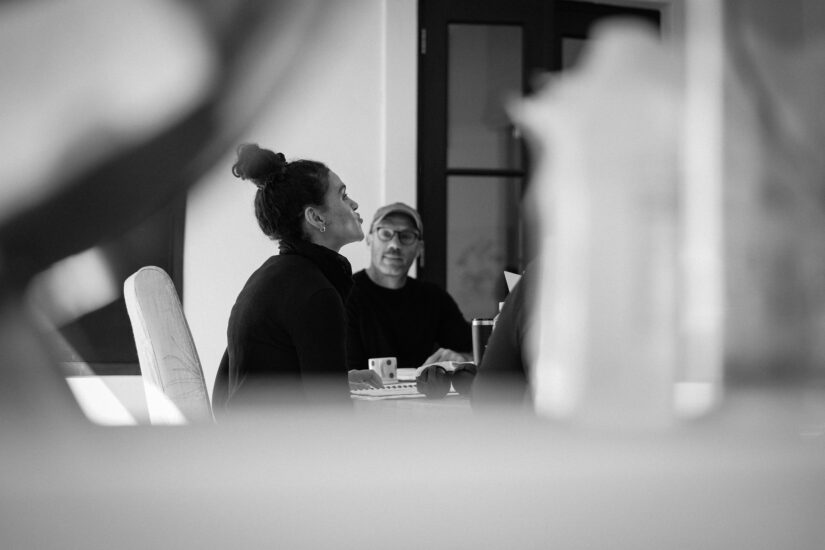
Danica De La Rey Jones. and director Neil Coppen during rehearsals. Picture Supplied


South Africa’s gender-based violence crisis has given the international hit play Prima Facie added urgency as it opens at the Market Theatre from 17 September to 5 October.
The locally adapted production takes aim at a legal system that director Neil Coppen believes continues to fail survivors of sexual assault. The Australian play has been reworked to speak directly to South African audiences. It stars Danica De La Rey Jones.
Coppen said South Africa’s rape and GBV statistics made staging the work locally particularly important. Coppen said the international success of the production showed that the failure of legal systems around the world to adequately serve sexual assault survivors was not just a South African issue but part of a much wider systemic problem.
In the beginning, Tessa, the main character, believes in the legal system…
Suzie Miller, the Australian playwright behind Prima Facie, clearly creates two distinct parts in her play, with the second half cleverly subverting what we learn and understand about the character, the story (and the law in general) in the first part.
This allows the audience to journey with the protagonist, Tessa, and undergo a clear empathetic shift, transformation, or reversal alongside her as she moves from a brash advocate in the first half to a disempowered witness in the second. Such an odyssey (and I don’t use that term lightly here) allows dynamic and challenging epiphanies to occur in both the character and the audience.
Where does Prima Facie show the patriarchal bias in law?
I think at the heart of Tessa’s discovery in this story is how the law has been historically shaped and determined by men to protect men-here, I would go as far as to say ‘White men’ in particular.
While that’s common knowledge, Prima Facie serves as a powerful and damning reminder of this fact and reveals how these structures continually undermine women and sexual assault survivors who dare to speak out and brave the legal system in an attempt to seek justice.
Does the legal system understand sexual assault and consent adequately?
Looking at the South African legal system and many friends who’ve been courageous enough to try to seek justice through it, I would definitely say it largely fails survivors of sexual assault and clearly needs major revision and rethinking.
Is Prima Facie modern protest theatre?
While the playwright definitely has an advocacy agenda around the failures of the legal system when it comes to sexual assault and GBV, she does not let the polemic get in the way of telling a powerful and utterly compelling story.
Like all great theatre, this play is bound to spark some serious debates and conversations in South Africa, as it has already done across the world and during our recent run at the Baxter Theatre in Cape Town.
Can theatre challenge institutions in ways journalism or public debate cannot?
Above all, a play like this draws us deeply into the problem itself rather than simply grappling with it conceptually or theoretically. I believe theatre is one of the most powerful vehicles in allowing us to step outside of ourselves and inhabit, for a few hours, the life of another.
Once we have empathetically opened ourselves to another’s story by witnessing and feeling into it, we are better equipped to have kinder, more profound conversations that seek adequate solutions. I’m a firm believer that theatre is one of the most effective mediums to foster feeling and empathy because it demands that we first listen and witness before speaking.
Watch the trailer
Does South Africa’s gender-based violence crisis give the play greater urgency?
With GBV statistics as they are in South Africa, I felt it would have been a lost opportunity for this play not to speak directly to South African audiences in a vernacular and world they recognise as their own. We were so grateful Miller agreed to let us set it in a local context; as far as I know, this is the first time she has granted a company permission to do so.
I worked closely with Danica to weave elements and contexts from her own life story into our version, including the mother character she plays, which was inspired by many of the extraordinary women in her own life. We need to be having these conversations far more frequently.
What have audiences been having after seeing the production?
During the recent Cape Town run, I received numerous letters from audience members weekly articulating what the experience of witnessing this story on the stage meant to them- most of whom had experienced sexual assault in their lives. For many people, the play makes them feel seen and heard and is a powerful call to arms.



