Burnout is driving more South Africans to Reiki in search of calm, connection, and an hour of uninterrupted stillness.
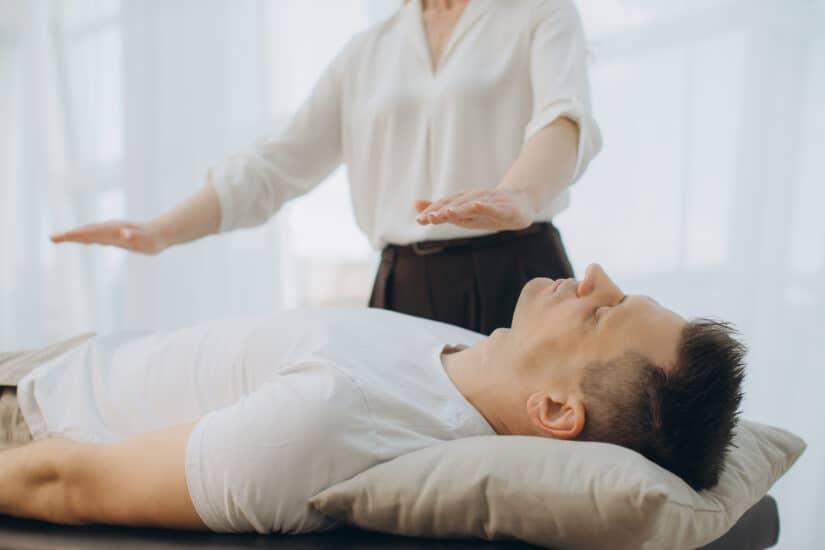
Reiki creates space to pause. Picture: iStock


Modern life has become one long fight-or-flight response to deadlines, traffic, grief, admin, and the endless ping of notifications on a string of devices.
Somewhere between all of it, people seem to have forgotten how to exhale and take a pause. Because these days, fast forward is the only button anyone gets to press and not release.
Perhaps that is why complementary therapies like Reiki and reflexology have found a growing audience. Anne-Mari Viviers of Heavenly Healing in Benoni said that it’s become very difficult to create space and hold it, for a pause or time out, when the daily grind has become a drive-through of changing tides. All the time.
“This is where Reiki comes in,” she said.
It is a hands-on healing practice that started in Japan in the early 1900s, and the name translates loosely to universal life energy.
A practitioner places their hands lightly on or just above the body, and then the woo-woo happens. But it’s an authentic engagement between therapist and client, said Viviers,
Then the woo-whoo happens
Proponents of the practice say that the benefits are tangible.
“Breathing changes and clients’ bodies soften. Their minds quieten. Often, they leave feeling lighter than when they arrived,” Viviers said.
Reiki is not a cure-all, she said, but what it does when a practitioner lays their hands on someone is quite magical.
“Some call it energy healing. Others call it a relaxation therapy that calms the nervous system. I think it is a bit of both. It helps create conditions in which healing of many kinds can begin,” she said.
Viviers said that is why she became a practitioner in the first place after her own set of circumstances served up grief, stress, and questions that logic could not solve. The first time she climbed onto a treatment bed, she said, she was equal parts sceptic and seeker.
“There were no dramatic flashes of light, no angels descending from the ceiling,” she said. Instead, there was warmth moving through her body, emotions surfacing that she did not know she was carrying, and afterwards, calm.
“I didn’t write it off because the experience was tangible, because I wasn’t being asked to believe something. I had felt something,” she said.
Clinical evidence has generally not shown Reiki to outperform placebo treatments, although many recipients report feeling calmer and more relaxed afterwards.
Viviers said she is not losing any sleep over it, though.
“The placebo effect is often spoken about as though it’s a weakness. I see it differently. If a person’s symptoms improve because they feel safe, hopeful, supported and cared for, that’s not something to dismiss lightly,” she said.
Being seen does not fit on a medical chart
Science measures blood pressure very well, she added, but meaning, connection, and the feeling of being seen do not fit onto a medical chart.
She shared an anecdote about a client who suffered a significant personal loss and was riddled with grief.
“They hardly spoke during the treatment, but,” she said,” at the end of the session the client sat up, had tears in their eyes, and shared that for the first time since the loss they were able to breathe, and take a pause from the tragic circumstance.”
The grief did not disappear, said Viviers, but the person felt able to hold it instead of being overwhelmed by it. “Healing and curing are not always the same thing,” she said.
Viviers said her range of clients includes teachers, executives, students, healthcare workers, and parents, and most of them are not looking to be fixed on anything. They are simply worn out by life in constant overdrive.
“Many clients aren’t looking for a diagnosis. They are looking for a place where they can exhale,” she said. “It is not a medical consultation, because a clinical consultation cannot always give a human being what they need emotionally.”
“Touch is important, presence and being witnessed matter,” she said.
Perhaps the fact that these moments, which in years past were perhaps a given, and now feel remarkable, says more about modern life than it does about Reiki.
“Come and lie on the bed. Notice how you feel before and after. Then decide for yourself,” she said.
“Curiosity is enough. In a world stuck on unstoppable momentum, an hour on pause might just be the pause point you need.”