
Ramaphosa positioned AI as both a development imperative and a survival tool.
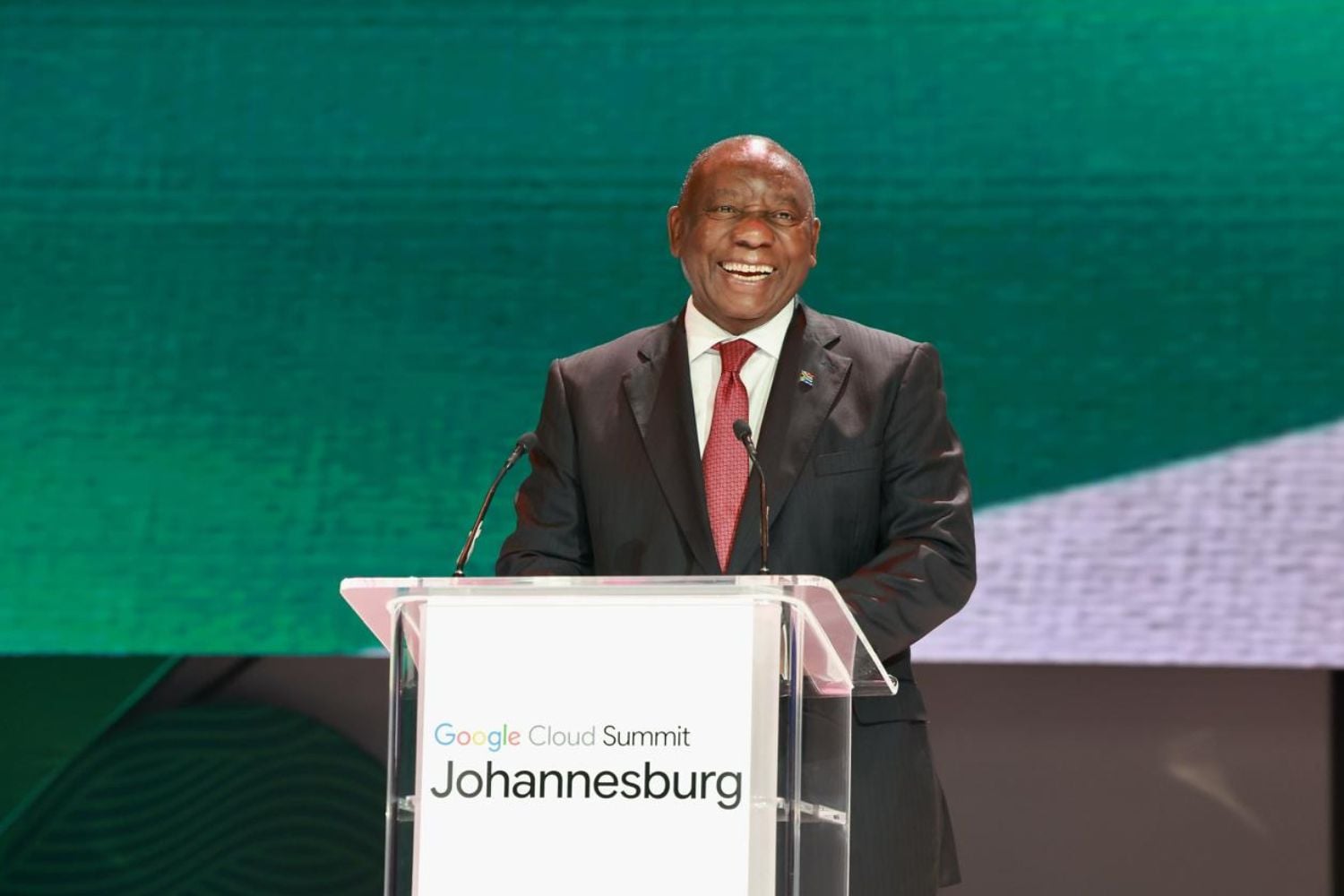
President Cyril Ramaphosa delivered the keynote address at the first Google Cloud Summit on African soil, held at the Sandton Convention Centre on 1 July 2026. Picture: GCIS


President Cyril Ramaphosa has urged South Africa and the wider African continent to accelerate the adoption of artificial intelligence (AI) and cloud technologies, warning that hesitation will leave nations trailing in the global digital race.
Delivering the keynote at the first Google Cloud Summit on African soil, held at the Sandton Convention Centre on Wednesday, Ramaphosa positioned AI as both a development imperative and a survival tool.
AI
“All of us must really adapt AI‑enabled services at scale, and we should do so much more rapidly and at a lower cost than through legacy IT infrastructure,” Ramaphosa declared.
“We envision a South Africa where these technologies are rapidly deployed across the public sector, enabling us in government to modernise public administration, education, transportation, public infrastructure and the delivery of basic services.”
Working remotely
He tied the digital transformation agenda to the lived experience of the Covid-19 lockdowns, when remote learning and home‑based work became the norm.
“I was one of the most hated persons in our country then, when I said everyone should stay at home,” he recalled.
“We saw how technology even enabled young people who were either at university or high school to continue learning. We also learned how to run our businesses from home and how it’s become our usual occurrence where companies now say you can work at home and you can monitor and manage yourself.”
AI solutions
Ramaphosa stressed that AI is not simply another innovation but a general‑purpose technology comparable to electricity or the internet.
“We envision a country where AI solutions are deployed for disease management and prevention, to manage the national energy grid, by farmers to predict weather patterns and by scientists to guide our national climate response,” he said.
Fighting diseases
He underscored the urgency of deploying technology against health threats.
“Tomorrow I will be going to the DRC, where there is now Ebola. We are discussing with President Tshisekedi how, through enabling technologies, we can confront Ebola and many other diseases.”
Ultimately, Ramaphosa argued, AI and cloud matter because they enhance productivity.
“If we are going to rely on technology and AI, we need to focus on how that enhances the productivity of all of us as human beings, but more importantly, how it can drive productivity in our companies, government and the economy broadly.”
Digital age
He closed with a continental call to action.
“No person must be left behind in this new digital age. No country on the African continent must be left behind. Let us continue to work together.”
Connectivity in SA
Earlier, Google said that, as part of its efforts to enhance connectivity and computing in South Africa, it is establishing a hub in the Eastern Cape that will connect to Australia via the Umoja subsea cable.
James Manyika, Google’s senior vice-president for research, labs, technology & society, said the AI opportunity for Africa is significant, and Google is committed to doing its part.
“Building on our past commitments, we’re making new investments in critical areas: infrastructure, African-led innovation, and education and skill building. From a new digital exchange port in the Eastern Cape to Africa’s first applied AI lab, we’re harnessing technical progress and building partnerships to amplify and scale Africa’s incredible vibrancy, hustle, and innovation for the world.”
President Cyril Ramaphosa has urged South Africa and the wider African continent to accelerate the adoption of artificial intelligence (AI) and cloud technologies, warning that hesitation will leave nations trailing in the global digital race. #Google #GoogleCloudSummit pic.twitter.com/zYjC1TJjqn
– 𝙵𝚊𝚒𝚣𝚎𝚕 𝙿𝚊𝚝𝚎𝚕 ⚡️ (@FaizelPatel143) July 1, 2026