
The company signalled a decisive shift in its AI strategy, declaring it has entered its 'agentic Gemini era'.
For Google, the launch marks a long-awaited return to a space where it suffered one of its most high-profile failures. Picture: Karl Mondon / AFP


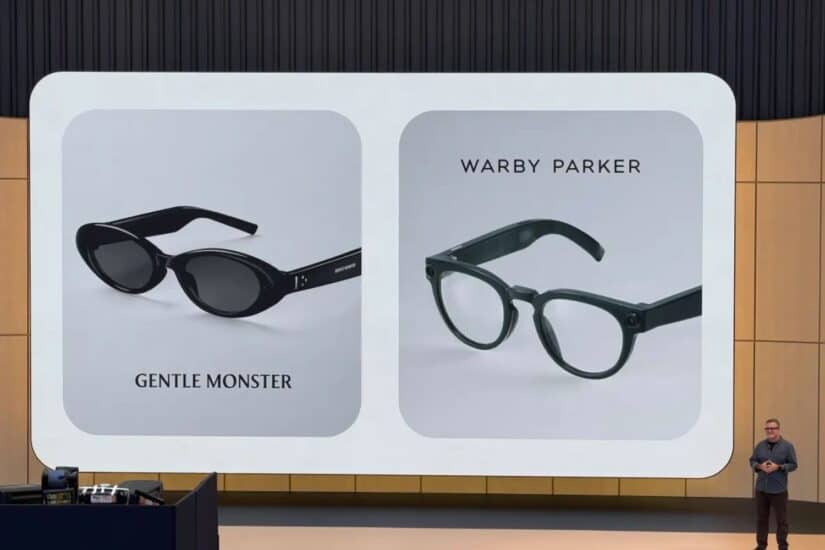
Google has unveiled the design of new smart glasses, returning to a market the tech giant tried, and failed, to crack more than a decade ago.
The company signalled a decisive shift in its AI strategy, declaring it has entered its “agentic Gemini era” – moving beyond AI that simply answers questions to AI that takes action on behalf of users.
The announcements were made at the annual Google I/O developer conference near its Mountain View, California, headquarters on Tuesday night.
Smart glasses
Google’s so-called “audio glasses” will be equipped with a microphone, camera and small speaker, and will allow users to make calls, listen to music, take photos and chat with the Gemini AI assistant.
The company unveiled two collections at the conference, one from US eyewear brand Warby Parker and another from South Korean designer Gentle Monster.
Samsung handled the technical development. The glasses will be compatible with both Android and Apple phones.
Back to market
For Google, the smart glasses launch marks a long-awaited return to a sector where it suffered one of its most high-profile failures: the Google Glass, released in 2013 with an integrated camera, which was shelved after sparking widespread concerns about privacy and surveillance.
Google is also working on glasses with a built-in display, similar to the latest model Meta brought to market in fall 2025. That version, previously shown as a prototype last year, has now advanced further in developer testing, Google announced, without providing additional details.
The company’s smart glasses launch puts it head‑to‑head with Meta’s Ray‑Ban devices and Apple’s Vision Pro ecosystem, raising the stakes in the race for wearable AI.
Yet the camera‑equipped design is likely to reignite the same privacy concerns that doomed Google Glass in 2013, echoing the scrutiny now facing Meta’s products.
Introducing intelligent eyewear that gives you hands-free help, all day long.
– Google (@Google) May 19, 2026
Coming first this fall: audio glasses designed to give you help from Gemini to take photos, navigate a new city, or translate audio in real-time. Audio glasses will pair with both @Android and iOS… pic.twitter.com/XrDu2U86lp
Search
Meanwhile, Google said the AI adoption numbers highlight momentum, with AI Mode in Search surpassing one billion monthly active users and queries doubling every quarter.
“Google Search is AI search,” said Elizabeth Reid, who oversees the product, calling the changes the biggest Google Search had seen in its nearly 30-year history.
The updates roll out globally to the desktop and mobile versions of Google Search on Tuesday. A video promoting the changes showed results that more closely resemble visually augmented versions of AI
Overviews, the bulleted summary responses that Google Search returns now, replace a list of links. Users will still be able to choose the original version of search, the collection of links, by clicking a tab titled “Web”.
Gemini
The Gemini app has surged to more than 900 million monthly users, while over 8.5 million developers are building new apps and experiences with Google’s models every month.
Building on this growth, Google unveiled new products designed to unlock productivity and creativity through natural, conversational AI.
Google’s AI surge has vaulted Gemini into the mainstream, igniting adoption at breakneck speed and intensifying competition across Silicon Valley.
YouTube
Ask YouTube reimagines video search by compiling long‑form content and Shorts into interactive responses, letting users jump directly to relevant parts.
Docs Live allows users to verbally “brain dump” ideas while Gemini outlines, structures and co‑writes documents. Google Pics, powered by the Nano Banana model, treats every element in an image as an object, offering precise creative controls.
Introducing Gemini 3.5 Flash ⚡️
– Google Antigravity (@antigravity) May 19, 2026
Normally, Gemini 3.5 Flash is 4x faster than other models with frontier performance. For a limited time, Antigravity is serving it 12x faster thanks to custom inference tricks, delivering incredible speed for your workflows. 🚀
See the… pic.twitter.com/K0BtWOJBYf
Platforms
On the platform side, Google introduced frontier models and agentic tools. Gemini 3.5 Flash combines frontier intelligence with action at four times the speed of comparable models, while Gemini Omni generates any output from any input, starting with video.
Google Antigravity 2.0 expands agent‑first development into a standalone desktop app for building autonomous AI agents. For consumers, Gemini Spark, Daily Brief, and new agentic features in Search – including background information agents, generative UI, and a Universal Cart – bring proactive personal agents directly into daily life.
Trust and security
Trust and security remain central. Google is rolling out SynthID and C2PA verification across Search, Chrome and Gemini, deploying DeepMind’s CodeMender agent to secure platforms, and launching Gemini for Science to accelerate research.
Google said that as it ushers in the agentic era, building trust and pushing the boundaries of discovery remain its top priorities.