
More users are swiping left on dating apps as finding love has started to feel more like admin and less like romance. Here's why.
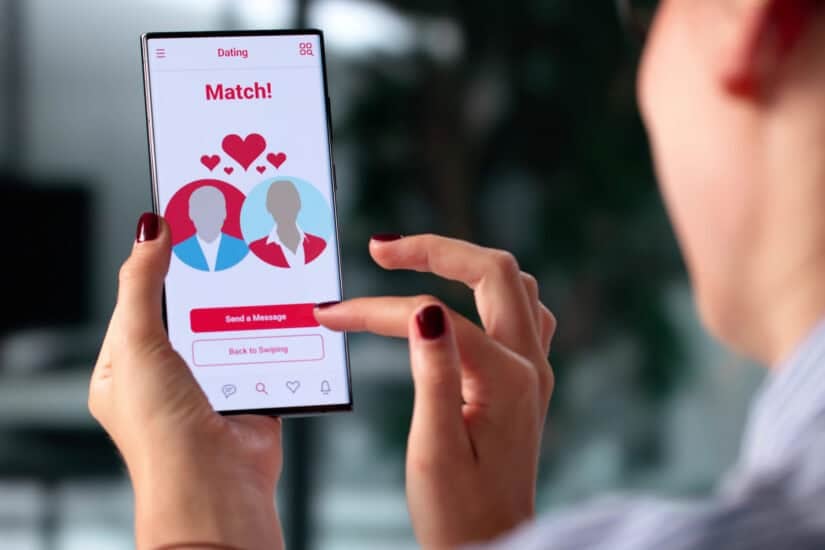
Love’s admin and why people are using fewer dating apps. Picture iStock


Finding love has never been harder work. Dating apps were supposed to make light work of everything courtship related.
But did it really? Or is the hundredth ‘howzit’ on the profile of a potential lover just tiring?
It’s a lot of admin when buying someone a drink at a bar may be far less of a mission near-impossible. Dating apps were once called the great equaliser of romance for the new century but, a quarter of the way in it’s become a task, not a choice.
A survey by website Healthy Framework, found that nearly four out of five users of dating apps reported experiencing some form of dating app burnout, while findings published by Forbes Health showed a similar trend, with users describing the experience of dating apps as overwhelming and emotionally taxing.
And it’s not because people don’t want to find a connection with someone else, but the way that love is procured has become lacklustre.
Lacklustre procurement of love
In the beginning, said a former dating app convert, the novelty and endless options online felt incredible.
“Striking up a conversation felt easy, but after a while it becomes the same kind of pattern. People’s profiles start blurring into one another because they all say the same thing in the end, and you can literally cut and paste the opening lines and starter questions sent to a profile to any profile,” they said.
“It becomes like a never ending audition.”
Psychologist Dr Jonathan Redelinghuys said the fatigue many users experience is less about dating and more about the conditions under which it is happening.
“When connection is reduced to a sequence of rapid decisions, the brain does not experience it as meaningful engagement. It experiences it as cognitive load. Over time, that creates exhaustion rather than fulfilment,” he said. That exhaustion is not only mental. It is emotional, he noted.
There is a steady drip of small disappointments that dating apps serve up. Messages that go unanswered. Matches that disappear without explanation. Conversations that seem promising and then simply stop for no reason.
None of these moments are significant on their own, but together they begin to paint a picture of why some people feel rather dead to the process. Effort increases, reward does not.
Repeated micro-rejections
Dr Redelinghuys said the impact of these repeated micro-rejections should not be underestimated.
“People tend to dismiss these experiences because they seem minor, but the brain does not differentiate in that way. Repeated exposure to inconsistency and rejection creates a pattern, and that pattern starts to influence how individuals view themselves and their chances of forming meaningful connections,” he said.

Profiles can be over-curated as well. Just like other social media, people are performing to be noticed and, as this blanket trend has evolved, throwing caution to the wind and engaging with a stranger has become a guarded exercise.
Dating apps’ access to a vast pool of potential partners has also made settling on an individual far more challenging.
There’s just too much choice. Users are in constant motion browsing, comparing, evaluating potential lovers. Swiping-spoilt-for-choice.
Dr Redelinghuys said this constant state of evaluation comes at a cost.
“Human connection requires presence and emotional investment. When individuals remain in a continuous search mode, they do not allow the neurological processes associated with bonding and attachment to take place. The result is a sense of disconnection, even while actively engaging with others,” he said.
‘A sense of disconnection’
This is probably why, on many chats online, some users have said that they are slowly withdrawing from dating apps.
Gen Z in particular, anecdotal research is showing, now prefer real life interaction at social spaces, shared activities, or introductions through friends, where interaction unfolds without the pressure of being a circus monkey.
Others said they remain on the apps but with boundaries, limiting time spent and focusing on fewer, more intentional exchanges.
Dr Redelinghuys said this response indicates a growing awareness that a spark between people cannot be rushed.
“There is a natural pace at which relationships develop, and when that pace is disrupted by systems designed for speed and volume, individuals begin to feel disconnected from the experience.
“Restoring that pace is helps engagement to feel authentic again,” he said.