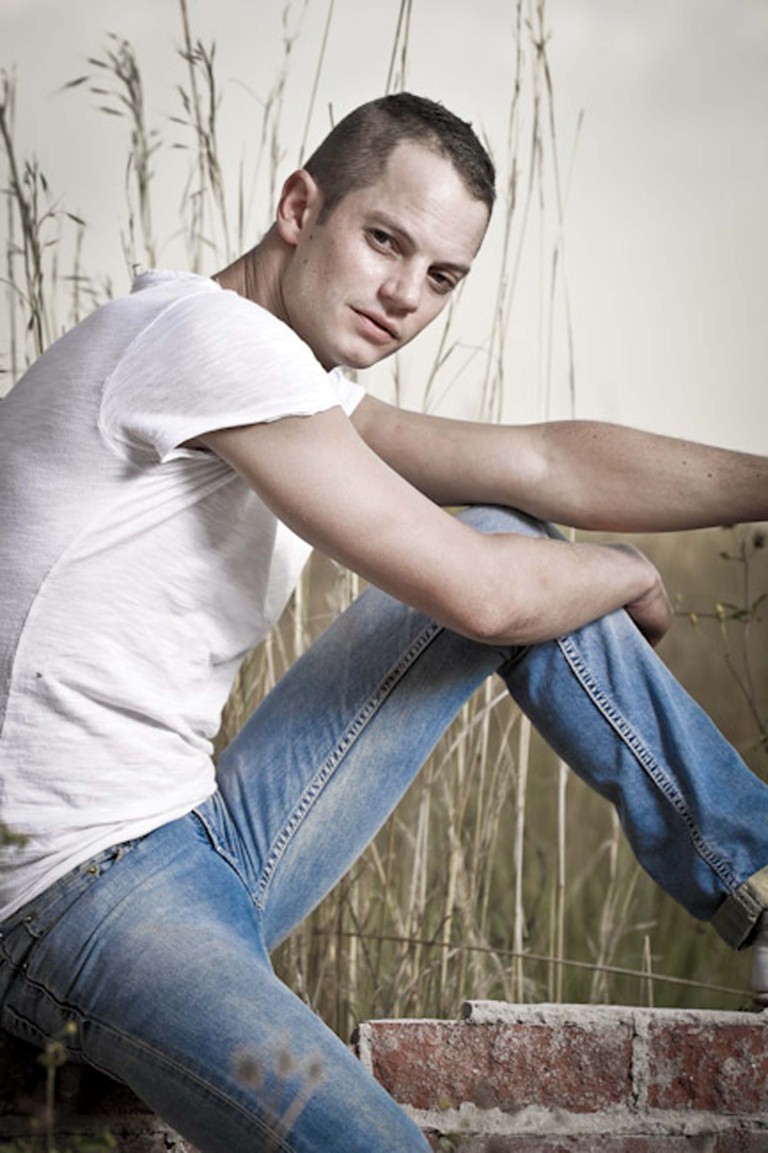
MBOMBELA – People often associate HIV/Aids with promiscuity and homosexuality. Some even think “it serves them right” when they learn that someone has contracted the disease.
However, HIV/Aids spares no one, regardless of your sexual orientation or the number of sexual partners you’ve had. It takes one time of unprotected sex, a cheating life partner, an assault, rape or even a blood transfusion to change your life forever.
Seeing someone suffer from this disease, really experiencing it first-hand, makes you realise that no one deserves to die such a horrible death, let alone battle the illness alone. I had the privilege of sharing a home with Charles Jacobs (32) in Mbombela in 2010. He is homosexual and had contracted HIV/Aids from having unprotected sex, once, in 2002.
I was aware of his HIV status, but didn’t realise how sick he really was. It was a Saturday morning and I was in my room and Charles was seated outside. He SMSed me, asking me to bring him pain tablets as he was too weak to get up. I found him curled up with several blankets in the sun, shivering from a fever.
He fell critically ill just as the Department of Health had embarked on a national strike. He couldn’t take lifesaving antiretroviral (ARV) medication as there was no health-care practitioner in the public sector willing to present a course all HIV/Aids sufferers who start with this treatment, have to undergo. It was touch and go for Charles, whose white-blood-cell count at that stage was a mere 29. Doctors couldn’t believe he was still alive. A local pharmacist was kind enough to give me cortisone without a prescription for Charles’ cough.
During this time, I became fully aware of the various stigmas surrounding HIV/Aids. I remember telling colleagues of his suffering. Worried, they would approach me afterwards and ask if I wasn’t scared of “catching” HIV from my housemate. As if HIV/Aids was contagious, like a cold or a stomach bug. I was astonished by people’s ignorance.
Charles eventually started with ARV treatment and today, he is a healthy entrepreneur who has decided to share his own journey in order to better the lives of other sufferers of this disease. He moved to Johannesburg where his family and most of his friends resided so he could have a support system.
Charles participated in Mr Gay SA 2011 and was the first finalist ever to go public with his HIV status. “I thought coming out of the homosexual closet was hard, but coming out of the ‘HIV closet’ was much more challenging.
“As time passed I never seemed to meet anyone else who was living with HIV, or at least who was open about their status. Were people not being honest? Or were they not getting tested?
“Today I know that HIV lives and grows off fear. The fear of rejection, the fear of not living a healthy life, of not achieving dreams. So people keep quiet. I want to stop feeding this virus with fear. I want people to start feeding HIV with hope instead,” he added.
During his participation in Mr Gay SA, he spent a great deal of his time raising funds and awareness around HIV and demonstrated his ability to design and implement fund-raising events. Soon after the competition, he was selected by Positive Heroes as its first Positive Hero for 2012.
Positive Heroes’ vision is to reduce the fear, misinformation, stigma and discrimination that still surround HIV/Aids in South Africa by providing role models who encourage and inspire others living with and are affected by HIV, with their powerful messages of hope.
Charles wanted to continue with this good work and established Change the Stigma Project earlier this year. The organisation’s first initiative will entail the search for 2015’s Positive Hero. He wants to give people with HIV the opportunity to participate and compete to be the Next Positive Hero of South Africa.
“From the onset the competition will be one with a difference. The organisers will search for participants who display courage and portray hope. Interactions between HIV-positive people and those who might hold stigmatic attitudes is an effective way of reducing stigma,” Charles says.
“People’s stories and peer-education outreach programs are the most effective ways to combat the stigma. It has the added benefit of reducing HIV/Aids. Change the Stigma Project believes that the disease is only an obstacle and positive role models are the solution. We believe that hope and courage are the greatest weapons of all. The Search for the Next Positive Hero South Africa will be the first competition of its kind in this country.”
Next year’s Positive Hero will undergo a complete life-coaching course sponsored by Bill Burridge of New Insights Africa.
Prospective entrants must be
• Living openly with their HIV status or want to use this platform to disclose their positive status and share their journey
• Older than 18
• South African citizens prepared to have their photographs published with their stories in the press and all other related marketing platforms (websites, newspapers and so on).
Fore more information, visit www.changethestigmaproject.com