MBOMBELA – The time has come to stand up and fight for global awareness of elephant and rhino and end wildlife trafficking, before it’s too late.
This is the message the Global March For Elephant and Rhino (GMFER), which starts at Makro tomorrow at 11:00, tries to convey.
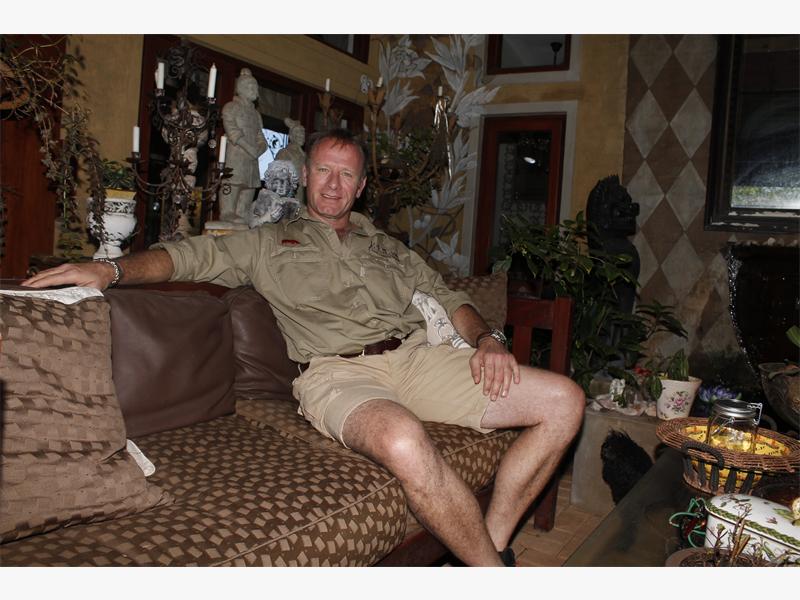
Mbombela, along with more than 130 cities worldwide, will take to the streets tomorrow. “If the current situation doesn’t stop, rhino might become extinct within the next 15 years,” says Mr Dex Kotze, world-renowned conservationist and a lead organiser of GMFER in South Africa. Kotze is better known for his affiliation to Jenna Clifford Jewellery as one of the founding directors, and his joy in being married to Jenna.
Since 1970, Africa’s wildlife population has decreased by a shocking 50 per cent. In an interview with Lowvelder, Kotze urged the community to partake in the march, as he believes that global awareness is one of the biggest weapons against animal-related crimes. He describes GMFER as a small nucleus group that can be contributed to the power social media have to connect people from all over the world.
He believes the only way to put an end to the madness is to reach the following goals:
• To raise global awareness that governments all over the world need political will and leadership.
• For all countries to implement a complete ban on commercial, international and domestic trade of all endangered wildlife body parts, including ivory, rhino horn and lion and tiger bone.
• All countries to shut down retail outlets for ivory and horn and to shut down industries associated with processing these.
• A memorandum of demand to be handed over to range, transit and consumer countries, calling for the urgent adoption of more stringent legislation to combat and deter criminal activities relating to wildlife crime.
• Governments to tackle corruption and money laundering linked to illegal wildlife trafficking by adopting or amending legislation to criminalise corruption and bribery that facilitate poaching and wildlife trafficking.
• Governments to adopt more punitive legislation in sentencing wildlife traffickers.
• Governments to strengthen the enforcement of laws associated with wildlife crimes.
• The UN, including the Security Council and General Assembly, to adopt sanctions against those countries in violation of intergovernmental agreements as adopted by CITES (Convention on International Trade in Endangered Species of Wildlife, Fauna and Flora).
• Action to be taken in all aspects in the illegal supply chain in source, transit and destination countries.
• Full engagements by governments in relevant bilateral, regional and international mechanisms.
• Destruction of confiscated wildlife products.
• Renunciation of the use of products from endangered species.
• All governments to ensure that wildlife trafficking be considered serious crimes.
• International cooperation, including extradition and mutual legal assistance where criminal offences are transnational in nature.
• All governments to strengthen legal frameworks and facilitate strict laws to assist in prosecution and imposition of penalties that will act as proper deterrents to wildlife crime.
• Governments to strengthen law enforcement, cross border and regional cooperation to protect populations of threatened species.
The misconception that some countries have regarding the dire situation of our wildlife, plays a major role in the possible extinction of these majestic, highly intelligent, and emotionally sentient creatures. It is estimated that an elephant is killed for its ivory every 15 minutes, and every 9 hours, we lose a rhino for its horn.
“According to the most recent statistics, there are less than 400 000 elephant and less than 18 000 rhino left in the wild in Africa,” says Kotze, “Chances are that it is much less.”
“This madness must stop, says Kotze, and with the governments’ help and political will, it can be done. The time has come to enact a prescribed minimum sentence of 10 years’ imprisonment for carrying out a restricted activity involving a rhino, elephant or any other protected species with a value of R100 000 or more, he says.
“Let’s all march together and put global pressure on governments. The state of our wildlife can be ignored, but the public’s outcry can’t,” he concludes.
Enquiries: Brenda Archdeacon on 082-820-9855 or at brenda@brightside events.co.za