Stakeholders convene to discuss culling
Residents expressed their concern over management of the wildlife in Marloth Park and especially the culling of animals outside of hunting season.
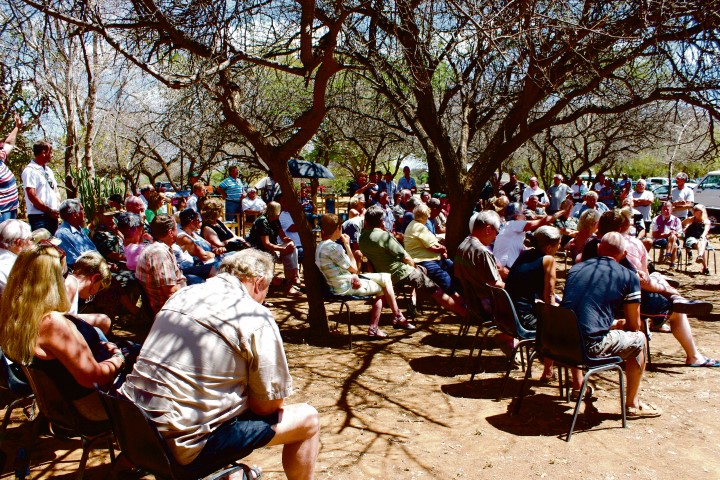
MARLOTH PARK – On Monday morning during a community meeting, the discussions on the culling of animals were frank and open.
Residents expressed their concern over management of the wildlife in Marloth Park and especially the culling of animals outside of hunting season.
Mr Louw Steyn of the Mpumalanga Tourism and Parks Agency (MTPA) explained that because it was not hunting but rather culling, the operation could be undertaken any time of the year.
Steyn noted that the MTPA normally issued permits that were valid for a year and it was then up to the Nkomazi Local Municipality (NLM) to decided when to conduct the culling.
A question was directed at Mr Velly Makwakwa, the chief conservationist of the municipality, of why it chose to cull the animals at a time when most females were heavily pregnant. He explained that they conducted a game count in September each year and after this the procedure was done.
Neither Makwakwa nor Steyn were able to give satisfactory answers on why the September game-count figures could not be used to calculate the removals to be done at a more appropriate time in the winter months the following year.
Makwakwa furthermore presented the proposed removal figures for 2014.
Community members expressed their concern that only the removal of 200 impala and 40 warthogs were planned.
Of even greater concern was the figures given for the removal of other species, those that were already within or very close to the proposed stocking rates that had been recommended by MPTA.
Ms Lorinda Steenkamp complained about this on the Marloth Park Facebook Group saying, “During the meeting Makwakwa gave us the game removal figures. Our last count showed Marloth had 534 impala. The proposed stocking rates given by MTPA are 150 to 210. Our count for warthog was 149; our proposed stocking rates are 50 to 108. The game removal figures given by Makwakwa for these two species were 200 for impala and 40 for warthogs. These removals will not even make a dent!
“Oddly they then decided to remove some of our other animals to supposedly make up for the lack of removals of especially impala. This even though the current numbers are in or very close to the stocking rates. For example, our last count of wildebeest was 30, the recommended stocking rates are 33 to 46. According to Makwakwa and Steyn, they now need to take another 12. We will be left with 18 while as mentioned, stocking rate is 33 to 46. Instead of dealing with the overpopulation of impala and warthog, they are using this as an excuse to take out our other animals!”
The chairman of the Marloth Park Property Owners Association, Mr Tony Hayman, raised the concern that the environmental management plan was outdated.
The plan, named the Orban Report, was compiled in 2006. Hayman noted that a new environmental assessment and management plan was necessary in order for them to make sound decisions.
NLM representatives assured community members that the culling operations would be dealt with in a better manner as of 2015.
They also committed to clearer communication and better cooperation with the organisations in Marloth. This includes regular meetings with all the stakeholders.

This news and the assurance from Steyn that there were currently no permits issued for neither culling nor game removals, were greatly welcomed by the community.
Steyn mentioned that they had talks with SANParks about temporarily dropping the fences between Kruger and Marloth to herd through excess animals.
According to him, SANParks has approved this, and he noted that it might be a tricky operation but it is doable.
Subsequent to the meeting information was received that MTPA and NLM were planning to remove animals through the passive capturing technique using bomas. The details on this were still unclear.
The Marloth community is again up in arms because both chose not to share this information during the meeting.