
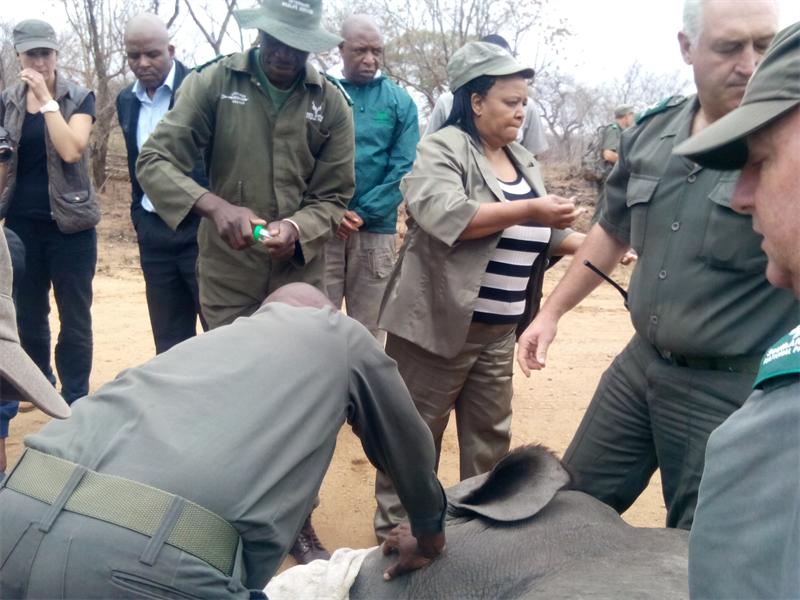
SKUKUZA – The official start of the relocation programme of rhino in vulnerable areas in the Kruger National Park (KNP) started this week in the Talamati area on the western side of the park.
Poachers from the Manyaleti area have killed various rhino in the Talamati region, while the total number of those killed in Kruger stood at 560 at the time of going to press.
In 1993 trade in rhino horn was banned by CITES, but it still continues destined to desperate people who believe in the mystical curative powers of the animal. Not so long ago the Asian passion for rhino horn was in the grand scheme of things, manageable, but now they are part of trade networks that girdle the earth and move products at great speed, and with that in mind the fate of the rhino hangs in the balance. This is the story of an animal under threat. “We are waging a protracted war,” says environmental affairs minister, Ms Edna Molewa. And it’s a real war between criminal syndicates that are the orchestrators of this lucrative business and SANParks.
By weight, rhino horn can be worth more than gold, fetching tens of thousands of dollars a kilogram in China and Vietnam. But investigating officers feel that spending resources on pursuing poachers and people connected with seizures are a waste of time as the big criminal bosses that head crime syndications walk free. Management in Kruger captured five rhino on Thursday for relocation to areas under intensive protection zones south of the Sabie River. The area where they were captured was against the western border between Malati Camp and Manyeleti.
“Although the Manyeleti forms part of the greater Kruger, rhino have become extremely vulnerable to poachers here,” according to Mr Marius Kruger, the head ranger of that area. Dr Markus Hofmeyr of head of veterinary services at SANParks confirmed this, saying, “We planned to capture one more rhino today from this dangerous area, but it is getting too hot now.”
The relocation of the five captured rhino forms part of a multi-tiered intervention by cabinet. Molewa says her department together with SANParks is now also embarking on the training of dogs to assist in the apprehension of poachers in the park. She and her team making use of an interdepartmental approach. She agreed on the question from the Lowvelder about the legal approach that poachers are only charged for poaching when they are actually caught, although they transgress on many different laws when they poach in South Africa. These transgressions include breaking laws concerning immigration, terrorism and damaging South African property! “We are busy talking to the department of Law and Order and the department of Justice as part of our multi-tiered approach and I am happy to report that we are making progress” an excited minister replied. She also confirmed that there is a delegation from South Africa in China as we speak to get commitment from the Chinese Government and a signed Memorandum of Understanding.
On a question to the chairman of the SANParks board, Mr Kuseni Dlamini, that the poachers and their overlords seem to have the upper hand, he responded by saying, “Those who are genuinely trying to stop the trade of rhino horn are outmanned and outgunned. But we will eventually bring this scourge to a complete stop and this is a promise we make to the whole of South Africa.”