Provincial hospital woes continue: generators not fully functional
The generators weren't working most of the time. I could recall an incident on January 6 when a baby had to be manually ventilated because the battery used to operate the ventilator, died. That same night, a C-section had to be performed by flashlight
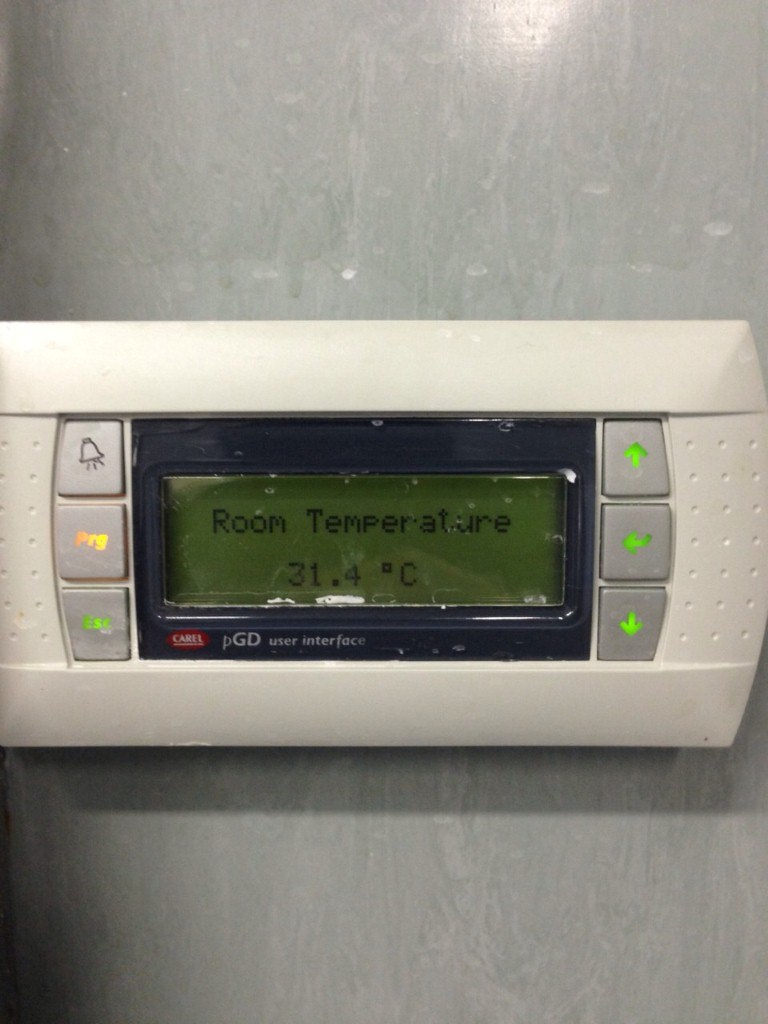
MBOMBELA – The past week has been scorching hot in the Lowveld, and temperatures in the theatres of Rob Ferreira Hospital reached more than 30°C. Doctors performed emergency procedures, but rather decided to postpone the less pressing ones as the risk for infection increased significantly under hot temperatures.
Non-operational aircons were just one of the problems highlighted when the public service commission visited Rob Ferreira last week, following various Lowvelder reports on the huge orthopaedic backlog at the hospital as well as dilapidated infrastructure.
A source told the newspaper that records are showing that secondary infections within the hospital are increasing and it is suspected that it is as a result of rising temperatures because of the broken aircons.
In addition, hospital staff informed this publication that the generators had not been functioning properly. They became aware of this when the city, like the rest of the country, was severely affected by load-shedding last week. During the commission’s visit, the newspaper specifically asked hospital management if the generators were in working order, and they insisted that they were.
However, a staff member informed Lowvelder that they had to use cellphone lights to complete a surgical procedure on February 5, since the generators had not kicked in during load-shedding. “The generators weren’t working most of the time. I could recall an incident on January 6 when a baby had to be manually ventilated because the battery used to operate the ventilator, died. That same night, a C-section had to be performed by flashlight,” the source said.
The newspaper also spoke to a patient who had to undergo an emergency C-section when the hospital was left in darkness during an episode of load-shedding on Wednesday.
Ms Simoné Botha (18) was 41 weeks pregnant when she was advised to go to Rob Ferreira Hospital to have labour induced. She arrived there at 10:30 when they started with the process of opening up her cervix and administering an induction. At 14:00 the baby’s heart rate was monitored when it was discovered that it dropped significantly whenever Botha had contractions.
She was told that the baby was in distress and that she would have to undergo an emergency C-section. Shortly after, the power went out. As a result the lifts weren’t working and Botha couldn’t get upstairs where the theatres were situated.
Hospital personnel had to push her all the way around the hospital. “When I arrived at the theatres, they argued over which one to use as the generator didn’t kick in and there were no lights.” Personnel finally decided on theatre number seven. Botha was placed on the operating table and had already received a spinal block when the doctor remarked that she should rather be transferred to Themba Hospital.
“The theatre sister scolded him and said that, if anything were to happen to me or my baby, she would personally hold him accountable,” Botha recalled. The doctor then agreed to perform the procedure. “However, he continued arguing with the sister. She said load-shedding wasn’t Rob Ferreira’s fault, but he wanted to know why the generators weren’t working as they should.”
Botha’s baby, Marlizé, was delivered and fortunately didn’t suffer any complications.

Another physician informed the newspaper that a patient, Mr Sibusiso Nkosi, died as a direct result of load-shedding on Thursday night. He alleged that Nkosi, who had fallen into a diabetic coma, couldn’t be ventilated due to a power failure and consequently died. “The machine used to suck phlegm from the throat didn’t work and we therefore couldn’t ventilate him successfully.”
Mr Dumisani Malamule, spokesman for the Department of Health, on enquiry said that Rob Ferreira has three stand-by generators. “Two are working perfectly. The transformer on the third one wasn’t working, but it has been repaired.”
Yesterday, a staff member of Themba Hospital informed the newspaper that the hospital had been without power since 08:15. “The hospital has three generators, but none of them are operational. One generator has to supply power to the wards, the other to the ICU and the other to the maternity ward and theatre. There are no batteries in the maternity ward to keep babies who need to be ventilated, alive. A lot of C-sections have been scheduled for today (yesterday) and we will encounter serious problems if we have to perform an emergency C-section,” the source said.
Malamule confirmed the power failure and said it was as a result of a contractor working in the KaBokweni area. “Some of the cables have been damaged.” He also confirmed that the generators weren’t working and said officials of the Department of Public Works, Roads and Transport were on their way to the hospital to attend to the problem. “As a precautionary measure, patients in ICU have been transferred to Rob Ferreira.”
Read the previous reports here:
• Rob Ferreira Hospital a sinking ship
• More than 2 000 patients waiting on orthopaedic surgery
• Rob Ferreira Hospital strike: we need selfless people in management