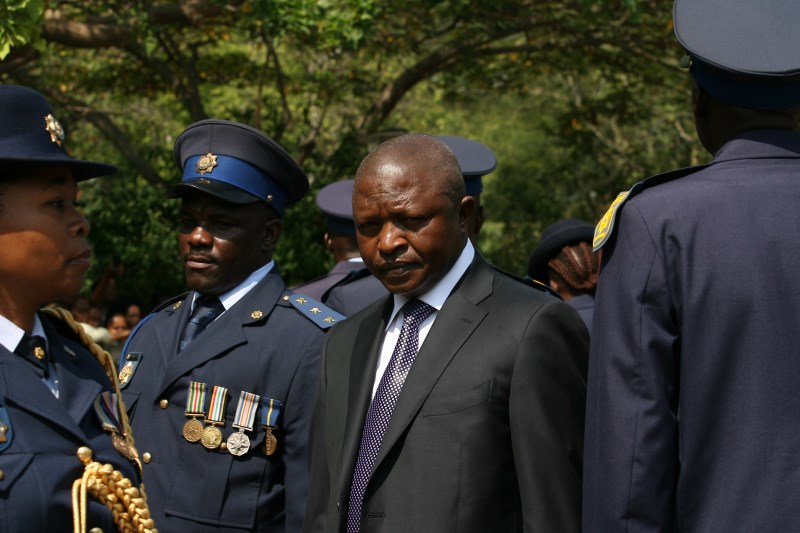
MBOMBELA – Large developments are coming to Mpumalanga. Premier Mr David Mabuza said during his State of the Province Address last Friday that extraordinary measures were needed if the government was to reach its five-year targets in economic growth (of more than five per cent per annum) and job creation (of 390 000 by 2019).
He said the public sector still accounted for most of the net jobs created in the province since 2008. But Mabuza and his MEC for finance Mr Eric Kholwane had long been advocating for the private sector to play a greater role in development, growth and job creation, and the plans the premier outlined for the financial year starting in April, relied heavily on private investment and large construction projects were mainly in the offing.
The R5,2 billion construction of the 68-kilometre Majuba railway was in progress to alleviate pressure on the existing coal-haulage network.
It would change the transportation mode of coal to a number of power stations, especially Majuba, from road to rail.
The first coal-loaded train was scheduled to begin operating on May 31 next year.
The process for the acquisition and registration of land for the Mpumalanga international fresh produce market had been concluded.
All the necessary statutory compliance matters such as the environmental impact assessments had been finalised.
The installation of bulk infrastructure on the site had started and construction was to begin in 2015/16.
The Moloto Rail Corridor had also been approved and was expected to relieve traffic on the notorious Moloto Road. It was hoped that it would attract private-sector investment which would increase employment and local enterprise-development opportunities.
The premier noted that private-sector investments were also being sought for the establishment of the International Convention Centre in Mbombela.
A high-altitude training centre in eMakhazeni needed private-sector investment before its establishment could be finalised.
Investor opportunities were also being explored for the construction of a cultural hub.
Private-sector investment was also needed for the Blyde development cluster, which would bring about the construction and management of a skywalk, cable car and Bourkes Luck Hotel.
Strategic dams were to be constructed to increase the availability of water. Moreover Mbombela was to commence with processes leading to the construction of a dam which would incorporate hydro-energy generation.
In the 2015/16 financial year, the processes leading to the establishment of a large-scale bio-mass plant for energy generation were to be initiated.
Viable sites to establish solid-waste energy plants for energy generation in municipalities were to be identified. A factory to manufacture energy-efficient light bulbs were also being planned.
Mabuza noted that since the manufacturing sector had the highest economic and employment multipliers of any sector, the Mpumalanga Industrial Plan was being finalised to guide the government in growing the sector.
“The principal objective of the industrial plan is to achieve structural change.”
Infrastructure for schools was also to be prioritised in 2015/16. Dysfunctional farm schools were to be closed down and replaced with state-of-the-art boarding facilities. The construction of grade R facilities, provision of laboratories and computer centres to all schools offering maths and science, upgrading of special schools, and provision of sanitation facilities, water and electricity would also continue.
The building of additional facilities at the University of Mpumalanga was underway, and these would be available for use in January.
At least 10 modern high-tech hospitals were to be developed over the next three years.
They were to range from 400 to 600 bed facilities and would use the latest medical technology available.
“Partnering with the private sector will allow us to mobilise additional skills and capital to compliment government resources and to build these state-of-the-art hospitals much faster.”
- Read more on SOPA here.