Eight hundred rhinos slaughtered in nine months
The biggest battlefield on the front is the Kruger National Park, where poachers have killed around 600 rhinos, from January to middle August.
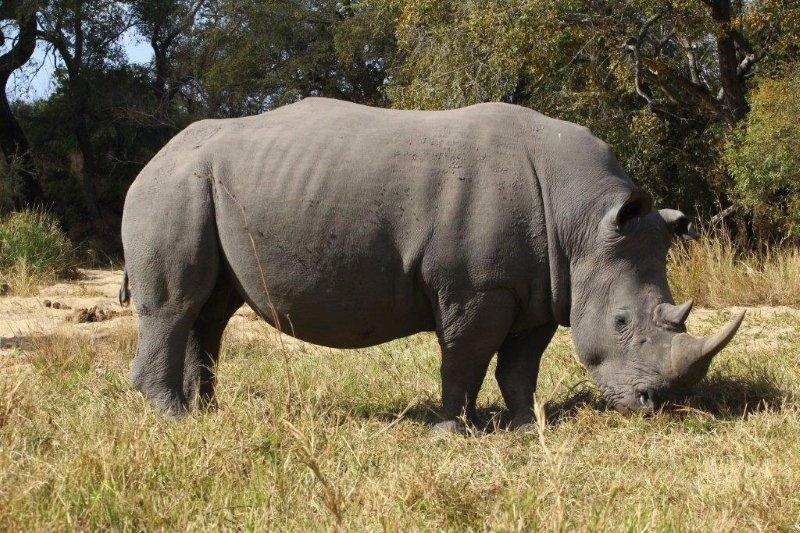
MBOMBELA – South Africa is on the main front in the war against poachers. Eight hundred rhinos were slaughtered in the nine months of 2015.
The biggest battlefield on the front is the Kruger National Park (KNP), where poachers have killed around 600 rhinos, from January to middle August.
Head of anti-poaching operations in SANParks, Maj Gen (Ret) Johan Jooste, said during the last media conference on poaching statistics, “Poaching of our rhinos are fast becoming out of control. Our research shows that there are at least 12 active poaching groups at work in KNP at any given time.”
“We face a poaching squad armed with the most modern equipment, and we must fight them with standard-issue weapons, so we need more,” Mr Ken Maggs, chief of staff at ranger services in KNP, told Lowvelder. He added that he as the head of all the rangers in KNP, as well as police officials are very concerned about the psychological welfare of their staff, from forensics staff right through to office staff. Post-traumatic stress syndrome is becoming a problem. “This war against poachers are relentless,” he added.
During the latest media conference at the end of August, environmental affairs minister Ms Edna Molewa presented the latest figures on rhinos killed by poachers. On August 20, it stood on 749 nationally, implicating three poaching incidents per day. With this in mind, the number on World Rhino Day could then be as high as 848 to 23 per cent more than the same time last year.
CEO of SANParks, Mr Fundisile Mketeni, said, “Of course we are worried, that is why all the ministers are here. It is because of that worry and also to articulate all the interventions to stop the tide. This is war,” he added.
The poaching crisis is driven by demand for rhino horn in China and to a greater extent Vietnam. Rhino horns are part of an apparent ancient remedy in traditional Chinese medicine. It apparently did have some medicinal capacity to reduce fever and treat poison, but less than that of other herbal cures.
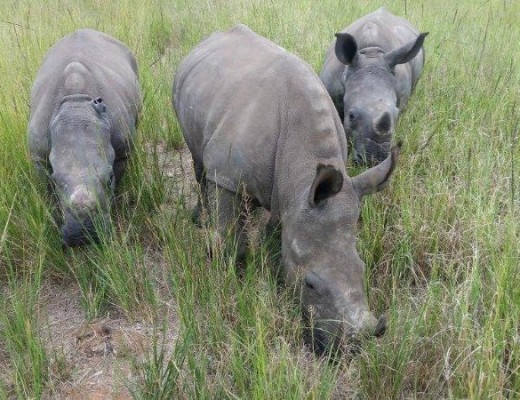
Today it seems that the sellers of rhino horns or the kingpins of the poaching – here and in the east – were the ones that claimed the medicinal value of the horns in the first place in 2007. This is according to Ms Katherine Lawson and Mr Alex Vines of Chatham House in London (The Royal Institute of International Affairs), who together with the Environmental Impact Agency in New York, produced a report analysing the global impacts of the illegal wildlife trade. The report was published in 2014.
Despite ongoing research, no traditional and medicinal use of rhino horn could be established in either China or Vietnam. “It is an age-old technique to create a need for something to be able to create a market, even if claims are false.
Keeping in mind the desperation of sufferers of certain diseases, who would not leave any stone unturned in their quest to find a cure, users of rhino-horn powder can still not guarantee the medicinal value of this for any disease,” Vines found during research.
Former US secretary of state, Ms Hilary Clinton, called this phenomenon “a national security issue, a public health issue and an economic security issue.” This was said in 2012. This year the Obama government in the US are taking steps against illegal trade in wildlife, especially ivory and rhino horn.
Organised crime syndicates remain almost untouched in South Africa. The poachers are the lowest on the hierarchy of the poaching ladder. They are normally locals, and from Mozambique and the poorest of the lot. They very often don’t even know who the kingpin is. Poachers also get the smallest fee of all in this hierarchy.Organised crime syndicates remain almost untouched in South Africa. The poachers are the lowest on the hierarchy of the poaching ladder. They are normally locals, and from Mozambique and the poorest of the lot. They very often don’t even know who the kingpin is. Poachers also get the smallest fee of all in this hierarchy.
Organised crime syndicates remain almost untouched in South Africa. The poachers are the lowest on the hierarchy of the poaching ladder. They are normally locals, and from Mozambique and the poorest of the lot. They very often don’t even know who the kingpin is. Poachers also get the smallest fee of all in this hierarchy.
Jooste and most conservationists, academics and government representatives agree that, “Only when the buying stops, the killing can too.” At the moment the department of environmental affairs is consulting widely on whether or not to make a submission on the lifting of the ban on international trade in rhino horn to the 2016 meeting of the Convention on International Trade in Endangered Species (CITES), that is taking place in South Africa.
Today on World Rhino Day, two rhino farmers, Mr Johan Kruger of Limpopo, and Mr John Hume, formerly from the Lowveld, but nowadays from North West and also the largest rhino farmer in the world, continue their fight in the Pretoria High Court to legalise rhino-horn trade.
The anti-trade lobby urge nations of the world to uphold the precautionary principle, the basic underpinning of CITES, which says if an action or policy has a suspected risk of harming a species, the burden of proof that the action is not harmful falls on those taking the action.
Despite all the evidence, the South African government seems to be leaning towards supporting the pro-trade lobby. That would for one, go against, the British initiative to address international wildlife crime.
At the moment, the irrevocable truth is that rhinos are worth more dead than alive.