Mbombela’s property is among the most expensive
There is a great shortage of affordable housing in Mbombela. Also, there are no clear standards which determine property prices.
MBOMBELA – When compared to 19 local municipalities in the country, the cost of the development of property in Mbombela Local Municipality (MLM) is rated among the most expensive, without any visible reason for the heightened inflation.
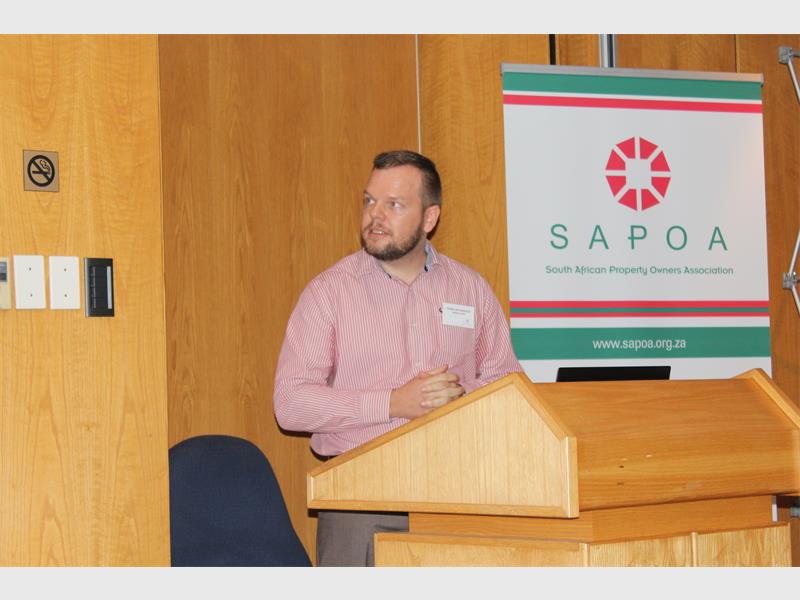
This was the general message conveyed at Wednesday morning’s South African Property Owners’ Association (Sapoa) meeting.
Mr Pierre van Jaarsveld, regional manager of the Mpumalanga branch of Urban-Econ, addressed about 25 of the city’s top property owners about the average growth in the local market.
“House prices in this city is on the increase,” Van Jaarsveld said. “The most sought-after suburbs in the city are Steiltes and Sonpark.”
According to him, security plays one of the greatest roles in the demand for property.
There is a general lack of affordable housing in the area. There is vacant residential land available, but due to the high cost of building, it is cheaper to buy standing property. The average size of built houses are 250 square metres.
The definition of affordable housing is vague, but Van Jaarsveld believes it refers to housing for under R1 million. “Government will see it as houses priced between R500 000 and R750 000.”
Urban-Econ’s statistics show that Mbombela has the highest rezoning application fees for residential, commercial office and industrial properties.
This is almost twice as much than the average fee for the relaxation of building lines.
Fees for the application to establish a township in Mbombela is more than double the national average.
On the bright side, fees for MLM’s building-plan submissions are regarded the cheapest in its category.
In residential areas, the fees are almost half the average, while this number is less than a fifth for retail and industrial property.
Locals should also not complain about MLM’s costs for service delivery.
It costs the municipality around R206,37 per month for sanitation fees while the average turns at around R1 000 per month.
It’s fees for water is well below the national average. “I think Sembcorp Silulumanzi plays a significant role in the low price of water,” Van Jaarsveld said.
Electricity is right on par with the national average.
Refusal removal seems an expensive exercise for the local municipality.
The national average is around R1 000 per month, but Mbombela pays R1 157,57, placing it second in its category after Polokwane Municipality’s exorbitant R5 601,57.
Property rates in MLM are well below the national average.
“In conclusion, there are currently no norms or standards in place to regulate the fees charged by municipalities,” Van Jaarsveld said.
“Consumption fees for each municipality are set up differently – some guide tariffs based on the size of the property while others use the type. In each case, the fee structures are not transparent.”
Urban-Econ recommends that “structures should be put into place to unify all records, which will assist the National Treasury to set up norms and standards”.
They also feel that an independent committee, consisting of professionals with practical experience, should be assigned to municipalities to help them compile fees for services. Municipalities should also work on improving communication with residents, so they know what they are paying for and comply to the Batho Pele principles developed for service delivery.