MBOMBELA – “We must not forget that the wage dispute in Alberta, Canada, was started by an individual, and not by all Working on Fire (WoF) employees,” a source told Lowvelder after 301 WoF crew members were asked to return to SA after downing tools there last week.
Firefighters return after ’embarrassing’ country
It followed a wage dispute and the firefighters returned after just six days of fighting the Fort McMurray blaze.
They arrived at OR Tambo International on Tuesday morning and travelled back to their home bases. They are expected to return to work on Monday.
It is alleged that the dispute began when the premier of Alberta, Ms Rachel Notley said it was not acceptable to her and her government that people would work for wages that did not align with their labour laws. The minimum wage in Alberta is CD$11,20 per hour.
VIDEO: Firefighters win Canadian hearts with singing
“This (the remuneration of the firefighters) was not in accordance with the laws of the province,” Notley told CBC (Canadian Broadcasting Corporation).
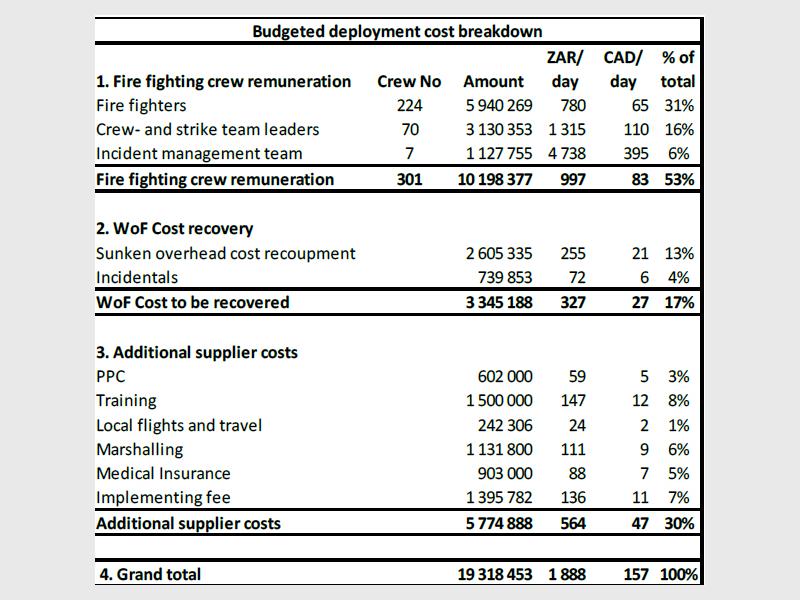
Kishugu explained to Lowvelder that R780 (CD$65) per day, comprising R600 for international out-of-country allowance, normal South African salary of R110, and R70 per day additional away-from-home-based allowance, was budgeted for the Canadian deployment for basic firefighter crew remuneration.
The crew members, however, demanded to be paid R3 000 per day after incorrect remuneration amounts were reported in the media and Notley’s statement.
What’s more, Daily Vox, reported that firefighters only received CD$50 of a supposed CD$170. They alleged that the other CD$120 ended up in the coffers of Kishugu.
At an exchange rate of 12 to one, this would have amounted to R1 440 per day, multiplied by the number of firefighters (which according to them was 301, when in fact it was only 224), and totalled R433 440 per day.
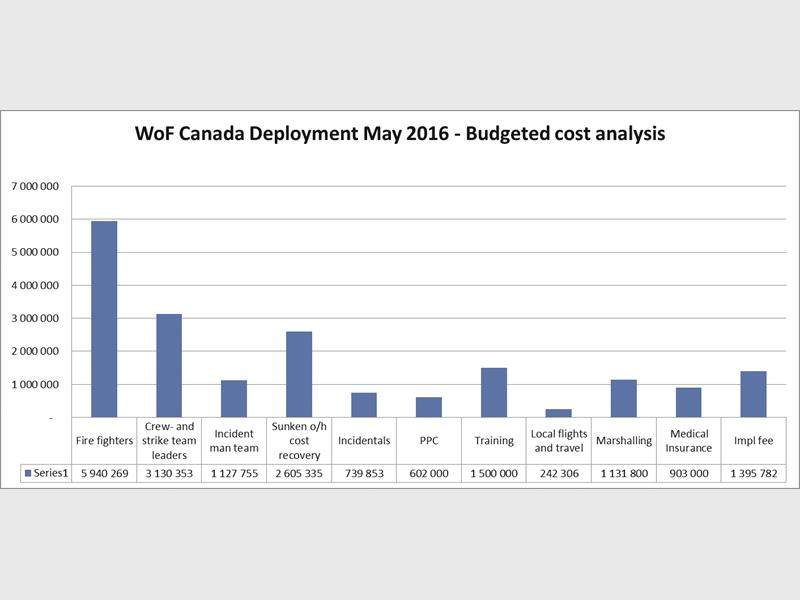
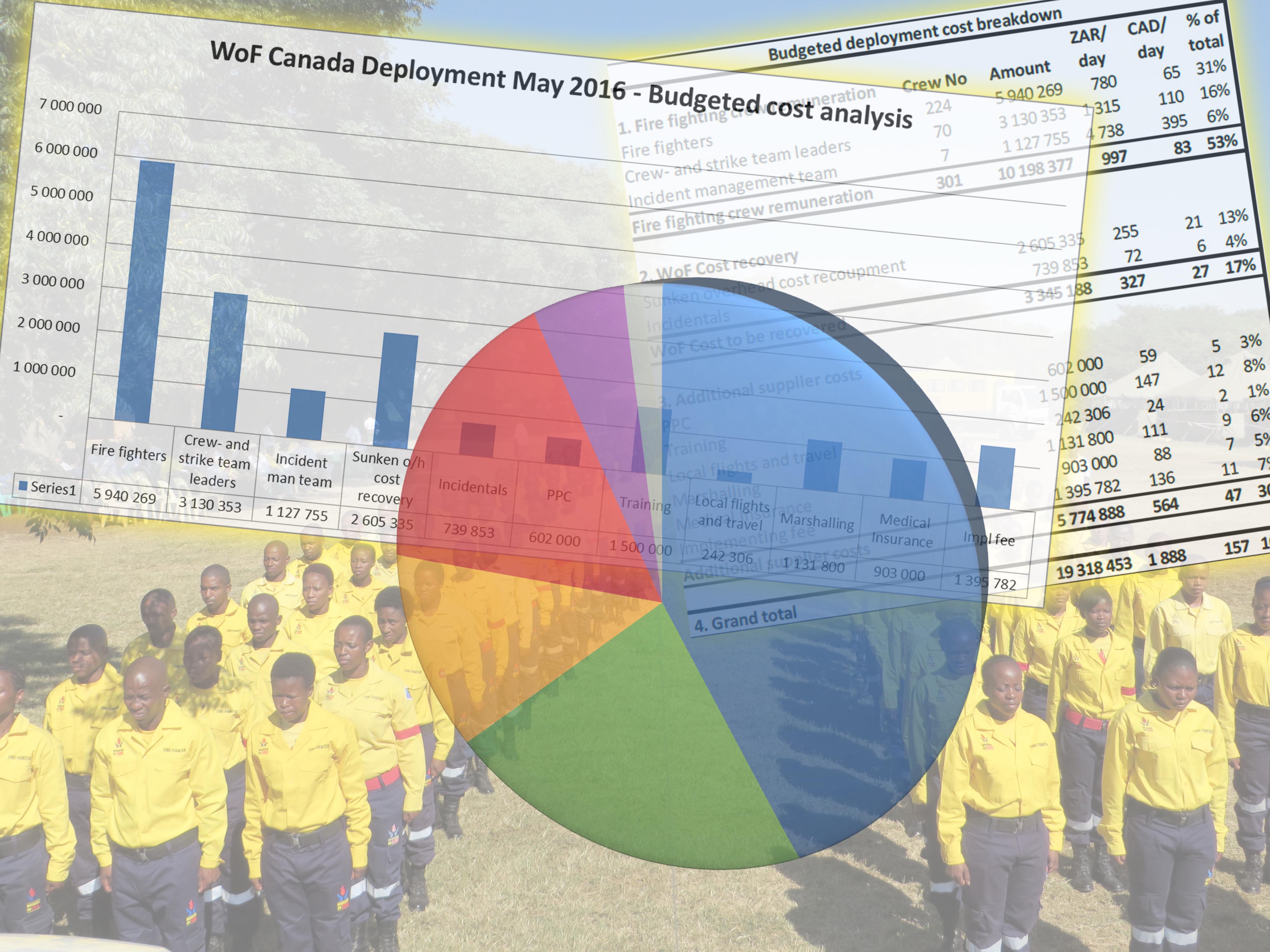
In a breakdown of the project costings, Kishugu explained to Lowvelder that CD$170 was the total project flat rate including VAT on certain expense items. The net project flat rate amounted to CD$157 (R1 884) per day. Of this amount, firefighters received 31 per cent, crew and strike team leaders 16 per cent, and incident management team members six per cent, which in total was 53 per cent (CD$83 or R996) of the total project flat rate.
Seventeen per cent was budgeted to go to the WoF overhead cost recovery (CD$27 or R327) for re-investment in job creation and skills development of WoF employees, and 30 per cent for additional supplier cost, specific to the deployment (CD$47 or R564).
In total, this amounted to the above-mentioned R1 884 per day, or R19 318 453 for the complete deployment project.
Kishugu earns an implementing fee of up to 9,6 per cent of additional revenue generated for the WoF Programme. That was just under R1,4 million and not R13 million as reported by Daily Vox.