10 Historical facts about cars and roads in the Kruger National Park
Ever wondered about the first road or the first car in the Kruger National Park? Here are all the answers.
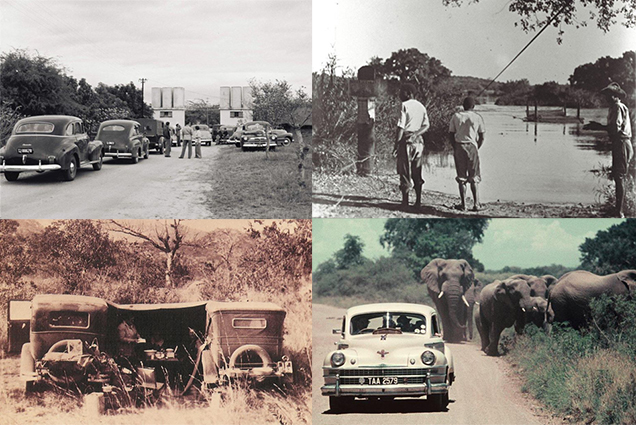
SKUKUZA – Riding along smoothly on a road in the Kruger National Park you might feel as if the roads and therefore cars, have been there forever, but this is not the case. To put a road network down that consists of more than 850 kilometers of tarred roads in the Park and 1 444 kilometers of gravel roads took almost 90 years. These are highlights over the years:
1. Until the proclamation of the Park in 1926, the Selati railway line, ox wagons, buggy carts, pack donkeys and horses represented the only forms of transport. There were no vehicles or roads.

2. With the initial opening up of the Pretoriuskop area in 1928 to day visitors, the only monies that could be charged were the admission fees of £1.0.0 (R2). In 1928 the Board decided that five shillings (50c) per person would be charged at all entrances gates and that a minimum of R2 had to be charged per vehicle.
3. To deter heavy vehicles from entering the Park, an admission fee for business purposes of R10 per heavy vehicle was charged.
4. An additional source of revenue was also offered by the pontoons over the rivers. Until the end of 1931, tickets could be bought for 50c.
5. As from 1927 on, the building of roads was started in all sincerity. The first roads were the routes between established rangers’ posts.
6. The first roads to be developed were those from White River to Pretoriuskop, from Pretoriuskop via Doispane to Skukuza, from Skukuza to Satara and Crocodile Bridge.

7. One of the first roads was from Crocodile Bridge via Gomondwane to Lower Sabie built in the midtwenties by game ranger CR de la Porte for his own convenience, after he acquired the first motor vehicle in the Park – a model-T Ford.
8. In 1928, construction of the road between Skukuza to Lower Sabie was started. It was completed in 1931.
9. During the period 1927 to 1929, three pontoons were brought into operation, over the Crocodile River (at Crocodile Bridge), Sabie River (at Skukuza) and the Olifants River (at Balule).
10. The tarring of road surfaces in the Kruger Park had to wait until August 1965 when the tarring of the Naphe Road between Pretoriuskop and Skukuza was commenced.
Sources:
Pienaar, U de V (Dr), Neem uit die Verlede, Published by South African National Parks (then National Parks Board) in 1990.
Section “Development of Tourism” of Chapter 17 (by Dr SCJ Joubert) in The history on the development of the Sabie and Shingwedzi Reserves and the Kruger National Park, 1898 to 1946 written by Dr SCJ Joubert ; Translated and edited by Joep Stevens.
Photographs: Lowvelder Archive