Bringing back the essence of the Khoisan culture
"Our clicks bring a smile to the face. Our language is like a smiling language."
MBOMBELA – “Our clicks bring a smile to the face. Our language is like a smiling language.”
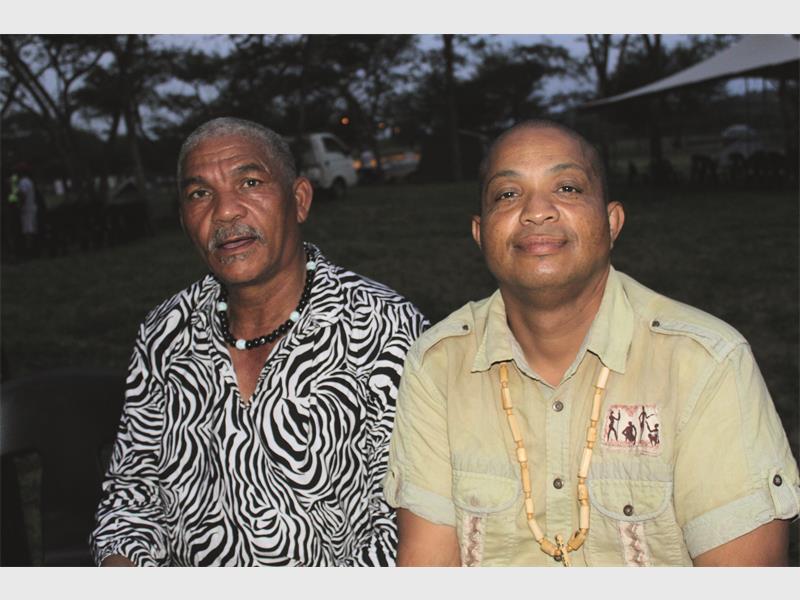
These are the words of the Southern Khoi senior chief, Ishsaqua. Khoisan leaders were recently in the Lowveld to educate people about their language and culture.
Lowvelder met up with them at the Ubuntu Festival last weekend.
The Khoisan are descendants of the ancient hunter-gathering San (bushmen), who are the earliest known original inhabitants of South Africa, followed later by the pastoral Khoi (Hottentot) people, thousands of years ago. The Khoisan are a blend of the Khoi and San people.
The Khoi originated from the coastline of the country and the San from the northern parts, particularly in the Kalahari region.
The Khoisan tribes are the indigenous people of the country and are similar in cultures and belief to Native Americans.
Ishsaqua said he thanked the “Great Spirit, Groot Gees” that brought him to the event and for the opportunity for the elders to be heard.
Ubuntu was about everybody. “There is learning going on and there is processes that we are trying to bring the Khoi language back. All of our chiefs and headman from the northern and southern tribes are here with us.”
He said their culture has been lost as the world becomes more westernised. “We are losing our culture and our heritage. Our language is not even on the list as one of the 11 official languages of the country and we are the indigenous tribes of the country. We want to show the world we were never gone, we have always been here.
“Unfortunately there is other people that are mimicking us. They say they are Khoi but they not Khoi. Although we cannot say they not Khoi, as the word means ‘people’. Our lineage comes from the coastline. We come from the Cape. There are two things the north does not have that we have – how to make grain and women taking charge.”
He said because many of their women had married into other tribes, a lot of their traditions were lost.
“The women carry the traditions and cultures. What happened in the Cape was a genocide; our tongues were cut out, our necks cut off. We were used as target practice. The northern tribes had the same when they brought the smallpox. It killed a lot of our people off. Those who lived had to become slaves. We had no other chance of survival.” He said what they doing now was to bring back the essence of the Khoi back. “From the north and to the south is to bring the language back.”
Ishsaqua explained that the language is not foreign and everyone can understand it. “Our clicks in the language are not like the other bantu tribes that open the mouth. Our clicks bring a smile to the face.”
He said many of their people not only lost their ethnicity but also their livelihoods. “We are realising as a people that we need to come together.” The national emblem means “Diverse people unite”.
“This is why we include everyone, black and white. We have come together although there are differences in our traditions.”
Ishsaqua said everything started in the Cape. “What God wants is us to be nomadic, so our animals could graze in a field and we could move on so the grass could grow back. We lived in complete harmony. When the African tribes arrived, we were the most humble people, we embraced everyone.
“We did not put up fences or fight over land. We still believe we need to learn from one another.”