Six coloured diamonds you might not be aware of
Green Diamonds A Green diamond acquires its colour after its trip to the earths’ surface once it was within the ground near present radiation. This radiation “pushes” into the diamond causing absorption within the red and yellow regions of the colour spectrum; producing a green colour. Green Diamonds can also contain a yellowish, bluish or …
Green Diamonds

A Green diamond acquires its colour after its trip to the earths’ surface once it was within the ground near present radiation. This radiation “pushes” into the diamond causing absorption within the red and yellow regions of the colour spectrum; producing a green colour. Green Diamonds can also contain a yellowish, bluish or grayish modifying colour.
Green diamonds are found predominately in regions of South America and Africa.
Blue Diamonds
How to see if a diamond is real?
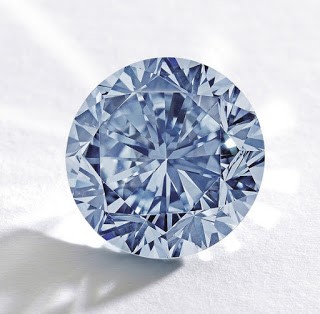
A Blue Diamonds’ colour is caused by the bonding of boron to carbon in the red, yellow and green parts of the colour spectrum. Blue Diamonds may contain a gray, violet or greenish modifying colour. The Golconda region and The Cullinan mine are the most notable areas where blue diamonds are mined.
Pink Diamonds
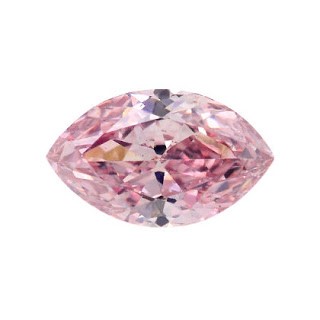
A diamond becomes pink when heat and pressure deep within the earth cause the crystal lattice to distort. These distortions cause Pink Diamonds to absorb green light and hence impart a pink colour. This crystal lattice can often be seen as parallel bands within the diamond. Pink diamonds may be modified by an orange, brown or purplish colour. The price tag of a Pink diamond is directly influenced by the intensity of the colour. They are graded from faint, very light, light, fancy light, fancy intense, fancy deep to fancy vivid. Natural pink diamonds can be found in South Africa, Russia, Brazil, Tanzania and Canada. However, the majority of these breathtaking stones hail from the Argyle Mine in Australia.
Red Diamonds
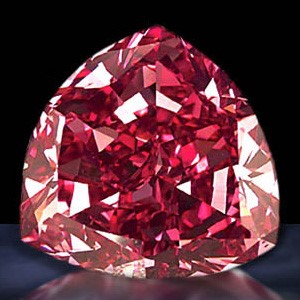
The rarest of all diamonds: Red diamonds. They are very strongly and deeply coloured pink diamonds, with the same cause of colour and crystal lattice distortion. This strong hue of diamond is so rare that most jewellers and diamond dealers have never even seen a natural one. They are not found in large stones with the 5.11 carat Moussiaf Red shield being the largest known red diamond.
Purple Diamonds
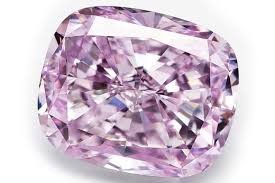
Purple diamonds are almost as rare as Red diamonds. Similar to pink diamonds, it is believed that they have a similar cause of colour; crystal distortion. Hydrogen is present in the atomic structure of the crystal but the exact mechanism is not yet known.
They are most often found in Siberia, Austalia and Northern Asia and are generally small in size. Less than five intense or vivid violet diamonds are mined each year.
Olive Diamonds
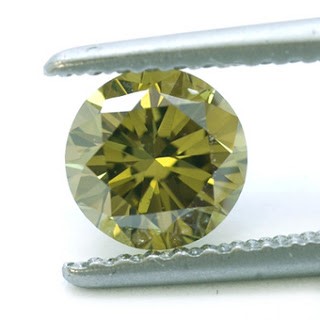
Olive diamonds are not green diamonds: they populate a different and discreet area of the colour spectrum. Their colour is a unique combination of yellow and green and sometimes also a bit of brown or gray. With colour grading, they often come with three colours to describe them such as brownish greenish Yellow, and while this does accurately describe the different hues, the colour olive is a more concise term.
They are found in stones as large as 10+ carats. Sierra Leone Zimi Mine produces Olive diamonds; they have the same characteristics as yellow diamonds but are not as appreciated by the public.
Visit our website now for great specials and promotions – https://www.yourdiamonds.co.za/