Coromandel through the ages – the Sydney Press Legacy
After many years of being totally inaccessible, the mysterious Coromandel manor house is now open to the public. Groups on a quest for the extraordinary can rent this fully furnished facility as a self-catering lodge and experience the grand old days when this was a weekend hideaway to one of South Africa’s most wealthy clothing retailers.
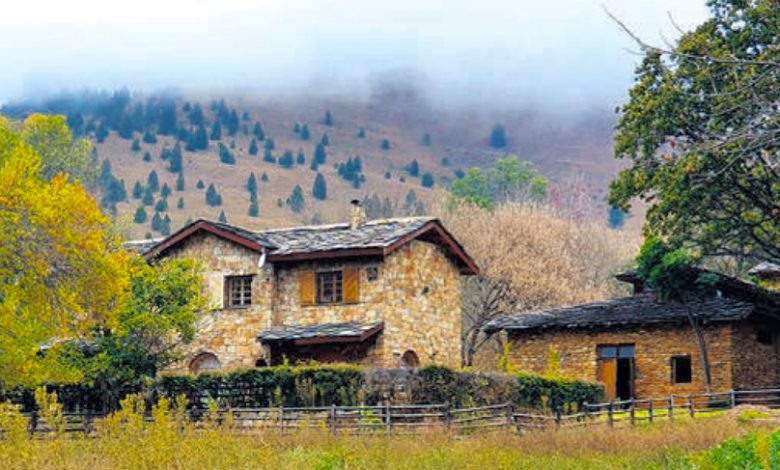
Sydney Press, once the owner of Edgars, a nationwide chain of outfitters had the house built in the seventies. At the time he was developing his model Coromandel Farm outside Lydenburg on the road to Dullstroom. The breeding stables at Coromandel were once home to some of the world’s most expensive racehorses. The 5 800-hectare estates, with their leafy avenues, a number of farms, large-scale farming activities and a game reserve in the Steenkampsberg, later ended up in a family trust that ousted Press as a sole proprietor.
This led to years of neglect. Finally, with the help of the state and a Land Bank loan, a buyout plan by a trust formed by the original farm workers, was negotiated. Currently, the trust is contracting professional farmers to work the land. The many beautiful structures, like the yearling stables, are available as function facilities, and the charming stables cottages and manor house are available as weekend or holiday accommodation at a rate of R350 per person. The house is prepared for guests by charming hostess Sharon Nzimande, who can be contacted on 073-346-4419 for bookings.
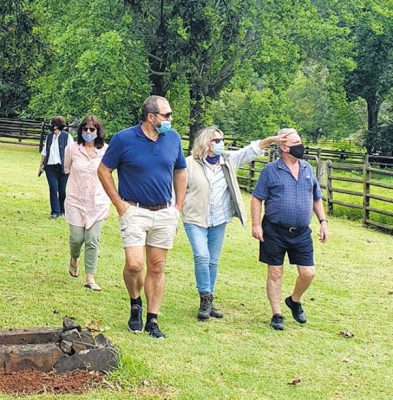
The house can sleep up to 40 people with some of the bedding arranged in dormitory-style. Linen is provided, though an extra blanket in winter might be advisable. Towels also need to be brought along. The modern kitchen is well-equipped and firewood can be arranged. The enigmatic Press, the man that once built and owned the clothing empire, Edgars, also played a significant role in die Lydenburg area with the creation of Coromandel Estate, once one of the largest, model commercial farming operations around. Part of the Press legacy is the extraordinary architectural structures he commissioned for the estate.
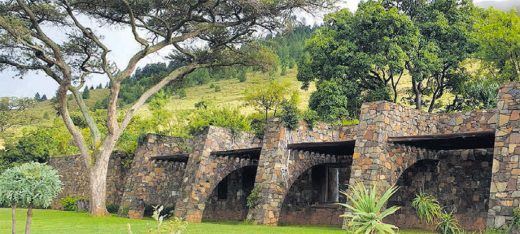
Sydney Press was born and raised on a struggling farm in Namaqualand. His Lithuanian father was first a travelling salesman, then became a concession store owner, later on, an innkeeper and finally a farmer. Sydney loved books and was an exceptional rugby player at school, but had to abandon his dream of attending Oxford University because the Wall Street Crash in 1928 put paid to those ambitions. He forfeited a bursary to Cape Town University when he went to work at Edgars in Cape Town as an office boy over the Christmas holidays. He was 16, Sydney Press – a captain of industry. A year later in 1936, the company’s owner Eli Ross sent him up to Johannesburg to open a branch there. On arrival from London, they had initially opened their business in the City of Gold, so it was their second attempt, using young Sydney to prove his metal. No contest! The multifaceted stone exterior leaves the visitor with a mixed impression of a castle from the Middle Ages to a large African Zimbabwean style stone ruin. By 1982, 46 years later, Sydney Press was a highly respected captain of industry who had masterminded the growth of Edgars Stores to 430 outlets while adding Sales House, Jet and Ackermans to the basket. His two brothers, Hubert and Basil, had also joined the company in the early stages and made a considerable contribution to its growth. Hubert was later appointed to the board of directors. Both brothers retired in 1965. Sydney enjoyed many diverse interests. These included photography, speed-reading, theatre, travel and art. And, besides being CEO of Edgars, he was a trustee of the National Development and Management Foundation, a member of the National Productivity Council, director of the National Productivity Institute, and he was president of the Dendrological Society for 27 years. In 1983, he persuaded Sandton Municipality to landscape the Ben Schoeman Highway with indigenous flora.
Coromandel Estate
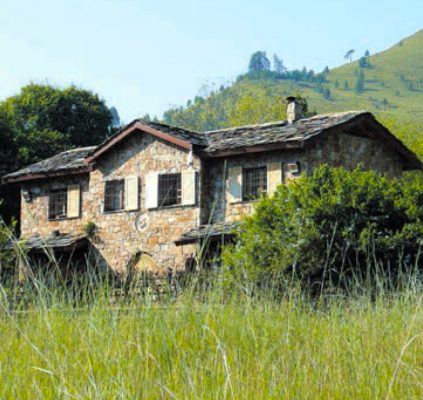
Perhaps one of his most notable of notable achievements was Coromandel Estate. The same Italian architect and designer, Marco Zanusco (1916-2001), whom he called upon as CEO to design Edgardale, designed his manor house at Coromandel – an estate of 5 800 hectares that were amassed from the gradual purchasing of 24 adjacent farms from 1968 onwards. In a pristine and breathtaking area of the veld, mountains, rivers and waterfalls between Lydenberg and Dullstroom, the manor house- Press House – had been built into the side of a mountain in such a way that it became one with its surroundings. In response to the harsh climate, the building framework was made of sympathetic local materials – rock, pebbles and cross-cut timbers.
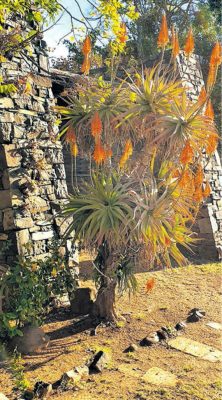
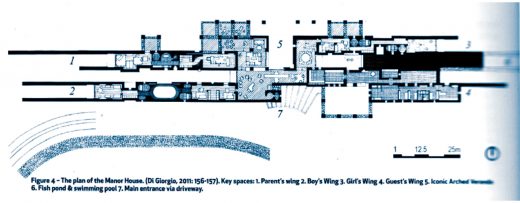
It included roofs of indigenous plants, shaded windows and verandas, planted atria and soothing water features – a pond and natural swimming pool. This deliberately created an interior with the ambience of shade, coolness, greenery and water. It had taken six and a half years to build and Zanusco brought his craftsmen from Italy to do the work which was completed in 1975. Sydney’s wife, Victoria*, gave landscape designer, Patrick Watson, his first major commission when she chose him to design the layout of the gardens around the manor house. He hiked the length and breadth of the farm (on a few occasions with Zanusco) to collect indigenous plants for the Coromandel nursery. The house had four wings – one for Sydney and Victoria, the girls’ wing for their three daughters, Caroline, Jane and Suzanne, the boys’ wing for his four sons, Clifford, Rodger, Gregory and William, and a guest wing. All had protected outside spaces and all opened up to the living areas in the middle of the house. Victoria presided over the interior decor. She was a Manhattan-born fashion designer and they were married in 1952.
Coromandel house plan She educated herself, in between bearing Sydney seven children, by reading design books, visiting museums, engaging with antique dealers and enrolling in art classes. She would later be described as “a true aesthete with a taste for imperfection!” She appointed industrial designer, Achille Castiglioni, to make several customised pieces and Franco Albini and Gio Ponti to design the rest of the furnishings. The ’80s – a turning point for Sydney Press and his family In 1982 Sydney’s career in the retail industry ended abruptly when he was dethroned in a boardroom takeover by South African Breweries while he was in the USA undergoing heart bypass surgery for the second time. It sparked a long-standing family feud. Nevertheless, he was a multimillionaire, a man of means who deeply appreciated the finer things in life. His Coromandel Estate that had been his weekend passion became his new career. It would appear that his wife and children were not happy with his decision to sell his shares to SAB and spend most of his time at Coromandel. Sydney Press turned his astute business acumen in a new direction and engaged in his enthusiasm for horse racing when he entered the world of racehorse breeding. Zanusco had already designed and built a magnificent stable block with stone walls, yellow-wood doors and slate tiled roof. There was a separate yearling barn.
Sydney had Charlotte Stubs, the doyenne of horse knowledge in South Africa, bring back from Ireland, Germany and Sweden, warmbloods to his stables for breeding purposes. In 1983 expert bloodstock agent, Robin Bruss, bought the stallion, Northfields from the Coolmore Stud in Kentucky, USA. It made headlines as the most expensive horse in the world; Sydney paid R3,1 million for him. Robin also purchased the filly, Tecla Bluff, from Argentina for him. She was the first filly to win the Durban July in 21 years. The mating of these two horses produced Teclafields, another race winner, who over time also produced race winners. Sydney Press set his standards when he aimed to make his farm the best in the country. He pretty much achieved his goal many times over as he regularly won SA Farm of the Year awards. Time would reveal he made some mistakes, but he followed his own compass and did not easily take advice from anyone. He tried everything. However, he did employ people who were experts in their field. There were 25 managers’ houses dotted throughout the farms in areas adjacent to the projects allocated to them. He had orchards of nectarines, peaches and olive trees. He successfully grew the first export-quality blueberries and also supplied them to Woolworths. He grew fields of maize, wheat, beans, sunflowers, sugar cane and potatoes. He had the biggest herd of Holstein-Friesian dairy cattle in South Africa that were milked in a pristine state-of-the-art milking facility. He had beef cattle and did wool farming with sheep. Besides the dry and irrigated agricultural lands, there were natural areas of open fields, beautiful waterfalls, pockets of indigenous forest, trout dams and in the higher reaches, a well-stocked game reserve. Along with maintenance gear, 24 tractors and a grader, the important and necessary workshop complex contained large fertiliser stores, a butchery and a fruit packaging area containing three cold rooms and a freezer. An airfield had a hangar for the aerial crop sprayer. However, to cap it all, in the ’80s, Sydney Press constructed a staff village that consisted of 140 houses in groups opening into a town square at its heart and a junior school in close vicinity. The plan had been decided upon through dialogue with the farmworkers who were going to live there. All 300 staff were engaged in some form of training and education. Besides the teachers Sydney had on his payroll, he provided a school bus to take his workers’ older children to high school in Lydenburg. Everyone on the farm could read and write. A mobile clinic visited the farm monthly. Food parcels were provided to the staff village monthly. Every house had free electricity, running water and a geyser. Free firewood was delivered to each household throughout the icy winters. Sydney and Victoria part ways. In 1988, a protracted court case began between Sydney Press and five of his children, fighting for control over the fortune in the Lincolnian Family Trust. They believed he was wasting their potential inheritance on hair-brained schemes like his racehorse stud farm and his extravagant gardens at his historic Inanda house in Johannesburg. Towards the end of his personal court case battle, Sydney Press was neglecting the Coromandel Estate and when he lost the case in 1996, he was no longer allowed to live there and had to get permission to visit. The loss impacted his health; he had a heart attack and died on May 28, 1997. The Coromandel legacy of Sydney Press As all of Sydney’s immediate family were living abroad with the exception of his son, Gregory, the farm languished after his death. There was little money coming in and the farmworkers tried to manage the farm without any capital investment or any of the perks that Sydney had regularly provided for them. A few of the managers were caught pilfering the movable assets and ended up behind bars. The family appointed curator, Future Perfect Corporation, to auction the farm. When they did not get the money they expected, the farmworkers put in a bid. They obtained R11 million in the form of a government land reform grant they applied for from the provincial Department of Land it either grown up on the farm or been working on it for many years, to make informed decisions. The general workforce still needed ongoing training, managing and discipline. The provincial government stepped in to guide them with making business plans, implementing cost-cutting measures and establishing long-term goals. They narrowly avoided having the farm stripped of all its movable assets by liquidators of the operating company by making a counteroffer that was accepted. The board resolutely got to grips with what they were able to do, but there were many challenges as they learned to manage the assets and to experience for themselves what worked and what did not. Surrounding farmers, at first dismayed by the turn of events, became supportive when they were asked by the trust to give them advice on planting. Now they are pleased and proud to have in their midst a land reform project that is working with regular input from the Department of Agriculture, Rural Development and Land Administration. The blueberries and dairy farm are successful activities, as are the maize, sunflowers, soya beans and winter wheat. Some of the managers’ houses are rented out on long-term leases. Forty-five hectares were excised to the local council for R1,8 million to expand on the existing village compound so it could house 1 500 people, including farmworkers and their families. Workers that had experienced evictions from other farms have also been accommodated. Access to housing subsidies enabled these people to own their fully serviced homes. Without deliberate intention, Sydney Press made it possible for his farmworkers to fall heir to a legacy that would be of generational benefit to them all. Because of the initiatives he had introduced on his farm, the Farmworkers Trust was enabled to take its rightful place in the new South Africa. From humble beginnings, Sydney Press became a man of consequence who had significant influence and impacted many lives. He consciously continued to educate himself throughout his life. A private and solitary man, he was nonetheless a humanist and philanthropist. To book the Coromandel Manor House, contact Sharon Nzimande on 073-346-4419. REFERENCES:
• Family Tree - www.fisherfamily. za.net/1064.htm https://fisherfamily. za.net/1694.htm
• Edgars History - www.fundinguniverse. com/company-histories/edgarsconsolidated-stores-ltd-history/
• Slides of Coromandel architizer.com/idea/933244/
• Noseweek Issue 23 Article 334 dated 23-07-1998
• Mail and Guardian article dated 2012-02-03 A Time of Transition
• Mail and Guardian article dated 2012-02-03 A Beacon of Hope for Land Reform
• Get It - Lowveld dated 10-04-2012 www.christies.com/features/Old-ChelseaThe-Collection-of-Victoria-Press-6667-1.aspx
• Update Sept 2013: www.vukuzenzele.gov.za/workers-restore-farm-land-milkand-honey
• Background piece on the life, times and aspirations of the South African clothing retail mogul, Sydney Press is to be found on the community and promotional online platform aimed at the Garden Route town Sedgefield: discover-sedgefield-southafrica.com.
• Footnote: Victoria Press, 1927-2015. Born Victoria Lurie in Cleveland, Ohio, USA. Died April 7, 2015. Buried on San Michele Isle, Venice, Italy.