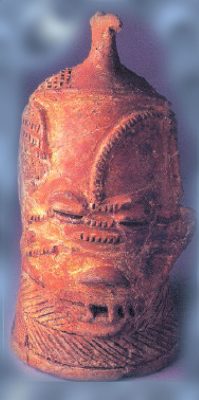
The Lydenburg Heads: A famous find
The name of the archaeologically famous Lydenburg Heads have been used in the naming of a shopping centre and a lifestyle estate in Lydenburg. When passing these, I often ask myself if the average townsfolk, specifically the younger generation, know what this is all about.
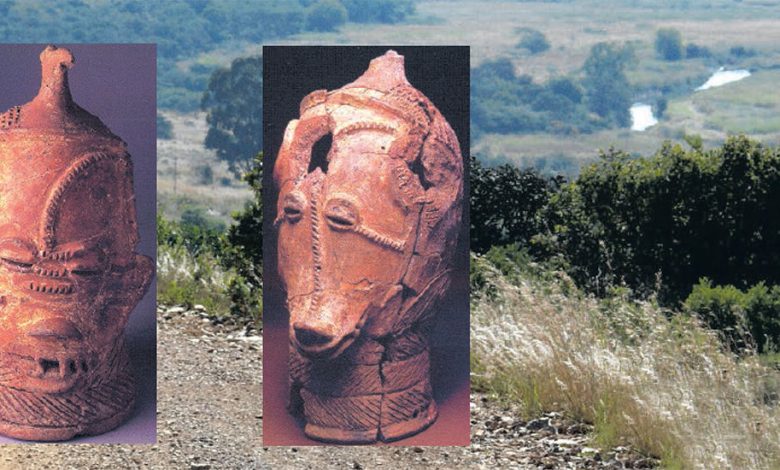
I therefore thought it good to remind our readers of the story behind these significant archaeological finds. Though not formally excavated, the shards that once made up these clay ceremonial masks were found by a local schoolboy in the Sterkspruit Valley close to Lydenburg Dam – a find regarded
today as a particular highlight of the Early Iron Age period in Mpumalanga.
Though found in our town, the now reconstructed heads, ceremonial headdresses of baked clay, are ironically to be found today on display in the National Museum in Cape Town.
Though the possibility is often discussed among local conservationists, nothing has yet been done to get them back to Mpumalanga.
Also read: Overseas archaeologists are highly passionate about these findings
Smaller-sized replicas of some of the heads are on display in the local museum in Lydenburg. Photographs of the real reconstructions appear in the publication Mpumalanga, History and Heritage, edited by Peter Delius. The shards that make up the pottery heads were found in the 1950s by Ludwig von Bezing when he was on his father’s farm in Sterkspruit.
They are believed to date back to 500AD and were used for ceremonial purposes by early Iron Age inhabitants.
The Lydenburg Heads have the distinction of being the earliest known form of African sculpture in Southern Africa. Five years later Von Bezing
developed an interest in archaeology and went back to where he had first seen the shards. Between 1962 and 1966 he frequently visited the Sterkspruit Valley where he unknowingly collected pieces of the seven clay heads.

Later, when he studied medicine at the University of Cape Town, Von Bezing joined the university’s archaeological club. He took his finds to the university at the insistence of his fellow club members. Not only had he the shards to show, but also some artefacts he found among the pot shards. These were iron beads, copper beads, ostrich eggshell beads as well as pieces of bones and millstones.
Established archaeologists of the University of Cape Town and the University of the Witwatersrand, Prof Ray Innskeep and Dr Mike Evers, then went on to excavate the site where Von Bezing had found the remains. This site, and in particular its unique finds, instantly became internationally famous and was henceforth known as the Lydenburg Heads site.
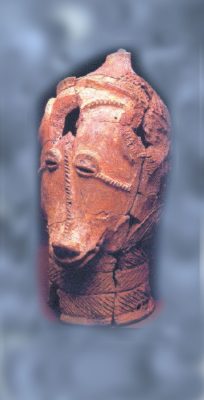
Two of the clay masks are large enough to probably fit over the head of a child, while the other five are approximately half that size. The masks have both human and animal features, a characteristic that may explain that they had symbolic use during initiation and other religious ceremonies.
Carbon dating has proved that the heads date to approximately 490AD and were made by Early Iron Age people. These people were Bantu herders and agriculturists and probably populated Southern Africa from areas northeast of the Limpopo River. Similar ceramics were later found in the Gustav Klingbiel Nature Reserve and researchers believe that they are related to the ceramic wares (pottery) of the Lydenburg Heads site because of their form, function and decorative motive. This sequence of pottery is formally known as Klingbiel type pottery.
In later life, Von Bezing practised as a radiologist in Kimberley, after completing his initial medical studies at the University of Cape Town in 1969. He is an ardent mineral collector and
specialist.