Congested border post a continuing disaster
The Minerals Council South Africa and the South African Association of Freight Forwarders (SAAFF) have urged government to take vital steps to address the stagnant traffic towards the border post.

Trucking companies are being forced to their knees, having lost an estimated R1.3bn in revenue this year alone due to the ongoing congestion at the Lebombo/Ressano Garcia Border Post.
The situation is said to be the worst it has been in 15 years.
The Minerals Council South Africa and the South African Association of Freight Forwarders (SAAFF) have urged government to take vital steps to address the stagnant traffic towards the border post.
Since August, freight trucks have been waiting up to three days to cross the border. The majority wait on the N4 highway.
The queue of trucks between Komatipoort and Lebombo ranges from between seven and 15km long.
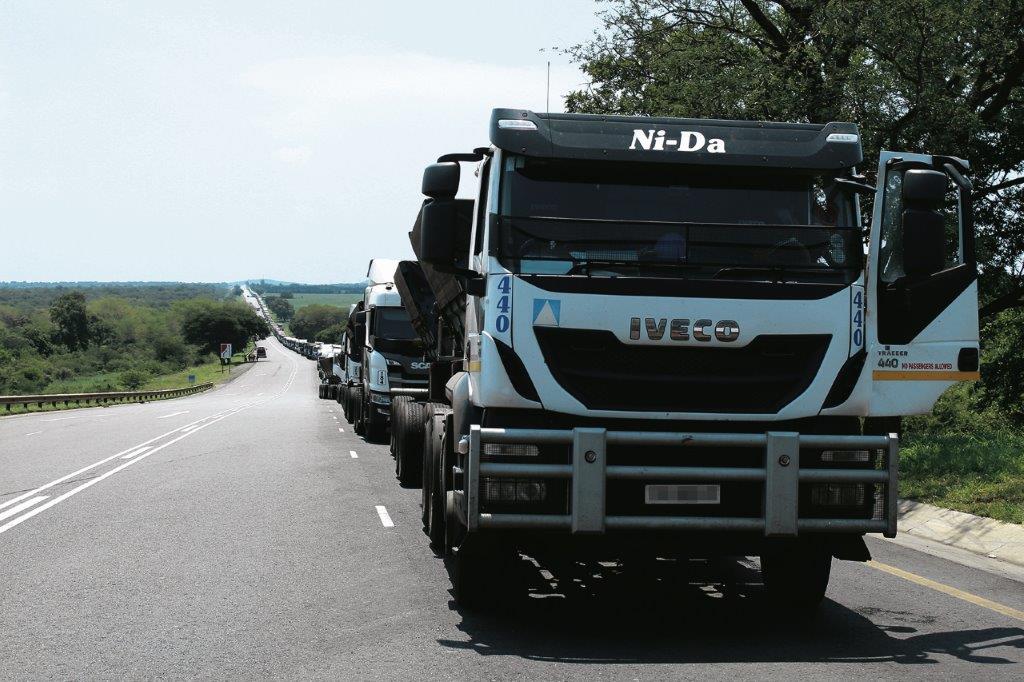
Drivers sit in their trucks for hours or days at a time without access to food, water or ablution facilities, in scorching weather. “Truck drivers are easy targets for criminal activity close to the border and are being robbed or harassed,” said WO Humbelani Radzilani, the crime analyst for Komatipoort Police Station.
ALSO READ: Lebombo truck crisis boils over in Komatipoort
The greatest challenge to the border crossing is the lack of 24-hour operations, resulting in crossing times increasing from an average of one hour to more than 20 hours since 2019. Covid restrictions exacerbate the situation and vaccination certificates expire while truck drivers wait in queues.
According to the Minerals Council South Africa and the SAAFF, both the mining and transport sectors are losing confidence in the stability of the public sector to support trade on this strategic corridor.
The Maputo Corridor connects Gauteng, Limpopo and Mpumalanga with Maputo.
The corridor comprises roads, including the N4, railways, ports and border facilities at Komatipoort.
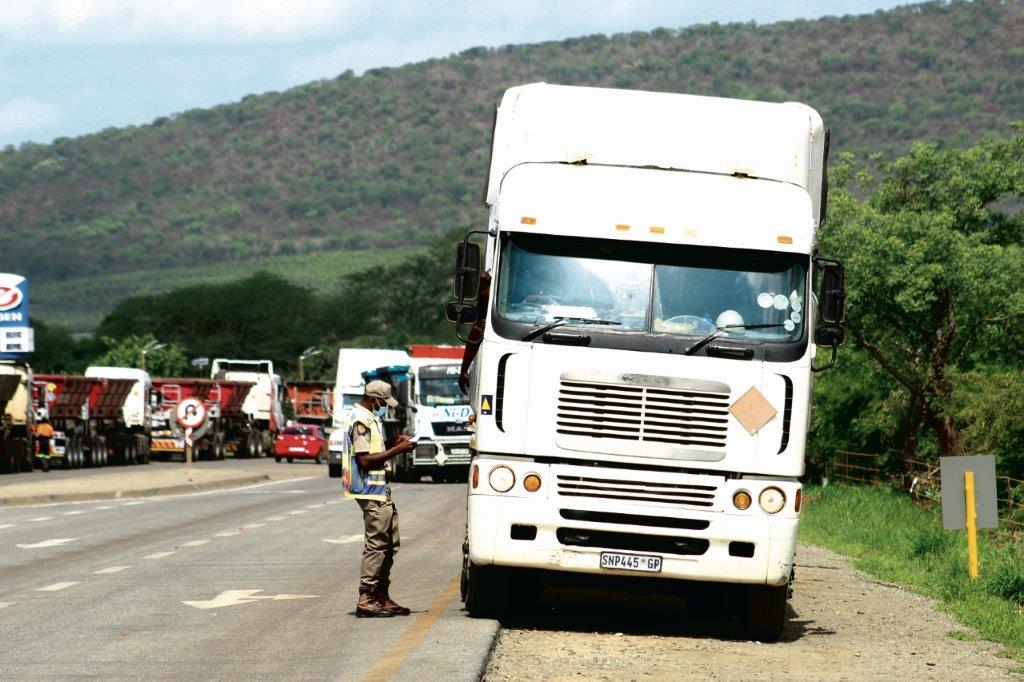
“Mining companies are losing a lot of money by having their products stuck at the border post. Clients expect deliveries by a certain time and the difficulties South African bulk mining companies face in easily accessing export markets creates problems of unreliability and uncertainty for those clients,” said Allan Seccombe, head communications of Minerals Council South Africa.
According to Seccombe, a truckload is between 30 and 50 tonnes, depending on what type of vehicle transporting companies use.
“Chrome ore was worth R2 100 per tonne in November’s trading figures. Trucks with over R100 000’s worth of minerals each are being delayed, which leaves our economy in crisis,” he stated.
The SAAFF pointed out that the value of South Africa’s total chrome exports amounted to over R93bn since 2020, with 20.7m tonnes shipped, of which 50% to 60% had to be delivered to Maputo.
The minerals on direct transit between SA and the Port of Maputo include chrome, ferrochrome, thermal coal and magnetite.
South Africa is the largest exporter of chrome ore in the world, which mainly goes to China.
Chrome is used to make ferrochrome, which is used to make stainless steel.
Thermal coal is used in electricity generation plants and magnetite is a form of iron ore used to make iron and steel.
The SAAFF and the Minerals Council South Africa reported that the poor performance at Transnet’s Richards Bay port operations has also pushed bulk exporters to use Maputo as an alternate export channel to retain their customers.
“The Maputo Corridor has become a vital trade route between South Africa, Maputo and our international trading partners.
ALSO READ: Abalone worth R1.6m seized at Lebombo border
“It has the potential to facilitate faster economic growth and job creation in both countries if these bottlenecks can be overcome,” said
Dr Juanita Maree, CEO of the SAAFF.
The Minerals Council South Africa and the SAAFF believe it is necessary that better coordination among government agencies of each country needs to be implemented. The situation needs to be addressed as a matter of urgency, at a state level, between South Africa and Mozambique.
“The public and private sector stakeholders on the Maputo Corridor are willing to work together to resolve the issues urgently, but will require the support of an enabling environment created by the public sector,” said Maree.
“This can be done by urgently implementing solutions that are both rapid and effective in a cooperative partnership approach.”
Do you have more information about the story?
Please send us an email to editorial@lowvelder.co.za.
For free breaking and community news, visit Lowvelder’s website: Lowvelder
For more news and interesting articles, like Lowvelder on Facebook, follow us on Twitter or Instagram