Solar systems, tax breaks explained in Mbombela
Solar system must be registered with the municipality for future planning and development and to feed surplus electricity back into the network.
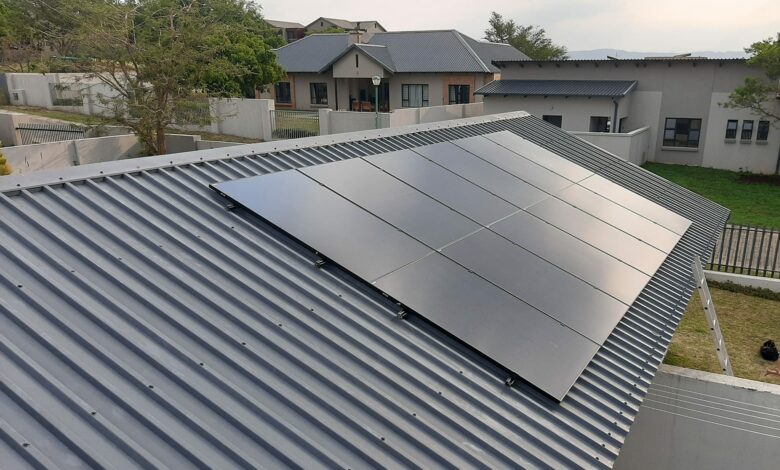
The government’s so-called ‘tax break’ to assist especially households and private persons to install solar systems in an effort to assist Eskom with its current load-shedding crisis, is not going to be possible for most citizens, especially those in the lower and middle income class. This view of many South Africans is supported by Henri Pieters, a tax specialist and a director of Stabilis Chartered Accountants in Mbombela.
Although the government announced that private households will qualify for a 25% tax deduction, it did not make it clear that this ‘gift’ is to the maximum of R15 000 and only applicable for the purchase of solar panels.
Some of the other confusing ‘small print’, according to Pieters:
• This tax break is only valid for one year, the 2023/24 tax year.
• The tax benefit can only be claimed if the complete solar system is purchased and completely installed. One can thus not purchase the solar panel alone and do the installation later when the rest of the system is bought.
• The tax benefit can also only be claimed if the systems are a permanent fixture to the house roof or other permanent structure. A portable solar system cannot be claimed from tax.
• No DIY installations are allowed or will qualify for a tax break. The services of a qualified installer must be used.
• The homeowner also has to submit a certificate of compliance when submitting a claim.
• Any person who wants to apply for the tax break must be a registered taxpayer.
ALSO READ: Businessman sentenced for Eskom fraud in Mbombela
In realistic terms, it boils down to the fact that any person who wants to claim the 25% tax break, will have to have enough cash on hand or qualify for a loan from a bank, to afford such an installation.
If someone pays R60 000 for a complete system, only 25% (to the maximum of R15 000) of the cost for the panels can be claimed. “If someone is living in a shack and wants to install a solar system with two lights, which will probably cost them around R1 000, only R250 can be claimed back, but for the panel cost only.
“In most cases, this is just not affordable for the average South African,” Pieters pointed out.
Although there are many options available to finance such an installation, for example, the rent-to-own scheme, not many will still be able to afford it.
“I think banks need to come onboard and somehow ensure that everybody will be assisted is some or other way,” was the opinion of Linda Grimbeek, COO of the Kruger Lowveld Chamber of Business and Tourism.
Pieters said although it is not a necessity for most private households to install a solar system, for businesses, however, this is a must.
“If you can’t power up your company or business, you will have no business to run. However, this is an very expensive exercise, and that is why the government is being way more lenient with tax reductions.”
ALSO READ: Response officer injured in Rocky Drift filling station robbery
Companies are allowed to claim 125% of their expenses on a solar installation. This tax break is for the installation of a complete system, which will cover the price for panels, inverters, batteries, the cost of building a room for the system and battery bank as well as labour cost. “Some companies even build or cover their car ports. Even the total cost of such a project can be claimed against the tax break,” said Pieters.
For the small, informal or one-man business, such as a welder or carpenter running a business from home, or even a spaza shop, there will be an opportunity to apply for the tax break. “This will, however, have to be determined as a shared cost between private and business expenses.”
One of his concerns is how the taxman will control how the expenses is claimed. “The tax break is per household. How will they ensure that, if there are four valid taxpayers living in the house, that they all don’t claim for the same expense? I don’t think the tax systems are sophisticated enough to pick up such claims.”
A Facebook post last week in which a municipal councillor, Thea Rix, said all solar systems must be registered with the council, caused quite some irate responses from residents questioning the validity. “This was announced by Wiseman Khumalo, the municipal manager, during the renewable energy conference recently held,” Rix said.
ALSO READ: 19 illegal immigrants appear in Nelspruit Magistrate’s Court
Joseph Ngala, spokesperson for the municipality, confirmed that this was indeed true. “According to the legislation and regulations of the municipality, all solar systems must be registered with the municipality. This not only to assist the municipality in future planning and developments, but will ensure systems can be found for residents to feed surplus electricity back into the network and be paid for such,” he said.
Application forms are available at the municipality’s Department of Energy.