MBOMBELA – Shocking statistics were revealed on Tuesday as the 16 Days of Activism for No Violence Against Women and Children kicked off.
According to the National Institute for Crime Prevention and the Reintegration of Offenders (Nicro), a woman is killed by an intimate partner every six hours in South Africa, and 46 per cent of the victims are aged 14 to 29.
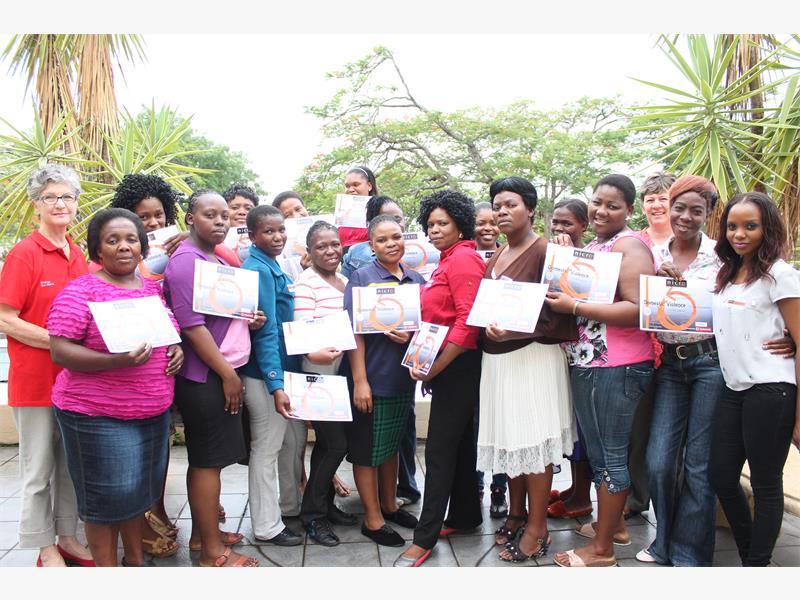
With the commencement of the campaign, Nicro’s training unit partnered with the Greater Rape Intervention Project (GRIP) in Mbombela to empower lay counsellors during a two-day training session.
GRIP provides assistance and counselling to survivors of sexual offences, domestic violence and HIV, while Nicro offers professional social services to people in conflict with the law as well as to troubled youth.
According to Ms Talita van der Walt, trainer at Nicro, the focus of the session, which was made possible by Vodacom’s Change the World project, was to empower the lay counsellors in understanding the link between gender inequality and domestic violence.
It also focused on the identification of the various kinds of abusive behaviour and the escalating nature of domestic violence, as well as the warning signs of life-threatening situations.
Domestic violence is defined by Nicro as a pattern of abusive behaviour used to establish power and control over an intimate partner through fear and intimidation, often including the threat or use of violence.
According to the institute, the intensity and brutality are likely to increase over time and often begin with threats, name calling, hitting doors or walls, or damaging objects and hurting pets. It may then escalate to restraining, punching, slapping, kicking or sexual assault which finally become life threatening as choking, breaking of bones or the use of weapons occur.
Stats
• From January to August this year a total of 1 447 domestic and 1 067 sexual cases were reported at GRIP.
• About 80 per cent of domestic-violence victims are female.
• About 93 per cent of perpetrators are male.
• Every nine seconds a woman is assaulted by an intimate partner.
• Women exposed to domestic violence are twice more likely to experience depression, 16 per cent are more likely to give birth prematurely, stand almost double
the chance to struggle with substance abuse, and are 1,5 times more likely to contract HIV, syphilis, chlamydia or gonorrhoea.
• About 42 per cent need treatment for injuries caused by their partner.
• About 38 per cent of all murders of women globally were committed by their intimate partners.
• The most likely place for a woman to die is in her home.
• Women aged 15 to 44 are more at risk of domestic violence than of cancer, road accidents or malaria.
Note from Dr Magda Rall, volunteer for Vodacom’s Change the World project
As a volunteer for the project, I chose GRIP as the non-profit organisation to become involved with. My work there concerns the well-being of the care workers from different angles, personal welfare, workshops and training, among others.
As skills and information are being updated on a continuous basis it is necessary to transfer recent progress made in the field of domestic violence over to the individual whose task it is to deal with these matters, and thereby increasing their effectiveness in dealing with a very disturbing phenomenon in our society today. GRIP has for many years been at the forefront in dealing with gender-based violence and I’m grateful for this opportunity given by Vodacom Change the World project to be part of this outreach.