
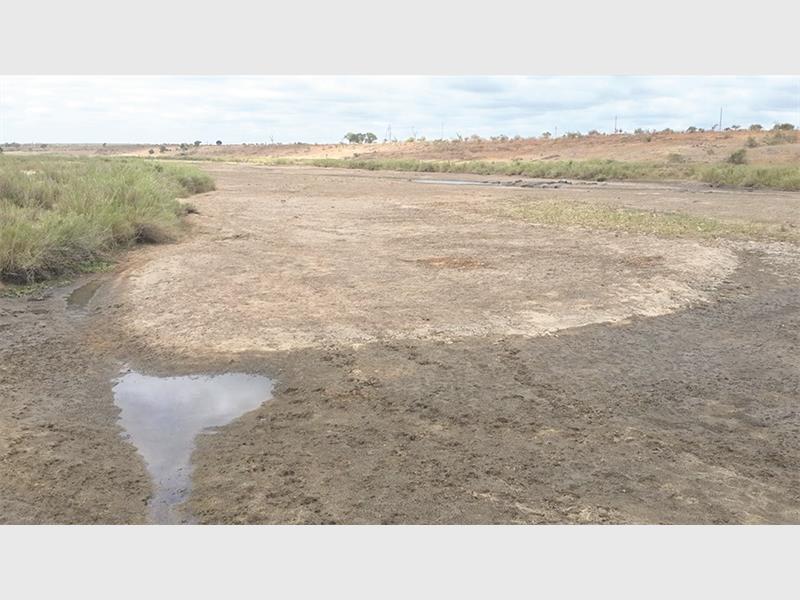
MBOMBELA – Despite the fact that the Lowveld has received some much-needed rain recently, we are far from out of the woods. Dam levels are critical according to the Department of Water and Sanitation.
Primkop Dam is currently the lowest of all the catchment dams at just 17,6 per cent. Witklip Dam is also very low at 44,3 per cent, followed by Kwena Dam at 52 per cent, Da Gama Dam 59,5 per cent, Nooitgedacht Dam at 64,8 per cent, Inyaka Dam at 66,6 per cent and Vygeboom Dam at 69,6 per cent yesterday. According to Mpumalanga Disaster Management, the situation has remained unchanged for the past few weeks. There is, however a glimmer of hope for rain, but sporadic storms, like the one on Wednesday in Mbombela, are not bringing relief. “Short and heavy thunderstorms like those don’t even saturate your lawn,” a disaster management official told Lowvelder.
Lees ook: El Niño staan dalk einde se kant toe
The ground is so dry that it sucks the water in, and there’s not enough run-off to the rivers and dams.”
“We are very concerned that the rain expected to come down in the beginning of winter, will result in floods. This will be too late to bring relief to farmers, and is likely to cause severe floods.”
The official said the community needed to do more to save water. “We have to rethink our use of water. If we don’t receive rain soon, we are going to have big problems.”
A frequent traveller to the Kruger National Park, Mr Robby Holmwood, wrote: I have seen various posts and photographs of rain in Kruger on Facebook. I was, and am sure many other people are, of the impression that the worst was over.
“With fair rains in the Highveld, I anticipated the Crocodile River to be flowing strongly again. Unfortunately, this is not the case. The various large dams in the river are working like a sponge, with the lower area only receiving what’s left.”
“The rains in Kruger appear to have been localised with The Bergendal/Pretoriuskop areas looking deceptively green and lush but with the grass still short and sparse. Going north and east, the situation becomes gradually direr. The number of buffalo and hippo carcasses, less than five kilometres from the flowing Sabie River, bear credence to the fact that animals are starving and that the man-made water points are not the saving grace some perceive them to be.
It rained last Thursday on the H4-2, with various animals emerging onto the tar road to drink water. Our emotional elation was short-lived, as, on the return trip an hour later, there was no evidence of rain. The road and veld were as dry as a bone.
“On the positive side, the park is brimming with new life in the form of cubs, calves and piglets. Nature will take its course, as it has been through this before and it will come through strong. There is no doubt it will again, and that the human management of the problems is in the sound professional hands of SANParks.”
Also read: Devastating effects of drought becomes clear in Kruger