Controversial diesel dealer expands to Lowveld
The development has been authorised under Section 24G of the National Environmental Management Act to continue with the 'unlawful commencement' of four 200 000L above-ground diesel storage tanks and two 100 000L below-ground petrol storage tanks.
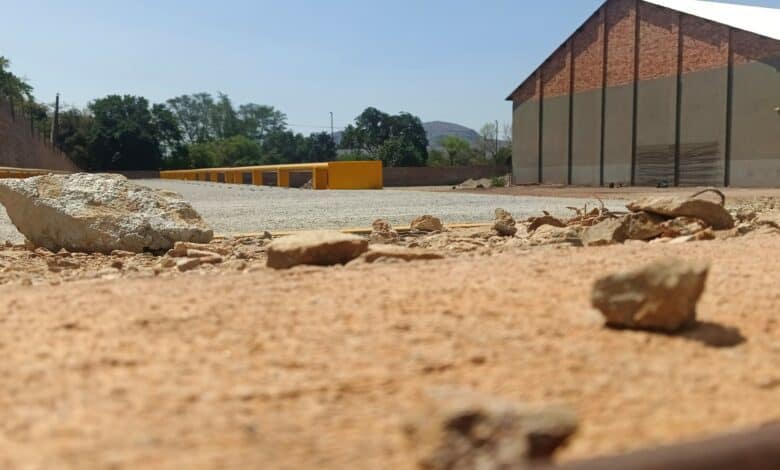
Alleged multibillion-rand illegal diesel blending player Walter Gilfillan appears to be extending his operations into the Lowveld with a million-litre fuel depot development in Malalane.
The recent issuing of an environmental authorisation (EA) for the development in the heart of this agricultural town, which also borders the Kruger National Park, has put the proverbial cat among the pigeons amid residents.
Located in Lion Street, within less than 150m of the Malelane Municipal Clinic, residential properties and next to a functional Transnet railway line, the development has been authorised under Section 24G of the National Environmental Management Act (Nema) to continue with the ‘unlawful commencement’ of four 200 000L above-ground diesel storage tanks and two 100 000L below-ground petrol storage tanks.
This after the developer, as noted in the EA, paid an administration fine of R150 000 as prescribed by the Nema Section 24G process for commencing groundwork for the fuel depot without the necessary authorisation.
ALSO READ: Lowveld outraged by Dos Santos slaying
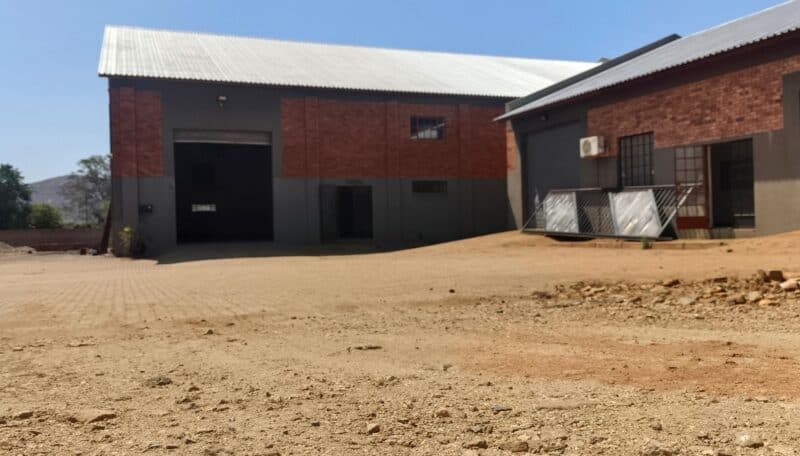
Janice Tooley, executive director of All Rise Attorneys for Climate and Environmental Justice, explains Nema Section 24G makes provision for a person to apply for an environmental authorisation or waste management licence in instances where a listed activity was commenced without the necessary authorisations.
Should the application be successful, the activity will be lawful going forward, but the person can still be prosecuted for the period of unlawfulness. In a recent example, the high court ordered oil giant BP to pay a R53m fine for building and upgrading 17 of its petrol stations in Gauteng in 2000 without environmental approval.
According to the EA issued on September 17 by the Mpumalanga Department of Agriculture, Rural Development, Land and Environmental Affairs (Dardlea), no objections were received from registered interested and affected parties (I&APs).
However, a series of documents and correspondence seen by Lowvelder suggest otherwise. These include objection letters, a 23-page register of I&APs on behalf of whom a bulk objection was submitted, as well as email correspondence between various I&APs and the listed environmental assessment practitioner, Thabelo Nelwamondo of Fecund Consultants, as well as Dardlea.
Responding to Lowvelder’s questions late on Wednesday morning, Dardlea’s spokesperson, Zanele Shabangu, released the department from any wrongdoing in the possible omission of objections by I&APs. She said objections received by the EAP were dealt with in the final report sent to the department. To her knowledge, no further objections that required attention had been received, unless there were any the EAP had missed during the public participation. She left the door open for any such objections to be forwarded to the department with proof that the EAP deliberately missed it.
“The department will review the validity of the authorisation in case of missed objections, which have a proof of submission and [it being] intentionally missed out,” Shabangu said.
ALSO READ: UPDATE: Mkhuhlu Magistrate’s Court postpones Big Joe’s bail application again
Attempts to get a comprehensive response from the EAP and Gilfillan were in vain.
Lowvelder first requested relevant documentation, which it believed would facilitate accurate reporting from the EAP on October 21.
The publication then followed up with a phone call, during which she confirmed the paper’s request had been forwarded to Gilfillan. Eight days and no response later, Lowvelder sent additional questions to Gilfillan and copied them to the EAP. The EAP promptly responded with: “The questions you sent here are not the same you sent to us, which were forwarded to the applicant.”
Lowvelder then highlighted the fact that these were in fact different to the initial questions as they were additional ones and highlighted the paragraph that explained this point in the previous email.
Late on Wednesday morning, as Lowvelder was about to go to press, the EAP referred the publication to Gilfillan’s attorneys for comment. Although Lowvelder was not furnished with their names, two email addresses were provided. Lowvelder will send detailed questions to them for a possible follow-up piece.
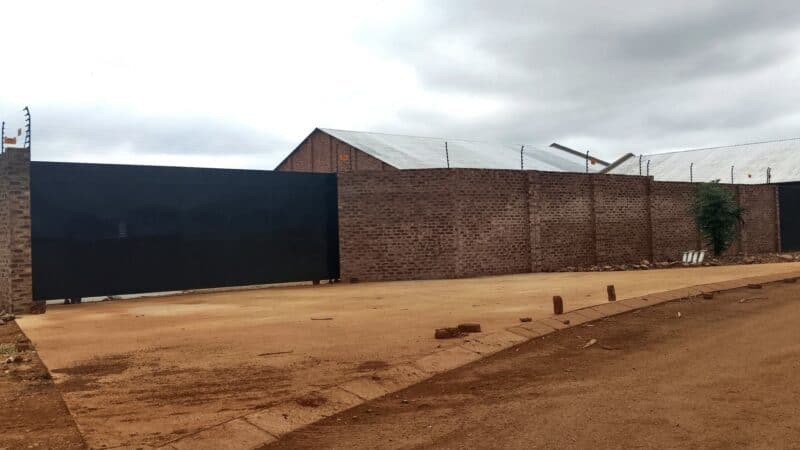
The man behind the fuel depot
Gilfillan, whose Meyerton and Louis Trichardt fuel depots were raided and shut down by SARS last week on suspicion of illegally diluting diesel with illuminating paraffin, is the sole director of RER Investments, the company that holds the EA for the Malalane development. He is also the contact person indicated on the EA via an email address linked to Alliance Fuel, the entity under which the Meyerton and Louis Trichardt depots are registered.
Business Day reported SARS suspects Alliance Fuel to be a front for Agrifuel, a multibillion-rand entity solely owned by Gilfillan.
Lowvelder’s sister publication, The Citizen, reported “Preliminary findings by SARS lay bare the vastness of Agrifuel’s operations. Between 2019 and 2023, the company’s income tax returns showed revenue of about R5.6b, VAT turnover of R7b and PAYE of R1.1b. The company, which has several bank accounts, had inflows of more than R8.6b during the same period.”
Earlier this year, following a Department of Mineral Resources and Energy investigation, which revealed that at least 70 petrol stations in South Africa were selling diesel diluted with paraffin, the minister of petroleum and mineral resources, Gwede Mantashe, highlighted the growing issue of adulterated diesel and issued a warning to fuel stations.
Besides failing to meet regulatory standards and causing long-term engine damage to vehicles, contaminated fuels also offer unethical businesses a golden opportunity to undercut legitimate traders and cheat the taxman. This as illuminating paraffin is exempt from fuel taxes. Mixing diesel with paraffin allows unscrupulous businesses to sell diluted diesel at a lower price, boosting their profit margins and avoiding taxes on diesel.
ALSO READ: K9 dog killed by crocodile in Kruger National Park