Controversial diesel dealer mum over Malalane depot questions
Residents are concerned about the impact the fuel depot may have on the surrounding environment
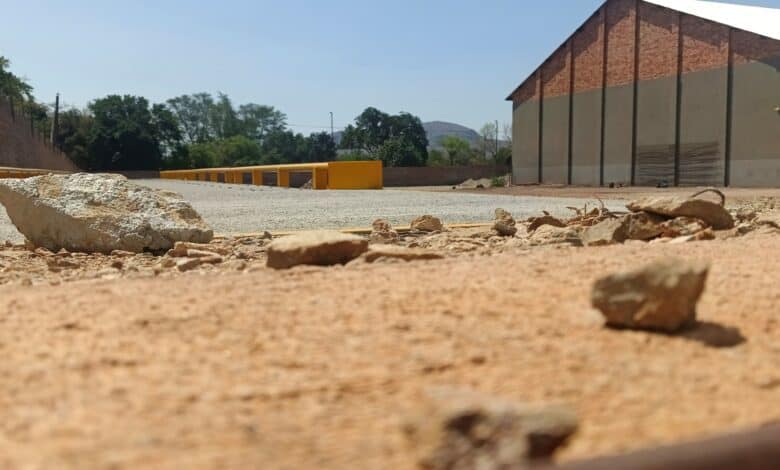
Questions to the controversial diesel dealer, Walter Gilfillan’s attorneys regarding the extension of his operations to Malalane have been met with silence.
So too has Lowvelder’s preliminary engagement, through its attorney, with the the Mpumalanga Department of Rural Development, Land and Environmental Affairs (Dardlea) to launch a Promotion of Access to Information application to obtain environmental impact assessment (EIA) documents for the controversial million-litre fuel depot in this small agricultural town.
Dardlea issued environmental authorisation (EA) for the development of a million-litre fuel depot in the heart of Malalane on September 17. The depot will be conveniently situated near a primary school, a government clinic, residential homes and public roads. News of the approval raised grave concern among residents and local business people about the impact this major hazardous installation could have on the receiving environment.
Through our investigations, it became apparent that key specialist reports that would have formed part of the EIA were seemingly not made available for public viewing. If this is indeed the case, interested and affected parties (I&APs) would not have been able to contribute meaningful comment on all aspects of the EIA during the public participation process. Of specific interest to objectors are the geotechnical investigation (related to groundwater), air quality assessment and traffic impact assessment.
Gilfillan, through his environmental assessment practitioner (EAP), Thabelo Nelwamondo of Fecund Consultants, previously referred Lowvelder to his attorney for comment.
Although Lowvelder was furnished with the name of the attorney, we were given two email addresses, one of which was traced back to a legal firm in Johannesburg.
The following questions, sent to both email addresses, had not been responded to by the time of going to press:
1. Has Gilfillan or his representative submitted an application for this fuel depot to the Department of Mineral Resources and Energy?
2. Reports indicate that the initial work for the development was commenced without environmental authorisation, triggering an application to have the commencement legitimised. Lowvelder wanted to know why.
3. Lowvelder presented them with the allegation that specialist studies should be made available for viewing by interested and affected parties, but that this was not done. These include but are not limited to the geotechnical investigation, air quality impact assessment and traffic impact assessment. They were asked to comment.
4. Those affected by the developments have raised questions relating to the Environmental Management Programme (EMPr) with Gilfillan’s EAP, Nelwamondo. Those questions were reportedly never responded to (although Nelwamondo acknowledged receiving the correspondence). Subsequent to that, the competent authority, Dardlea, was under the impression that the EAP had received no further objections that required attention. Hence the EA was granted, indicating that no objections were received from I&APs. According to Lowvelder’s information, this may not be entirely true. Gilfillan was asked to explain the EAP’s lack of response to objections on the EMPr. They were also asked to explain why specialist studies had seemingly not been supplied.
5. Lowvelder asked Gilfillan and his representative how he plans to mitigate the impact of this development on the receiving environment. Special emphasis was placed on the impact it will have on the Crocodile River, groundwater resources, traffic and air quality.
6. They were asked whether the development is compliant with the Occupational Health and Safety Act 85 of 1993 – Major Hazard Installation Regulations of 2022.
7. Gilfillan and his representative were asked to provide clarity on what storm water system this development will link into and whether they are separating out areas of clean storm water and areas of contaminated storm water.
8. Lastly, the allegation was made that the site development plan differs from the actual layout of the site currently visible, and they were asked to explain it.
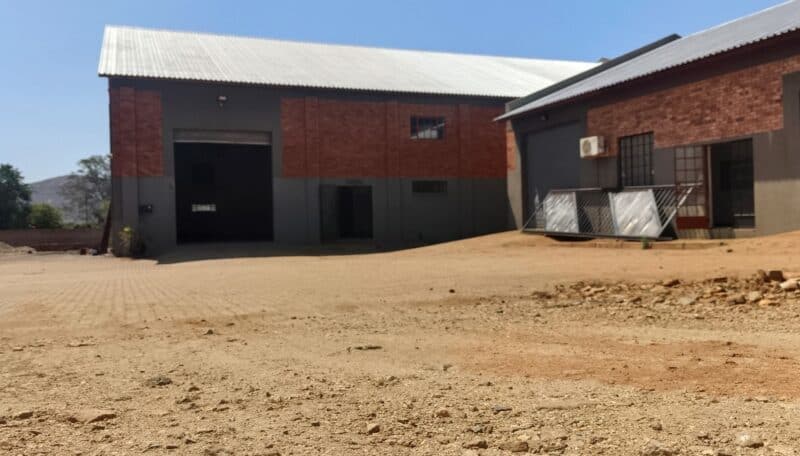
Major environmental concerns over a major hazardous installation
Specialist reports that were made available to I&APs seem to lack detail. Commenting on the ecology and watercourse assessment report, an I&AP known to the publication said in a document Lowvelder has had sight of that the report does not indicate any potential impacts of the specific activities on important water resources, including the Crocodile River.
It is understood the river, which borders the Kruger National Park further downstream, serves Global GAP farmers who are bound to an internationally recognised and certified standard that serves as a safeguard for, among other things, food safety.
Mozambique also has skin in the game. South Africa is locked into an international water treaty to supply Mozambique with a certain volume of water of a certain quality from the Crocodile River.
In the absence of a geotechnical assessment report being made available, concerns have also been raised over the potential impacts the fuel depot may have on groundwater resources. This as 200 000 of the proposed million litres of fuel is indicated for underground storage.
One expert told Lowvelder if the water table is too high, the tanks will pop out of the ground. Tanks may also rust and subsequently leak into the ground, contaminating groundwater.
Lastly, the I&AP also noted a lack of communication from the EAP about a storm water management plan or how potential issues from the site will be addressed.
The mastermind behind the fuel depot
Gilfillan, whose Meyerton and Louis Trichardt fuel depots were raided and shut down by Sars last month on suspicion of illegally diluting diesel with illuminating paraffin, is the sole director of RER Investments, the company that holds the EA for the Malalane development.
He is also the contact person indicated on the EA via an email address linked to Alliance Fuel, the entity under which the Meyerton and Louis Trichardt depots are registered. Business Day reported Sars suspects Alliance Fuel to be a front for Agrifuel, a multibillion-rand entity solely owned by Gilfillan.
Earlier this year, following a Department of Mineral Resources and Energy investigation that revealed that at least 70 petrol stations in South Africa were selling diesel diluted with paraffin, the minister of petroleum and mineral resources, Gwede Mantashe, highlighted the growing issue of adulterated diesel and issued a warning to fuel stations.
Besides failing to meet regulatory standards and causing long-term engine damage to vehicles, contaminated fuels also offer unethical businesses a golden opportunity to undercut legitimate traders and cheat the taxman.
This as illuminating paraffin is exempt from fuel taxes. Mixing diesel with paraffin allows unscrupulous businesses to sell diluted diesel at a lower price, boosting their profit margins and avoiding taxes on diesel.