Eco-warriors make a difference
The Wessa Eco Schools program in Mpumalanga is transforming communities and making a real difference on various levels. Food gardens, projects to supply schools with water and various other projects were recently awarded recognition and teachers went home with certificates, seedlings and trees.

GRASKOP – On 9 April more than 60 teachers from all over Mpumalanga met at the Graskop Environmental Centre for an Eco-Schools programme workshop hosted by the Lowveld branch of the Wildlife and Environmental Society of South Africa (Wessa).
The programme is an award system that encourages whole school development over time.
Mr Trust Ndlovu, project manager of Eco-Schools, gave the keynote address. He once advised teachers and their establishments to take part in the initiative. “Teaching the next generation to take care of the environment must be a priority to us all, especially if we can present it as solution-driven. This is where teachers can play an important role,” he said.
Wessa’s Eco-Schools programme has been in operation for 13 years in Mpumalanga. Ndlovu said they could see a real transformation regarding environmental matters and issues in schools, attitudes of pupils and communities because of the educational aspect of the project.
Capacity development workshops for teachers and schoolchildren are conducted by passionate Wessa professionals to assist the establishments.
“The great thing is the kids go home, teach their parents what they have learned about the environment and the information is passed on. In the meantime, schools are also developed by the projects they take part in. It is a very fulfilling project to be involved with.”
To Ndlovu, who was previously a field guide in the Kruger National Park (KNP), there is an added benefit that pupils can experience that being involved in environmental projects and education can lead to jobs in these fields.
Over the 13 years that schools have been involved, the main objective was never to award achievements with money, but rather with certificates of recognition and with plants, trees and seedlings that could be taken back to the establishments and used in projects.
“I am so proud of the teachers, pupils and schools who took up the responsibility to bring the environment into their classrooms,” he said. “It is good for individual as well as community development.”
Schools annually submit portfolios of ongoing as well as completed projects. These initiatives include school gardens where vegetables are grown and used to cook a lunch for the pupils. Quite often not enough water is available and pupils would have a roster of bringing a two-litre bottle from home for the garden.
“Schoolchildren and teachers are not the only ones involved,” said Ndlovu. Community members are included on the committees planning the project.
When an establishment becomes an Eco-School the strengths and weaknesses of the school are investigated and identified. Once that has been done an environmental project will be designed in cooperation with the teachers, pupils and community members to address the challenges.
Five areas of environmental learning are addressed which include healthy living and resource use.

An awards ceremony was also held to celebrate the projects and 45 awards were handed out to Mpumalanga schools. All of them walked away with at least two indigenous trees and vegetable seedlings.
Tlhame Primary School received the prize for effective/best practice for a water project for implementing water-saving methods and removing all exotic trees from its premises. It was also crowned best newcomer in the Eco-Schools programme and was given garden implements.
The prize for the the best poster went to Bukhosibetfu Inclusive School which also received a gold award and garden tools.
Mlilo Primary School from KaBokweni received a prize for a compelling reach project. Its water initiative ended up addressing meetings with Mbombela Local Municipality, securing water supply twice a week to the community.
Maswameni Primary School from Acornhoek received the diamond prize, a milestone 10-year celebration with Eco-Schools.
Mr Cyril Mphidu, deputy principal of Bakhutswe High School from Mariti, said the challenge facing their school were leakage issues which prevented them from saving water. “This was a weakness that was holding us back from creating a vegetable garden. New pipes were bought and old ones replaced and a water dispenser was placed at the school. This enabled us to get food gardens going. Every child now has a small garden.”
Mphidu stressed that a practical approach was the answer. “We must work together. Each person should do what is expected of them and the world will be a better place.”

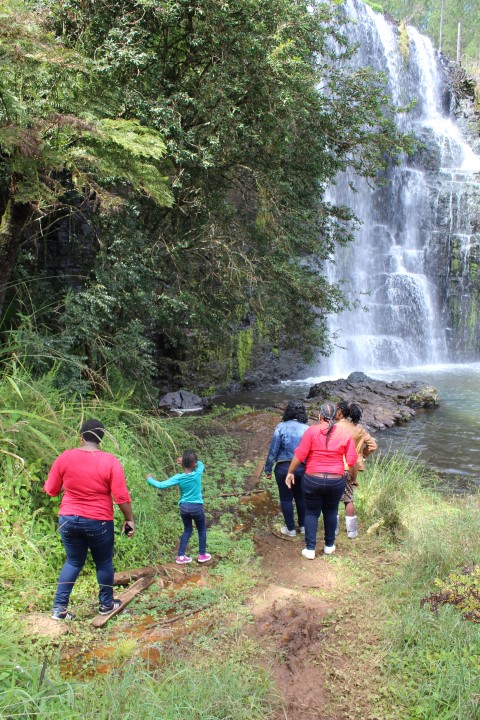
Mr Themba Dubisi, principal environmental officer of the Graskop Environmental Centre, explained to the audience what they could expect from a visit to the centre with a group of pupils and why it was important that a field trip like this should be included in their curriculum. “Getting in touch with nature in a real way which is also full of fun, is part of getting the environmental message across,” he said while leading teachers on a field trip to Forest Falls. He was especially proud of what schoolchildren can be taught in the indigenous forest at the centre.
Mr Matimba Maluleke, environmental officer at the Skukuza Environmental Education Centre, gave a presentation on facilities provided at the centre for pupils and schools and demonstrated how they could go about in securing a field trip. “But you must plan your trip – book in advance! This is a very popular venue,” was his recommendation.