The war on poaching takes on a new face
The war on poaching needs new anti-poaching strategies to address present as well as challenges of the future.
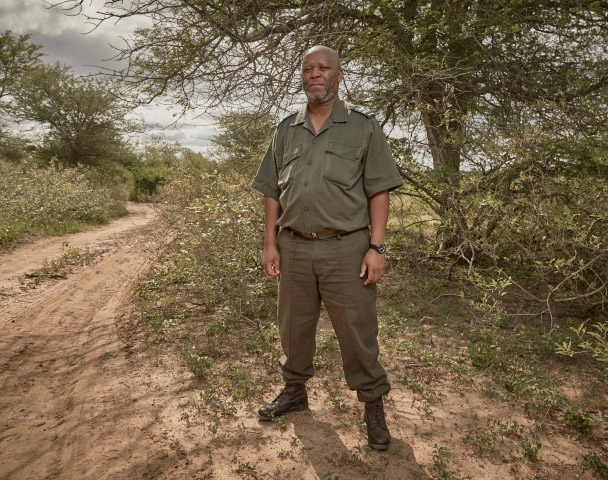
CROCODILE BRIDGE – “A new poaching war has started. We now have to fight rhino and elephant poaching with the same resources.” This was said by chief ranger of the Kruger National Park (KNP), Mr Nicholus Funda, during the Rhino Tears/SANParks Honorary Rangers media tour held in the park last week.
Funda referred to the higher incidence in the number of elephants poached. Projections show that there will be more of these animals poached in KNP at the end of 2016 compared to 2015 figures.
He stressed that this created new challenges as new anti-poaching strategies will have to address both rhino and elephant poaching.
“There are so many decisions to be taken. What do we need? More bodies? More technology? How do you police a boundary that stretches 1 000 kilometres?” he asked.
He referred to 2007 when 200 rhinos were poached in the KNP. In 2015, however, close to eight hundred rhinos were poached. If there is some good news, it is that the figure is stabilising and even coming down. In 2015 one animal less was poached than in 2014 and to date the figures indicate that six fewer rhinos than last year have been poached in 2016.
“What we seem to be doing in the southern part of the park is having a real effect. In the north there are fewer rhinos and that is most probably why elephants are a target. A poacher is a poacher and these may even be the same ones. We have 12 000 elephants in the park. Some would say why worry, but we value every one of those animals,” said Funda.
He referred to several recent experiments to combat poaching like drones. He recommended that an integrated approach be followed to implement new and established policies.
“Poachers change tactics all the time. As a country we cannot afford to not take hands to solve the problem like taking action to reduce the drivers of poaching. We need to disrupt organised crime outside, focus on the areas with high rhino densities and to mobilise resources to address the ever-changing poaching,” Funda advised.
Integrating the human effort with technology as well as with the dog unit should be part of this strategy. “Twenty years ago we thought we can fix this problem on our own, but now we know we need the dogs,” he said.
For Funda the air wing plays an important role. “The pilots are angels. They never complain.”
One of the shortcomings that he identified in the strategy against poaching is that no strong alliances have been formed. “We need the political will to join hands with countries around us like Mozambique and Zimbabwe.”
It heartened him that at present no ranger of the 3 000 working in the park had lost his life in the battle against poachers. He pointed out that this will be demoralising, should it happen.
He is worried about signs of ranger health being at danger in the corps in some sections. Projects have been developed that will make ranger wellness a priority.
With Project Embrace rangers are taken to soccer games of the Black Aces and treated like kings. Mpumalanga Black Aces have committed a R10 000 donation to ranger wellness for any match it wins.
Rangers are encouraged to make use of a psychologist trained in treating stress-related symptoms. The stoprhinocampaign.com and Metropolitan have also contributed to establish programmes that can help with rangers and families that are affected.