The search for the perfect tree
For almost half a century the search has been on for the perfect tree for planting in plantations in the Lowveld. "We're almost there," said Leigh Williams, nursery manager: nurseries and research, SAPPI Mpumalanga
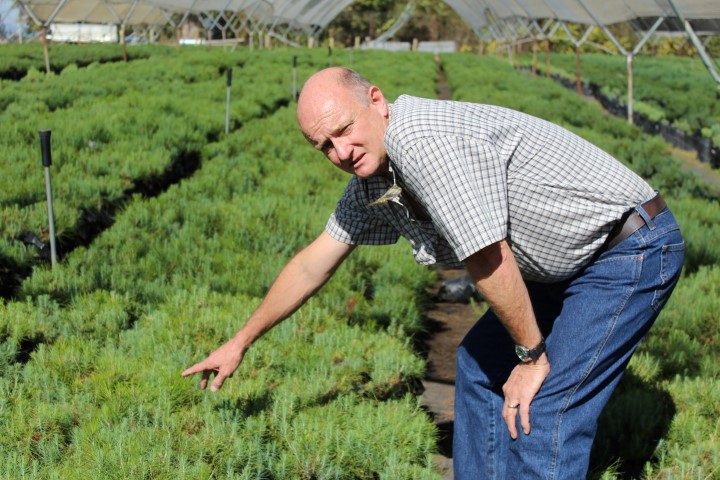
BARBERTON – At the Sappi Escarpment Nursery in the Glenthorpe area near Barberton, three million cuttings are waiting for orders from foresters in the Sappi plantations.

But plant production is not the only function of this nursery. A tree-improvement programme has been implemented over the past 25 years and enjoys all the support of managing director of SAPPI Forests, Dr. Terry Stanger.
Leigh Williams, nursery manager: nurseries and research, Mpumalanga, said the nursery is now 75% on its way to deliver a perfect tree to grow in the Lowveld to meet the requirements of its market.
“During the past few years our research centre and our nurseries have been working on a programme to develop and commercialise Pinus patula x Pinus tecunamanii hybrids as a replacement for Pinus patula,” he explained.

This pine species is indigenous to Mexico. It was introduced to Tokai, Western Cape in 1907, but later grown specifically in the warm summer-rainfall areas of Southern Africa. Pine hybrids are developed to combine desired traits of two species, to exploit hybrid vigour or to increase the adaptability of a pine species to areas which are marginal for the parent species.
“Field tests over the years have shown we are well on our way with the new hybrid,” said Williams. His father is a horticulturalist and he often consults him. Williams started out as a forester in the early ’90s, but soon it was the tree-improvement initiative that interested him.
“Every nursery is a small plantation to me,” said Williams.
He has been driving tree production at the escarpment nursery for almost 15 years. His recipe?
“You need to have respect for how trees and plants grow.”
Selective breeding is a key component of the programme and one of the aims is to increase production per hectare.
The idea is to get fast-growing plantations that allow large volumes of wood fibre to be produced sustainably.

Included in the wish list is to find a solution to large volume-growth improvements, disease and frost tolerance.
Biotechnology tools as well as DNA fingerprinting are used in Sappi’s labs to improve seed production and propagation.
He explained that with conventional tree breeding, new combinations are obtained through controlled pollination.
“Seeds from this pollination process are germinated and planted in progeny trials or nursery hedges. Trees showing best growth are selected for further breeding and later use in commercial plantings,” Williams emphasised.
This is where the nursery plays a major part, where cuttings are set, collected from the strongest shoots of small tree hedges and grown in the seedling “factories” of the nursery. The hedge plants in these tree factories are between one and four years old.
The cuttings are handset into trays to produce roots and then left to grow under controlled circumstances until they are eight to 10 months old and are ready to leave the nursery to be planted in plantations. No growth hormones or fungicides are used in this process.
But this is, however, not the end of the cycle because out in the seedling factory hedge plants, new cuttings are starting to grow and the cycle repeats itself many times over.
A forester and a nursery man’s work is never really finished, and here at Escarpment Nursery there is always that 25% to go towards the perfect tree.