Up to 10 per cent of KNP’s drought stricken buffalo and hippo to be euthanased or removed
The current drought is the worst ever in the Kruger National Park's history. Buffaloes and hippos are currently being euthanased as part of a drought management plan by the KNP's management.
SKUKUZA – The Kruger National Park (KNP) plans to start removing up to 10 per cent of buffalo and hippo populations from the park due to the drought.
Experts in the park are expecting that the drought will ultimately have a massive impact on the future of animal populations as it is quickly becoming one of the worst droughts ever.
The 1991/92 drought halved the buffalo population. The expectation is that, with this drought, mortalities will be even higher.

Under normal circumstances, two to six per cent of animals are removed by either euthanising them or removing live animals to other sanctuaries.
This has now been increased to a maximum of 10 per cent.
Ms Navashni Govender, KNP fire ecologist, at a press briefing this weekend said the buffalo population stands at over 40 000 and that of hippos at 7 500 at present.
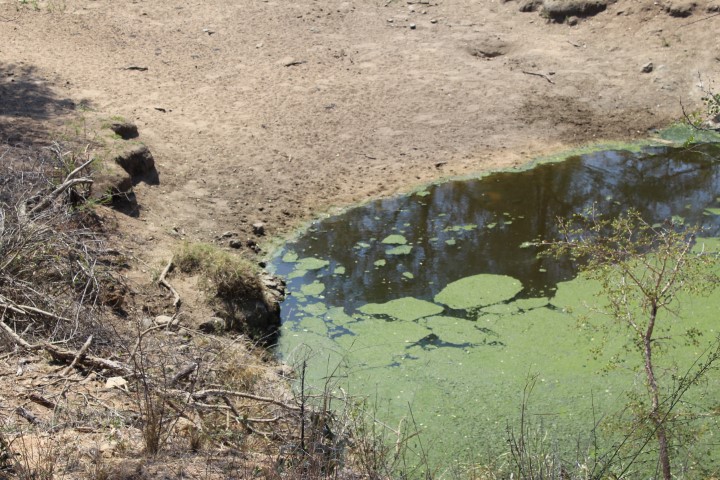
“There are too many hippos for the available pools. We now get calls daily from rangers saying that something should be done to solve this problem.
“The water in these pools become infected with blue green algae because there are too many hippos. The algae can cause disease in other animals drinking the water,” explained Govender.
Two dams have been breached because of this problem.

She said the determination of the removal of the animals is not done by “thumb sucking”, but that the historical growth rates of the animal populations and the condition of the veld are the drivers of the removal process.
“This drought is extremely harsh. It is the worst we have seen,” said Govender.
She predicted that the central parts of the KNP are likely to experience more severe effects of the drought, including more herbivores dying, herbivore movements towards the north and south-west, elephants taking out more tall trees, and woody encroachments becoming more prevalent. Satara is hit by the drought the worst.
There might also be an increase in diseases like anthrax and a higher percentage of animals breaking out of parks.
Some of the live removals will be to honour obligations to trans-frontier parks and to help wildlife sanctuaries.
To this end, animals will be captured and kept in bomas until they can be transported.
Govender referred to the number of days temperatures were higher than 35 degrees in Skukuza, and showed that in the previous massive drought in 1991/92 from July to March, there were 74 days with these high temperatures.
In the same period in 2015/16 there were 122 days when temperatures rose over 35 degrees in Skukuza.
The current KNP rainfall for 2015/16 compared to the long-term average of 500mm is 200mm.
“In a survey in February lots of surface water was still available but this is becoming less and less as the rain stays away,” explained Govender.
Available water is also less due to significantly lower river flow, especially where rivers have been impacted by developments alongside them.
Flow in some rivers, like the Sabie River has, however, improved because the Water Act has been policed more stringently.
“Forage is our big concern. There is no grass in certain areas,” said Govender.
She said the drought may be the cause of death of the savannah and in the long term, there might not be a mixture of grass and trees in the KNP.
Govender emphasised that SANParks’ plan in place to deal with the drought includes stabilising water sources for tourist camps, managing the fresh-water plan that is already in place with the catchment forums, and supporting vulnerable neighbouring communities with action plans to solve water-availability problems.
“Humans used to be drivers in the conservation cycle when they lived among the animal population. We took this away by creating parks.
“By having a humane management plan, especially in times of drought, we are becoming role players again.”