Highest district with most rabies cases in SA in Mpumalanga
The highest density of rabies per square kilometre in the country was reported in the Ehlanzeni-district in 2015. This is bad news for everyone living in this district which includes Mbombela and White River. Almost a million people live in this district.
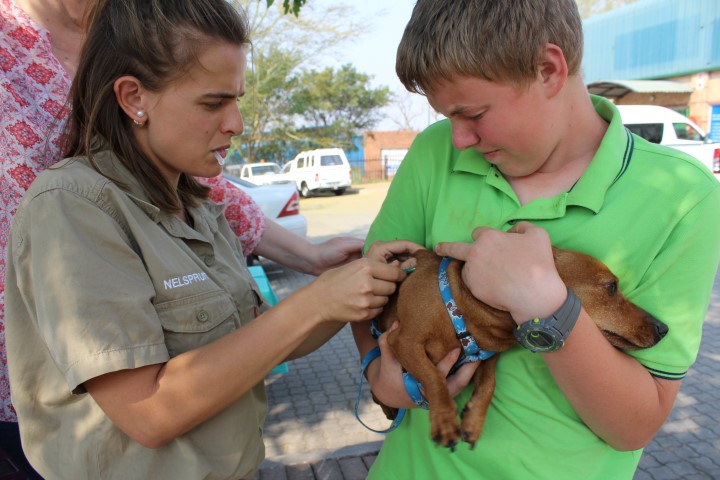
MBOMBELA – Animals in Mpumalanga are at particular risk of contracting rabies. The highest density of rabies per square kilometre in the country was reported in the Ehlanzeni-district in 2015, according to Dr Jacqueline Weyer, head medical scientist, National Institute for Communicable Disease (NICD).
As September was Rabies Awareness Month, a drive to prevent rabies and raise awareness was recently held in Mbombela.
The Nelspruit SPCA and feed company Alzu cooperated with the office of the state veterinarian to hold a rabies awareness day. Animals were vaccinated for free.
More than 200 dog and cat owners made use of the opportunity.
Weyer has found that such control efforts are bearing fruit. Efforts and campaigns to combat rabies have resulted in a steady decline in the number of infected dogs in Mpumalanga over the past three years.
Once symptoms appear, rabies in humans and animals is 100 per cent fatal. It is an acute disease with progressive development.
Human and animal patients usually die within two weeks after starting to display symptoms after being bitten by an infected animal. Symptoms include headaches and fever, irritability, muscle pains, fear of water, a hoarse voice, paralysis and mental disorder.
In 95 per cent of human rabies cases, the cause is a bite or scratch from an infected dog. In South Africa it has been a public health threat for the past 50 years.
Sizeable outbreaks of the disease in dogs have been reported in Mpumalanga, Limpopo, Gauteng and the Free State over the past 10 years. More than 77 per cent of animal rabies cases are currently reported in Mpumalanga, Eastern Cape, North West and KwaZulu-Natal. According to the National Health Laboratory Service (NHLS) a total of 38 human rabies cases have been confirmed in South Africa since 2010. Of these three occurred in Mpumalanga.
Representatives from the Mpumalanga state veterinarian’s office said that in rural areas like those near the Kruger National Park, where domesticated animals cohabit with wildlife, dogs and humans are at particularly high risk. NICD says all dogs and cats should be vaccinated against rabies annually. Consideration should also be given to vaccinating valuable livestock and horses. Any other animal that has frequent contact with humans should be vaccinated.
The NHLS found in research that at least half of the people who die from rabies are children younger than 15.
It is one of the reasons that the department advises that children should be taught not to handle unfamiliar animals. Wild animals should never be kept as pets and precautions should be taken to limit exposure of domesticated animals and humans to them by not letting dogs roam free and spaying or neutering pets to reduce a tendency to roam or fight.
It is also important not to feed or water pets outside if you live close to rural areas as even empty bowls will attract wild and stray animals. Should your pet get bitten by an unvaccinated animal, consult a veterinarian immediately. If the bite is from a stray or wild animal, the Mpumalanga Tourism and Parks Agency (MTPA) should be contacted.
What to do when your pet bites someone
* Seek medical attention for the patient immediately
* Treat it as a medical emergency.
* Contact the health department
* Get your pet examined by a veterinarian immediately
* Report any illness or unusual behaviour to your veterinarian.
What to do when you are bitten by an animal
Step 1: Wash the wound thoroughly with soap and water for at least 10 minutes
Step 2: Apply an antiseptic like ethanol or iodine
Step 3: Contact your doctor immediately
Step 4: Report the bite to the nearest state veterinarian. If necessary, you will be assessed for rabies symptoms. Prompt and appropriate treatment after being bitten and before the disease develops, can prevent a rabies infection.