Astronomer talks about science and religion
He reiterated that science does not prove or disprove the existence of God.
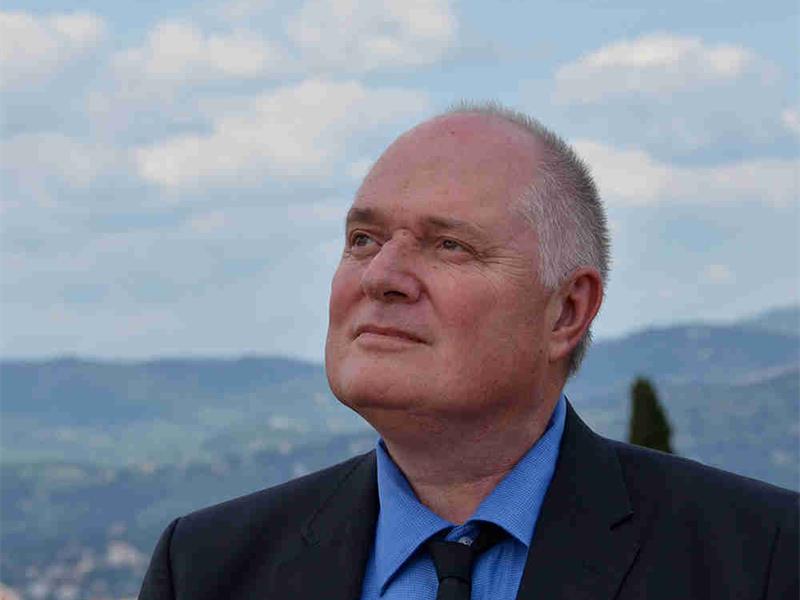
World-renowned astronomer, Prof David Block gave two presentations at the Dutch Reformed Church on Sunday.
In the presentation themed “God and science: The great divide?” he emphasised that there is truth in both nature and the scriptures. He sees it as two “books”: the Book of Nature and the Book of Scriptures, where God is revealed in both.
“There are two avenues of truth; both lead in different ways to truth,” he stated.
According to him the Bible is not a scientific textbook that reveals the truth of nature and theologians have no business in overriding the findings of scientists. An extreme example was the persecution of Galilio Galilei by the church when he pronounced that the earth was not the centre of the solar system.
At the same time, scientists err when they reject the scriptures and proclaim that science can give all the answers. Block referred to those scientists as the “cardinals of scientism”.
Science cannot answer questions such as “Why are we here?” He said atheism should not be masquerading as science.
In the second presentation, themed “Our universe: Accident or design?” he outlined mind-boggling facts and figures about our expanding universe, held together by four forces.
“The universe is extremely fine-tuned and with the minutest deviation, the earth and its living creatures could not exist,” he said and asked how could the existence of the universe, given its enormity and extreme fine-tuning, be accidental.
Once again he reiterated that science does not disprove the existence of God.
In answer to a question about the origin of God, Block pointed out that the origin of the universe was the beginning of time. God exists outside the confines of time and space and is simply there, the “I am” referred to in the scriptures. To imply that God had a beginning was to infer the existence of time before the universe originated.
Block was elected a Fellow of the Royal Astronomical Society of London at age of 19 and his first research paper, on relativistic astrophysics, was published in London, by the Royal Astronomical Society, at age 20.
He has been a visiting research scientist at the Australian National University (ANU), the European Southern Observatory in Germany, the California Institute of Technology, and Harvard University, among others.
He serves as a professor in the School of Computer Science and Applied Mathematics at the University of the Witwatersrand.