Jack the jackal hits the wilds of Nkomazi with special tracking collar
In a world first, Jack the black-backed jackal was fitted with a special tracking collar on Thursday morning before he and five others were released on a private game reserve in the Onderberg.
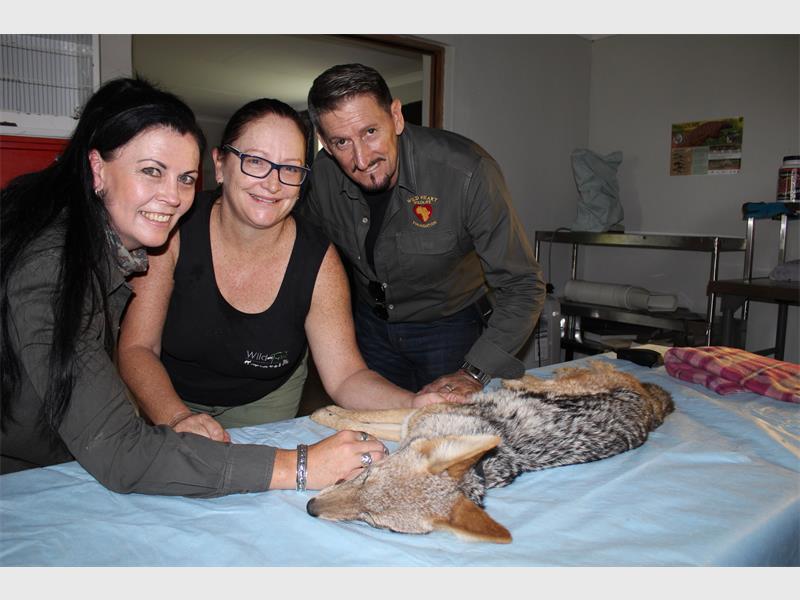
HECTORSPRUIT – Fitted with a special tracking collar, Jack and five other black-backed jackals were taken to their new home on a local game reserve last Thursday.
This is the biggest release the Wild and Free Rehabilitation Centre has facilitated since Deidré Joubert and her team officially started their work two years ago.
READ: Organisation keeps Lowveld’s animals wild and free
According to CJ Carrington of Wild Heart Wildlife Foundation (WHWF), who supplied the collar, the tracker is usually used on rhino to aid in anti-poaching initiatives. This is the first time it has been used on a jackal. Through this project, they hope to improve it for use on other species and gather valuable research on the jackals’ habits.

Carrington explained that jackals have been completely wiped out in certain areas in the country, whether due to rabies or famers killing the animals to protect their livestock.
Jackals are an essential part of the ecosystem. As “cleaners”, they target sick animals and prevent diseases and parasites from being released into the environment. These nocturnal animals are scavengers and hunt small creatures such as mongoose and rodents. When they work in groups, they can even take down antelope.
Jack and his family were rescued from a farm in Secunda in August when they were around three weeks old. WHWF took them to Deidré Joubert, who raised them for the past eight months.
READ: Donation to greatly assist in rehabilitating hurt wildlife
WHWF is active across the country, works with a handful of ethical sanctuaries and wildlife rehabilitation centres and raises funds to provide them with necessary equipment and other materials.
They are a great supporter of Wild and Free and, among others, helped to outfit their clinic.
Deidré then conferred with the state veterinarian, Nkomazi Local Municipality and Mpumalanga Tourism and Park Agency (MTPA) to find the perfect place to release the jackals once they were mature enough and get all of the necessary permits.
The location of their release is kept under wraps to ensure poachers do not try to track them down.
On Thursday, the state veterinarian team, Wild and Free’s vet (Peet Venter), Carrington, WHWF founder Paul Oxton, and Wild and Free volunteers gathered at the centre to move the animals.
It was challenging to catch the evasive animals in the enclosure, weigh and measure them and give them injections against rabies and other diseases, but the team proved very effective. Jack was sedated to fit the collar.

The six jackals were released into the enclosure, where they will stay for three to four weeks to get them used to the environment. The gate will then be opened, but food still provided to enable them to gain adequate hunting skills to survive in the wild.

It was quite an emotional moment for all involved, and both Deidre and the duo from WHWF stated that they were happy to fulfil their personal promise of seeing the animals free and safe.
Watch Wild Heart Wildlife Foundation’s video on the project:
https://www.facebook.com/wildheartwildlifefoundation/videos/423260044885769/
According to Deidré, Jack and his family will be very beneficial to the environment, as authorities suspect few jackals are left in the Onderberg. In certain areas, such as Marloth Park, the population of smaller mammals like mongoose have drastically multiplied due to lack of natural predators.
Deidre, Oxton and a select few will be able to keep an eye on Jack via the cutting-edge tracker. It weighs only 120 grams, which ensures the jackal can move normally, and is solar-powered, with a lifespan of two years.
The jackal’s location is monitored in real-time and the data can be accessed via a phone app and access is strictly controlled.
The tracker will be used to monitor their integration and establish the jackals’ habits and their roaming and hunting range.
The tracker is fitted with a microphone, which can be accessed to hear what is going on around the animal. Certain parameters can be programmed to set off an alert on the monitors’ phones, such as gunshots fired near the animal or if the animal moves very erratically or strangely.
If the collar falls off the animal’s neck, an alarm will be triggered so it can be found and reused for another animal.
Deidré said she has learnt a lot through this project and is excited about the prospect of helping to rehabilitate and release more injured or endangered animals.
To see what Deidré and her team at Wild and Free are up to, click here to visit their Facebook page.