Alexia faces extremely long flight home to Russia
"We are confident that her instinct will lead her home eventually," Douglas says.
WHITE RIVER – A visitor from Russia recuperating in the Lowveld after a serious accident and operation is ready to go back to her homeland.
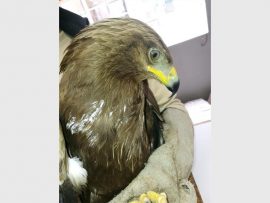
The injured lesser spotted eagle was found with multiple fractures of the ulna near Middelburg and brought to White River in January 2018.
It is suspected that she was hit by a car or could have collided with power lines. “We operated and used pins and external fixation to stabilise the wing,” Dr Carien le Roux of the White River Animal Clinic explained.
As soon as the eagle could be moved, she was transferred to the Dullstroom Bird of Prey and Rehabilitation Centre where Frith Douglas, who previously ran the Second Chance Wildlife Rehabilitation Centre near White River, took over the process.
Also read: Injured crowned eagle is being rehabilitated
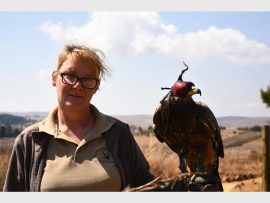
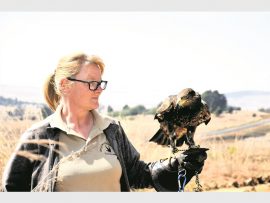
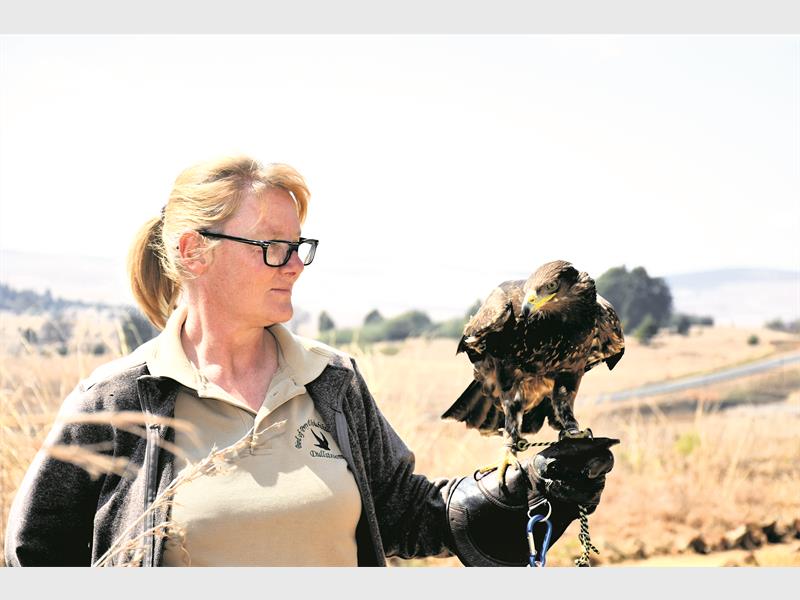
During a recent visit to Dullstroom, the newspaper met the magnificent bird, fondly named Alexia.
Douglas explained that members of this species spend their breeding season (from April to September) in eastern European countries and Russia, but during the northern hemisphere winters, migrate to the warmer climates of South Africa.
After she had originally molted out they started with physiotherapy and fitness training. Molting is the process by which she shed her old, worn feathers to be replaced with fresh plumage.
Everybody was ecstatic because of the way her wing had healed, and hoped that she would be able to fly back once she had completely recuperated from her injuries.
Before that could happen, however, she started to molt again, making it necessary for her to overwinter a second season.
Douglas feels that Alexia is now as ready as can be for the long journey. “We plan to release her in March and her instinct should lead her back to Russia,” she said.
Also read: Artist recognised for her remarkable talent
During her current fitness training, Douglas had already fitted her with an ordinary GPS tracker tested her for her freedom. To their joy she took to the sky and had to be retrieved from a farm about 40 kilometres from Dullstroom.
She added that they would like to fit Alexia with a decent tracker to monitor her. This costs in the vicinity of R15 500, and they would need some sponsorships to make that possible.
“We are confident that her instinct will lead her home eventually.”
• The Dullstroom Bird of Prey Centre is managed by the Wildlifesos Trust and incorporates Second Chance Wildlife Rehabilitation Centre. It is a non-profit organisation and receives no subsidies from government. It relies solely on the generosity of the public and corporate communities to achieve its goals and to remain sustainable.