New worm species found in the Garden Route National Park
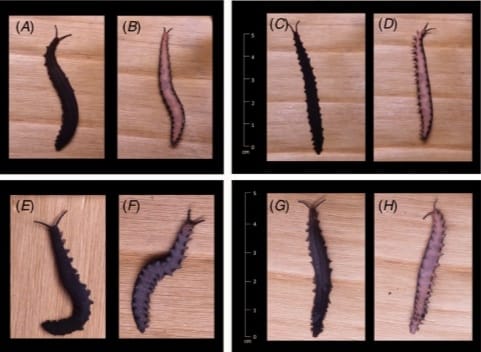
Five species of velvet worms were discovered in and around the Garden Route National Park (GRNP) by independent researchers of the University of Stellenbosch, Aaron Barnes, Till Reiss and Savel Daniels.
Vuyiswa Thabethe, general manager of the GRNP, indicated that the park had received the news with excitement. “Not only are we in the midst of age-old wonder creatures dating back as far as five million years ago, velvet worms thrive in pristine conditions only. Their existence in the forest points to how well the forests are managed under the GRNP. They are healthy and thriving.”
ALSO READ: Lily miners march to Mpumalanga High Court
Areas of study by Barnes, Reiss and Daniels are mostly situated in the GRNP and surrounds, including Diepwalle, Goudveld, Groeneweide, Garden of Eden (Harkerville) and Wilderness (Brown Hooded Kingfisher Trail, Beervlei, Half-collared Kingfisher Trail, Woodville Big Tree). Areas outside the park include the Robinson’s Pass, Witfontein, Jonkersberg, Homtini and Tulbagh.
Velvet worm movement is highly restricted, explained Barnes. “They can only occur and move between pristine forest habitats, living within dead and rotting logs in Afrotemperate forests.”
The purpose of the study was to revise information previously collected through sampling efforts on the Cape species of velvet worms (Peripatopsis clavigera). A study in 2009 collected eight samples only. The recently completed study by Barnes, Reiss and Daniels sustainably collected some 110 odd samples focusing on large forest complex patches and surrounding farms.
Another reason for the study was to understand the evolution of the species.
The indigenous forests of the GRNP present a unique system for research. The park, being made up of scattered patches of protected areas comprising Afrotemperate forests and fynbos areas, are mosaicked between commercial plantations, farmlands and private lands all having different land use practices. This continuously changing open system creates a unique “playground”, attracting numerous researchers, and for discovering new species.
ALSO READ: Couple seeks sanctuary in police station away from mob of alleged assailants
During an extensive fine-scale study of the Peripatopsis clavigera species complex, the Stellenbosch University researchers found that this species, formerly grouped as the Knysna velvet worm, actually comprises five different species that separated during the Plio-Pleistocene over five million years ago.
Researchers expected to find three isolated species at the most in geographically discrete areas. Instead, velvet worms were found distributed among many forest patches, sometimes with different species in the same log.
The fragmented Afrotemperate Southern Cape forests were shaped by ancient climatic conditions, characterised by alternate wet and dry conditions. This had an impact on the distribution of the species as forests expanded and contracted in response.
“That is how they speciated,” explained Barnes. “Populations were likely widely distributed across expansive forests during wet conditions and confined to smaller forest fragments under dry conditions. Being unable to move between these smaller patches of forest, they speciated. The unusual distribution of species that we see today is most likely due to repeated cycles of this process over millions of years.”
ALSO READ: DA pleads with Premier to address water issues
South Africa has two genera, namely, Peripatopsis and Opisthopatus. Peripatopsis occurs majorly in the Cape and Opisthopatus in the northeastern areas of the country, such as KwaZulu-Natal and Mpumalanga.
The Knysna velvet worm, known as the Peripatopsis clavigera, is part of the Peripatopsis genus. The additional species discovered forming part of Peripatopsis include P. ferox, P. mellaria, P. edenensis, P. mira and P. tulbaghensis.
More about velvet worms:
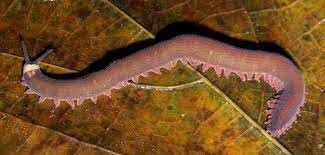
Females have a placenta and give birth to live young who are fully developed. They are nocturnal and ambush predators that mostly prey on other invertebrates. To catch prey, they squirt a sticky slime from a pair of glands on their heads.
Some species have a social structure led by matriarchs, much like elephants, who hunt together and leave a scent for others to follow their whereabouts.
Velvet worms are vulnerable to dehydration because of the way they breathe, which is why their environment has to be pristine and why they cannot move very far.
The species are ranked as vulnerable on the International Union for Conservation of Nature’s Red List.