Mandalas: circles for self-discovery
When was the last time you did something for the first time - for yourself?
Perhaps the pandemic inspired you to make some lifestyle changes involving exercise, start a hobby or practise an art form?
Practising any form of art, visual or otherwise, creates and improves what scientists refer to as functional connectivity. This is defined as the temporal coincidence of spatially distant neurophysiologic events (Friston, 1994). Functional connectivity refers to the functionally integrated relationship between spatially separated brain regions.
An art teacher and art therapist, Deanne Kim of Kaapsehoop asserts that “art and art therapy is a form of psychotherapy that uses art media as its primary mode of communication. “It is a form of psychotherapy which has been well established in other countries, especially the United Kingdom since the 1940s. It is still relatively new in South Africa.”
Clinical studies have shown that drawing mandalas boosts the immune system, reduces pain, lowers blood pressure, reduces anxiety and promotes sleep. Collectively the aforementioned benefits improve physical and mental health and sharpness.
Although psychologists Carl Jung and Sigmund Freud disagreed on some elements regarding human consciousness and their unconscious, it is generally accepted that drawing within a circle creates focus. It is said that Jung recorded all his dreams and then sketched them inside a circle, “It was calming and reflected the unconscious self,” he observed.
Working within a circle, one presumes, protects the artist against scattering and uncontrollable thought patterns which is so characteristic of conscious, subconscious/unconscious anxiety and exuberance.
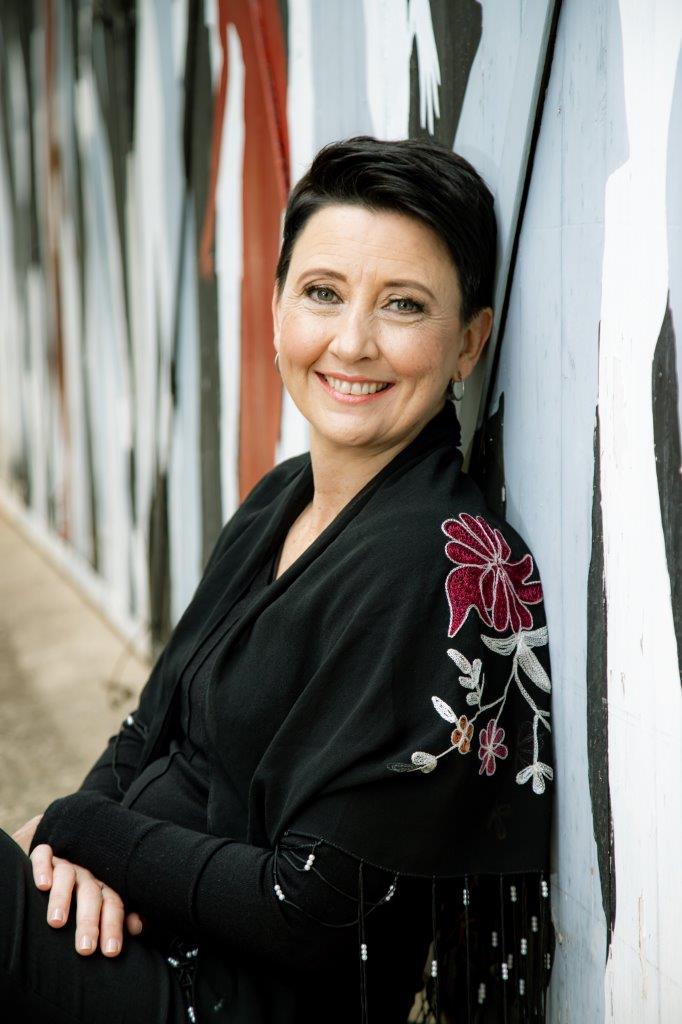
The well-known local mandala artist Liezel Lüneburg has been drawing and painting all her life, but it was only in 2016 that she drew her first mandala. “I have a lifelong fascination for circles and curves. A mandala is a work of patience, of many hours and sometimes frustration, and the constant urge to give up hope of getting it just right. For me, finishing a mandala is a personal accomplishment.
“Over the past decades I have been suffering from dysthymia. One of the coping mechanisms is to compel myself to focus on beauty by constantly searching for and recognising beautiful things, including ideas and abstract concepts. It is interesting to note that beauty is rarely recognised or portrayed in conceptual art and that many contemporary artworks create feelings of unease, angst and even disgust. Notwithstanding this fact, many of my own artworks seek to portray difficult and ugly situations, for instance death or Covid, through a different lens by identifying snippets of beauty in a seemingly never-ending dark space. Thus, I identify a specific theme for an artwork and form an idea in my mind of the general direction the project should follow.
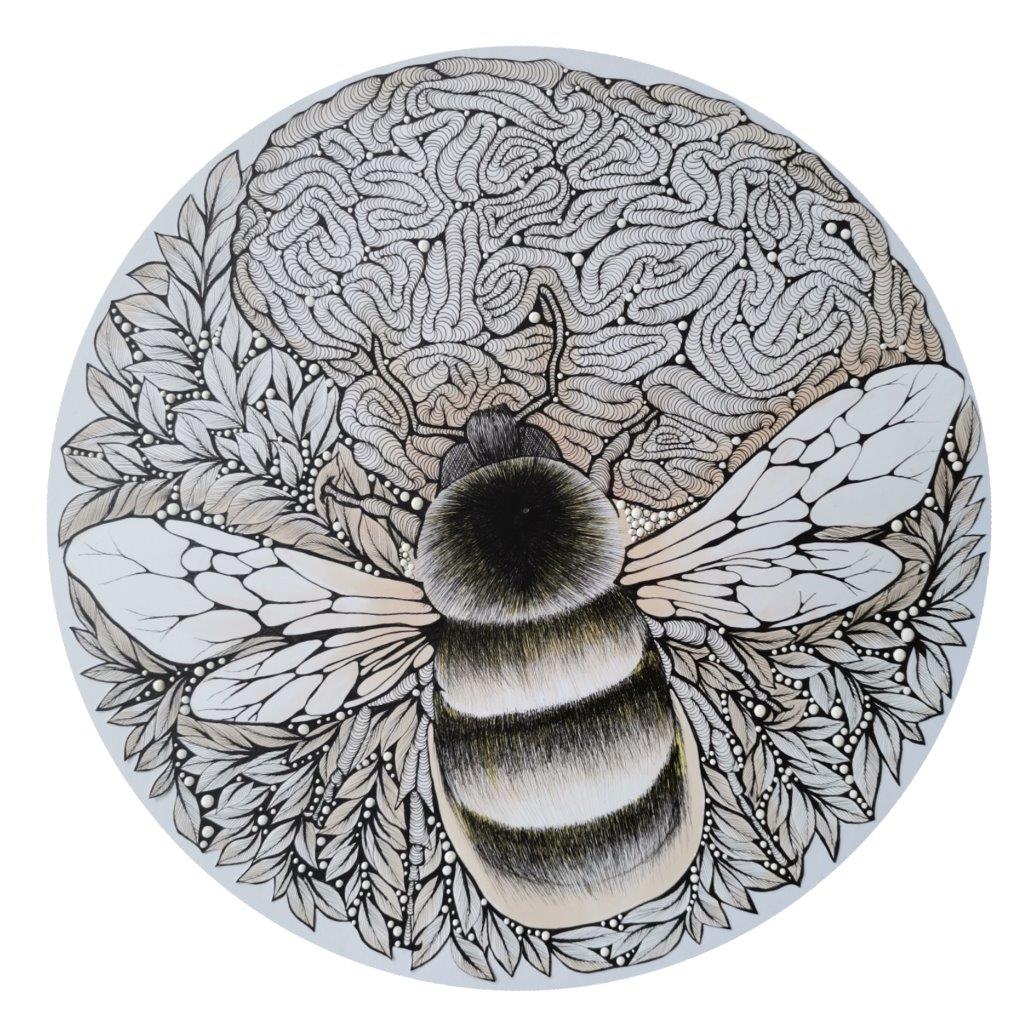
“I start drawing intuitively and never know beforehand what the end product is going to look like. It is always a huge surprise. The creation of a mandala is a spiritual journey, a search for meaning and purpose. It is a window to the soul and exposes subtle footprints of the artist’s emotional struggles, search for meaning and spiritual well-being.
I am a devoted Christian who also writes for Ekerk and I do indeed experience the making of art as a process where I move closer to God and His wondrous creation. A mandala is an object of balance and harmony and creating one brings inner peace and perspective on difficult issues. Now what could be closer to a prayer than the process of creating art and, specifically, a mandala?”
Jung defines a mandala as “representing the dreamer’s search for completeness and self-unity”. It is a Tibetan word and means “that which encircles a centre”. “The centre in this context symbolises meaning and that which encircles it is a representation of the meaning,” said Luneburg. “I have also started to draw more informal artworks that express the symbolic, abstract meaning of a mandala rather than the physical decorative symmetry. I enjoy this immensely!”
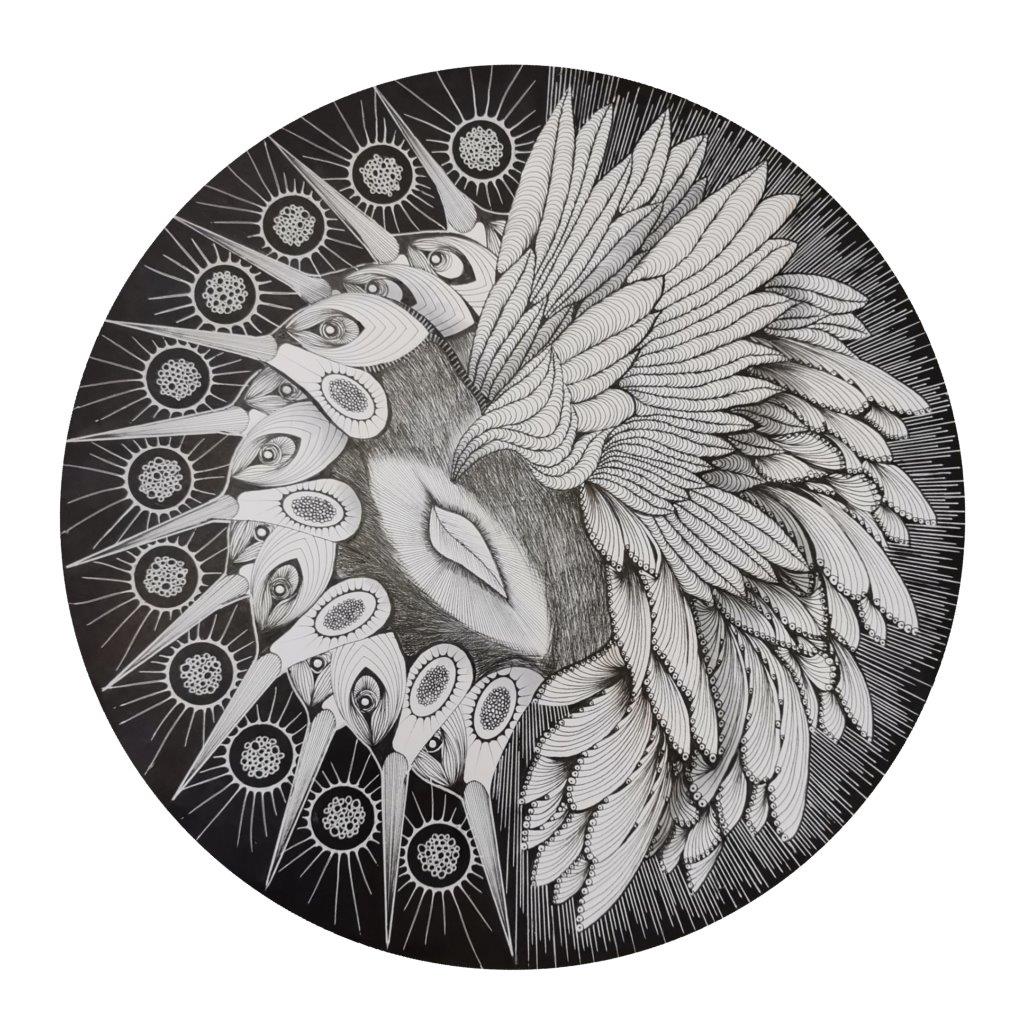
A well-known national geographic photographer once said, “If you are anxious and don’t know where to start, find something beautiful within your surrounds or within yourself, and then add to that.”
Find beauty and express it visually within a circle. After all, Leonardo da Vinci illustrated the human form, one of God’s most intriguing creations, within the circle.
Photos: Liana en Johan of Jolian’s Photography