Petrol price protests in Mbombela: the two sides of the story
During the protest, businesses were unable to open and people were unable to get to and from work. On the flipside, however, taxi operators shared their grievances about the fuel increase and what drove them to ultimately stage the protest.
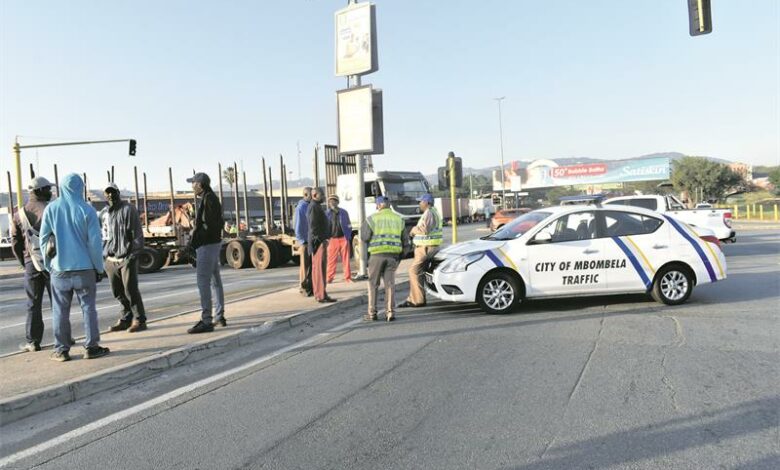
MBOMBELA – The local economic effects of last week’s petrol price protests have been described as “phenomenally disastrous”. This is according to the Kruger Lowveld Chamber of Business and Tourism’s (KLCBT) COO, Linda Grimbeek. She said several businesses have already approached the KLCBT about closing up shop while others have spoken about emigrating.
“Businesses were unable to open. Visitors and tourists were stranded between the Kruger National Park and the blockages, and some people had to sleep in their cars overnight,” said Grimbeek.
“The protest has caused a lot of uncertainty in the tourism industry.”
Grimbeek said staff were unable to get to and from work, and that since most companies operate on a no work, no pay basis, a lot of the casual workers would not have received any pay at all.
“People also had to walk many kilometres to get home. The economic effect is just disastrous, combined with load-shedding and the Delta power outage. It is all just heaping up,” said Grimbeek.
“The frustration people are feeling is immense.”
Gimbeek said the KLCBT had called on National Government to deploy the army for the sake of visibility.
“We hope that if something like this happens again in future, the army would be deployed and we can show our visitors, the world and our own people that they are able to protect the country and restore law and order, and we will not be held to ransom. This is what businesses expect to see and what we hope to see in future,” she said.
ALSO READ: Mbombela reaction officer misses death by centimetres
Meanwhile, one taxi operator who spoke to Lowvelder on Thursday July 7 said one day the people shall revolt against this government, just like the people of Sri Lanka had done. This strike that started last Wednesday morning, July 6, and continued the following day, had left scores of Mbombela residents stranded and without public transport.
Commuters using both taxis and buses had to walk long and tiring distances to get home after they had been left in the cold. There was no transport from Mbombela to the Matsulu, KaNyamazane, KaBokweni, Pienaar, Masoyi and Mahhushu areas. This meant that commuters had to walk from Mbombela to reach their various destinations. The protest by the taxi industry was triggered by the recent fuel hike.
“South Africa is slowly becoming another Zimbabwe. The Government is making us pay R27 for just one litre of petrol, and yet we are made to drive through dense traffic, because traffic lights are off because of Eskom and load-shedding. As if that is not enough, we are forced by this very same Government to drive our taxis every day on these bad roads, filled with potholes everywhere. Those are no longer potholes, but swimming pools.
“I personally don’t remember how many times I have bought and changed tyres because of the potholes. Let me make one practical example: take a drive right now towards the Pienaar and Emoyeni Mall Road and come back and tell me how many times you are willing to drive there. Well, for some of us, we drive there daily,” said the angry taxi operator.
He said they understood that their protest was not enough to send the message across, but still, they wanted to make a statement. “It is no longer about petrol, but about our everyday bread and butter. Everything is expensive now and soon we will be forced to increase our taxi fares, and this would be killing our already strained passengers who can’t afford to even buy cooking oil. I swear to you, one day the people shall revolt,” he said.
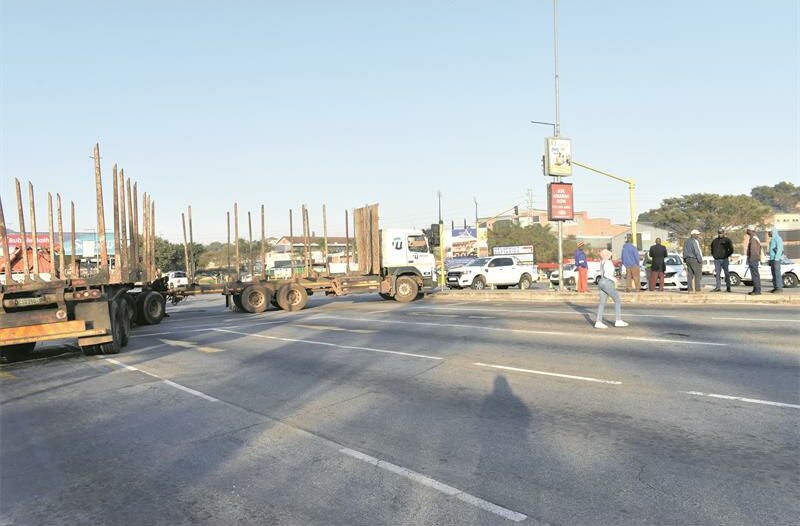
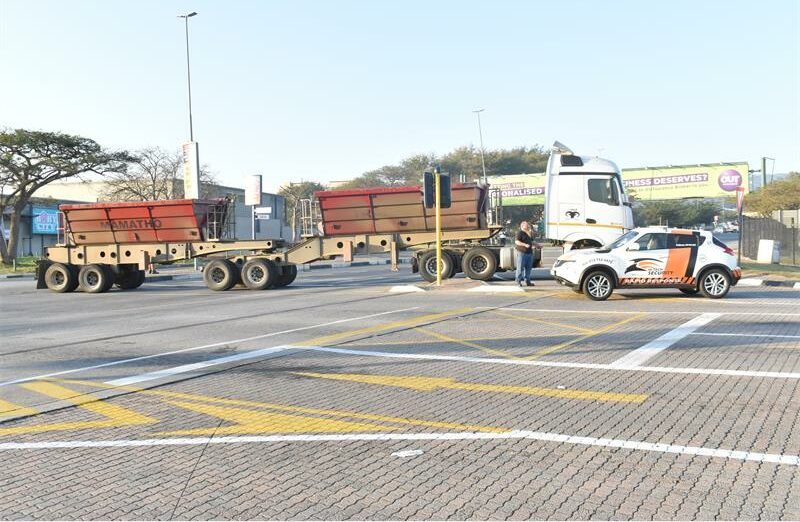
On the days of the protests, the taxi operators blocked the main roads with heavy-duty trucks, making it difficult, or at some places even impossible to enter and exit Mbombela. Some of the protesters who spoke to the paper, threatened to continue their demonstration until the Government offered a workable solution to what they termed absurdly high fuel prices.
ALSO READ: Emotions overflow as deadly bridge on R37 is discussed
Top Star Taxi Association’s chairperson, John Mavundla, said when the time comes, they would support the national call for a countrywide shutdown and would gladly participate. “It would be great if the general public can also support such a shutdown, because this doesn’t only affect us as the taxi industry, but everyone else,” said Mavundla.
The petrol price for both 93 ULP and 95 LRP increased by R2.37 a litre. This will see motorists paying just over R27 a litre, a record-breaking price for South Africa.