Mpumalanga professor explains flood impact on Kruger Park
A Mpumalanga professor explained that animals can sense when they need to migrate, but can be in danger when they move too late.
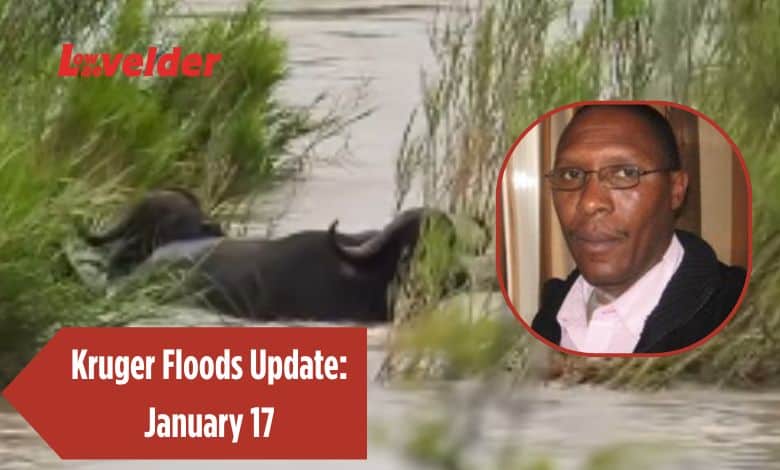
The Kruger National Park is known for the Big 5 and its beautiful landscapes that attract tourists from all over the world, but the recent floods have raised questions about the animals’ safety.

Lowvelder took the initiative to find out more about the effects of the flooding on wildlife and nature by speaking to Prof Wisemen Chingombe, a specialist in physical geography and biology, and environmental sciences, at the University of Mpumalanga.
ALSO READ: Kruger Floods Update: Phabeni Gate at risk of closure
He firstly acknowledged that floods can be both destructive and constructive.
“Animals, just like humans, have homes and habitats and can sense when they need to move to higher ground. However, if flood water moves at a rapid pace, it can catch up with wildlife and potentially sweep them away,” he explained.
He also added that animals get traumatised and disoriented when they are forced to move to higher grounds. The other risk during these floods are that animals can move into human settlements, and this could be problematic and life-threatening to humans.
“The affects on nature are also worth noting since many trees get uprooted, which weakens the soil and the land becomes degraded,” Chingombe added.
According to him, floods are beneficial to ecosystems. “When wildlife gets swept away it paves a way for younger animals to move into new habitats.” He admitted that younger and older animals battle more often during heavy floods. Increased seed distribution is another benefit as it results in lush and green vegetation for herbivores to feed on.
@lowvelder
JP Louw, SANParks spokesperson, also shared his views on the improved ecosystems. He shared that although some animals might not survive, it forms part of the circle of life and gives predators and scavengers a chance to feed on those animals.
ALSO READ: Kruger floods wrap-up: Here’s what you need to know
From a climate point of view, Chingombe concluded that the heavy rains in the Kruger National Park are not due to a tropical storm, nor a cyclone. He explained that most of the rain recorded in the park originated from Mozambique, with floodwaters occurring in the low-lying areas of Mpumalanga and Limpopo.
Therefore, members of the public do not need to worry about building an ark and can rest assured that most animals are on safe grounds.