Border control launches advanced Easter holiday plan
The BMS's Easter operational plan is structured into four key phases that include planning, execution, demobilisation and sustenance.
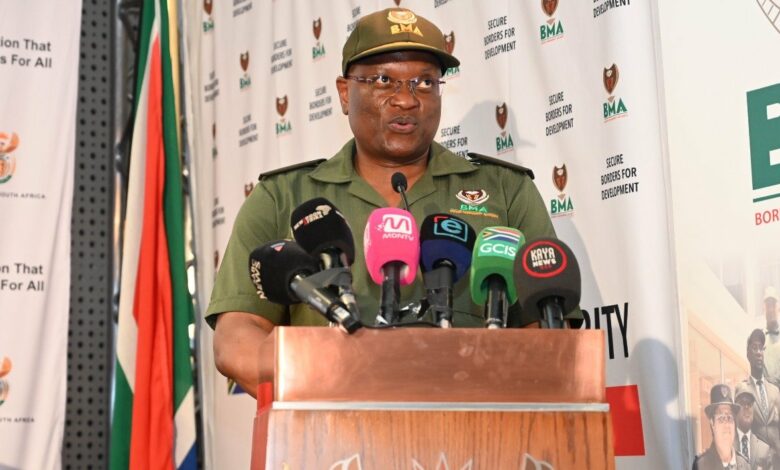
The commissioner of the Border Management Authority (BMA), Dr Michael Masiapato, said the 2026 Easter Operational Plan is aimed at ensuring the efficient, secure, and seamless movement of people and goods across South Africa’s 71 ports of entry during the Easter period.
Planning phase
This phase commenced at the tail end of the 2025/26 festive period, specifically on February 5, 2026, and ended on March 30.
The BMA partnered with the Department of Social Development to tackle the cross-border social protection challenges, particularly the safeguarding of minors and vulnerable travellers, including those without requisite travel documentation and victims of trafficking.
Masiapato welcomed the continued partnership with the Department of Tourism in which over 160 tourism safety officers were deployed to enhance the seamless movement within port premises.
“With regard to infrastructure augmentation, the Department of Public Works and Infrastructure through its continued support, will provide temporary lighting, ablution facilities, barricades and JoJo water tankers to enhance conditions within the ports of entry and transit corridors,” he said.
ALSO READ: Border baby: SAPS and customs officials deliver newborn at Lebombo Port
Execution phase
This phase will run for a period of ten days commencing on Tuesday, March 31, and ending on Thursday, April 9. It is divided into two segments, the departure leg from March 31 to April 4 and the arrival leg from April 5 to 9.
Peak travel volumes are expected on Thursday, April 2 for departures and on Easter Monday, April 6 for arrivals. During these peak periods, traveler volumes may exceed 25 000 per day at the busiest ports of entry.
He said the authority will implement heightened deployments, increased processing capacity, streamlined border checks and reinforced security to facilitate safe and efficient movement while preventing illegal activities. Priority will be given to the elderly, persons with disabilities, and adults travelling with children.
Demobilisation phase
This phase will commence on April 10. It will focus on the structured scaling down of operations, resource reallocation, and post-operational assessments to evaluate effectiveness and identify areas for improvement.
ALSO READ: Lebombo Border back to normal after holiday rush
Sustenance phase
Following the Easter operations, the BMA will sustain heightened operational awareness through continuous monitoring, evaluation and adaptive planning, including preparations for the 46th Southern African Development Community Ordinary Summit of Heads of State and Government in August.
Key operational measures
Masiapato said there will be intensified detection and proper processing of undocumented travellers, strengthen access control and enforce strict compliance with immigration requirements.
All travellers must present valid machine-readable passports with at least two blank pages and comply with visa conditions. Parents travelling with minors must present required documentation.
High-risk areas will be closely monitored through coordinated law enforcement operations. Any individual attempting to enter or exit the country illegally will face arrest and prosecution in line with the Immigration Act 13 of 2002.
On port health, travellers from yellow fever-endemic areas must present valid vaccination certificates. Travellers carrying health-related goods must declare them on arrival.
On agricultural and environmental biosecurity, the importation of plants, animals and related products requires proper certification. Non-compliance may result in fines or imprisonment.
ALSO READ: Festive travel to Mozambique prompts NATJOINTS inspection at Lebombo Border
Proactive measures to curb corruption
The BMA will utilise technology such as drones and body-worn cameras to deter corruption. Anti-corruption awareness initiatives led by the Special Investigating Unit continue to educate officials on the consequences of corrupt practices.
Members of the public are encouraged to plan their journeys in advance, comply with all legal requirements and cooperate fully with border officials. Suspicious activities and corruption can be reported via the toll-free number 0800 122 9 019 or the SAPS Crime Stop number on 08600 10111.