
Satellite data reveals mixed elephant impact on Kruger trees
Researchers found that elephant pressure is greatest along river zones in Kruger National Park, where it can prevent young trees from maturing.
By Dr Corli Wigley-Coetsee, South African National Parks (SANParks) scientist for vegetation dynamics
Are there too many elephants in Kruger National Park? Trees may help answer that question. Understanding vegetation change across almost two million hectares is challenging, but tagged trees and satellite technology show where elephant impacts are greatest.
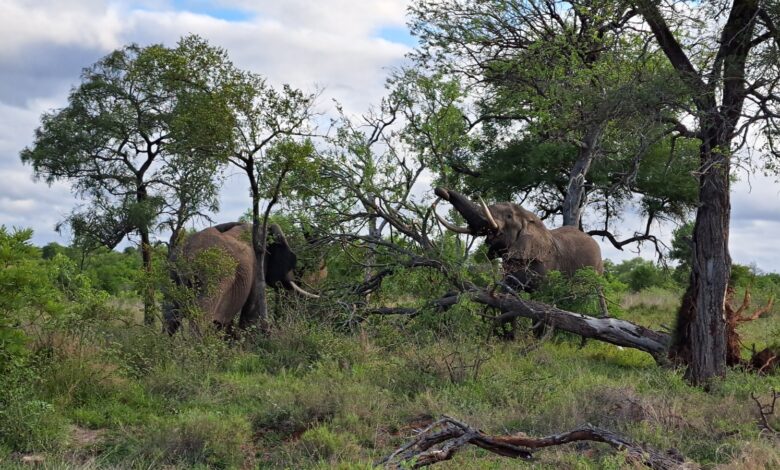
Elephants kill trees through pruning, debarking, pushing them over or snapping stems.
Severe damage can weaken trees, making them vulnerable to fire and drought. Large trees are easier to monitor, but most of Kruger consists of smaller shrubs that are difficult to track individually.
Not all trees are equally attractive to elephants. Some species, such as sjambok pod and tree wisteria, are mostly avoided.
Others, including silver-cluster leaf and red bushwillow, are indigenous encroaching species that can withstand disturbance by resprouting after damage. Highly preferred species, such as marula and knob thorn, are more vulnerable.
They often grow slowly, have single stems and struggle to replace damaged branches or stems.
Study tracks tree loss across 31 areas
To understand these changes, SANParks scientists worked with researchers from national and international universities and institutions. Rangers and conservation practitioners identified 31 areas where woody cover had declined and elephants were considered a possible cause.
Scientists then used GEDI-fusion remote sensing data to measure changes in woody cover and height between 2007 and 2022. GEDI is a NASA laser-based system measuring vegetation structure from space.
ALSO READ: New SANParks tender revamps KNP restaurants
The results showed declines in woody cover in 19 of the areas where current elephant impacts were identified. Most also experienced declines in trees taller than 5m.
However, the results did not show a park-wide decline in woody vegetation. About a third of Kruger experienced increases of at least 2.5% in woody vegetation.
River zones face highest pressure
ALSO READ: Project Blood Orange: R5.8m in assets seized from alleged rhino poaching syndicate
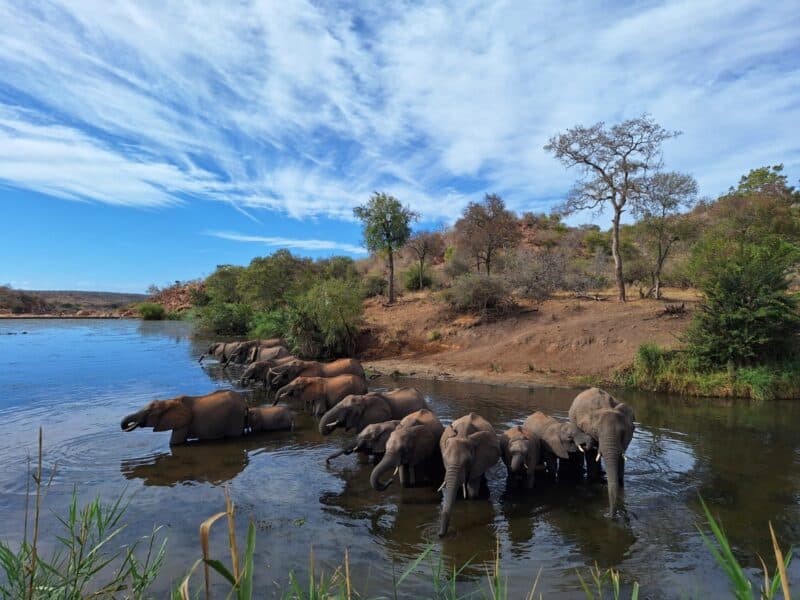
Elephant impacts are particularly strong along seasonal rivers, in areas affected by intense fire and along perennial rivers where flooding removes established trees. In flood-prone areas, elephants can prevent young trees from growing into mature trees by heavily browsing seedlings and saplings.
Kruger’s vegetation is becoming more varied, with some areas losing large trees while shrubs increase elsewhere. Large trees provide shade, habitat and nesting sites.
So, are there too many elephants? The answer is yes and no. Elephant pressure is too high in some vulnerable areas, while other areas are becoming increasingly shrub-dominated.
Targeted, flexible elephant management can protect vulnerable large trees while maintaining a resilient, biodiverse Kruger landscape.