

MBOMBELA – “Be fair, Lowvelder, and print what really happened.” This was the closing line of a reader’s letter in reaction to court reportage on the Louis Stephanus Neethling culpable homicide case.
Neethling was killed in a Barberton bar in April this year. The suspect, Anthony Cornelius, was not found guilty in court.

The letter writer felt the paper should have approached the story differently. “The police did not do their job properly,” she alleged. She felt that the court proceedings were a dud. Yet, the available evidence did not link Cornelius to the crime.
In 2013, a well-known principal was accused of possessing child pornography. Although many community members knew that the accused was Neil Malherbe, Lowvelder did not publish his name in connection with the allegations until July 16, 2015, when he pleaded. He was eventually found guilty.

Again, readers were baffled. “Why not just name him?” they asked. The Criminal Procedure Act dictates that the media may only name the accused in sexual offence and extortion cases after they have pleaded to the charges. That was why.
About a month ago, singer Jennifer Ferguson alleged that sports mogul Danny Jordaan had raped her 24 years ago. Caxton’s community newspapers – of which Lowvelder forms part – did not identify Jordaan, although Ferguson had publicly named him on Facebook.

This has triggered some debate on when a suspect or an accused’s identity should be revealed by members of the media. Whether details of a crime investigation should be published out-of-court context also became a hot topic of discussion.
Constitutional law expert, Pierre de Vos recently pointed out that an accused’s right to a fair trial does not bind the media. That is correct, but the media is bound by another constitutional right in reporting. That is the accused’s right to dignity, which is protected by the defamation law.
Defamation is the publication of content that tends to injure someone’s good name without justification.
Let’s get one thing straight: defamation in itself is not wrong. Newspapers defame all the time. It happens when I expose a municipal manager’s fraudulent transactions and when I report on a criminal case. The subject’s good name suffers as a result of my reporting. Yet there is nothing wrong if I can prove that what I wrote was the truth and in the public’s interest. However, the person incriminated must be offered the opportunity to comment.
Defamation is wrong when it is not justified. This may come as a result of irresponsible journalism. In 1998, the Supreme Court of Appeal added another defence to a claim of defamation – that of reasonableness. It enables reporters to evade liability for defamation by proving they had acted reasonably in gathering and publishing a defamatory statement. A large part of responsible journalism deals with obtaining evidence of allegations.
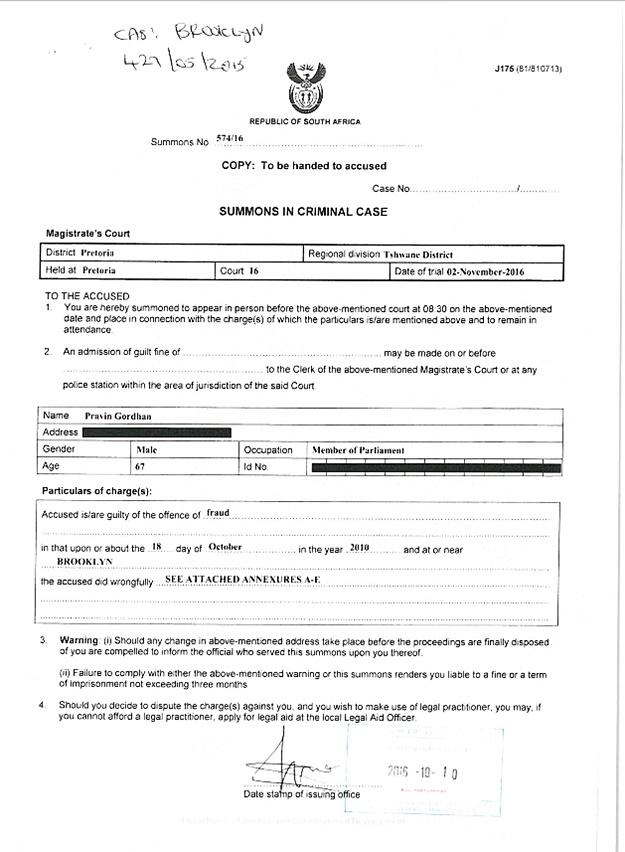
When dealing with allegations against an alleged fraudster, for example, this entails gathering documentary proof and confirming with the police whether a criminal case has been opened against the alleged wrongdoer.
Since the dawn of social media, users have increasingly posted criminal allegations onto platforms such as Facebook.
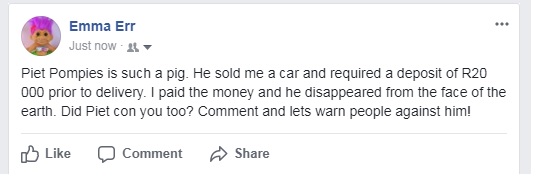
They name and shame persons they consider guilty of having conned them. Some expect the media to follow up on their online allegations, yet never open cases at the police station. This means that the incident is not reflected on the public record. Without sufficient proof, the media would be irresponsible in covering such stories.
What the media reports on must be true and in the public interest. If, for some reason, it later transpires that the published facts were untrue, the media must be able to prove that they had acted reasonably in confirming the veracity thereof. The mere existence of an allegation on social media will not suffice. Its evidentiary value is simply too low.
Reporting on criminal allegations is a juggling act. No two scenarios are the same, and it takes great skill from journalists who seek to uncover the truth while doing so in a legally justifiable way.
The Criminal Procedure Act bars reporters from publishing content that may influence the outcome of an ongoing trial. Doing so amounts to contempt of court. If such information is published prior to a trial commencing, the publisher may be accused of obstructing justice.
These are criminal offences, and may result in the journalist responsible being jailed.
In considering this, a journalist’s ethical decisions must be justifiable by South Africa’s media law and the Press Code. Press Ombud Johan Retief recently said a journalist’s adherence to the Press Code should come from his striving to live so unimpeachably that the law becomes part of his daily existence.
The regulations that apply to the media are not merely a filter distinguishing between good and bad, nor is it a tool according to which people are to be limited and convicted.
Our laws and Press Code are the media’s saving grace. In accordance therewith, the media voluntarily regulates itself. It means that the media functions freely, without duress from government or any other bodies. Those who embrace the regulations that bind them, report responsibly and without fear.
While reporting on crime and court proceedings, the Press Code states that journalists must do so in a balanced, objective way. No person should be classified as a convicted criminal until he has been convicted in court.
Allegations made in court are to be reported on in context. The context of court proceedings is what permits journalists to repeat allegations, even if these allegations are defamatory, without obtaining comment from the defamed party.
There are circumstances where overwhelming evidence exists against an accused, yet that person is not found guilty. In such cases, journalists are not barred from reporting accordingly if doing so will be in the public interest.
The comment of the incriminating party must be sought prior to publication. This ensures balanced reportage.
According to Retief, the media’s adherence to the rules that bind it, is “the media’s only way forward”. In an online era where fake news is everywhere, the media’s self-regulation and adherence to rules will contribute to its credibility. And if the media is not credible, it fails.



