Family discovers strange species in their swimming pool
A Lowveld family discovered a frog that is, according to the experts, not supposed to be here.
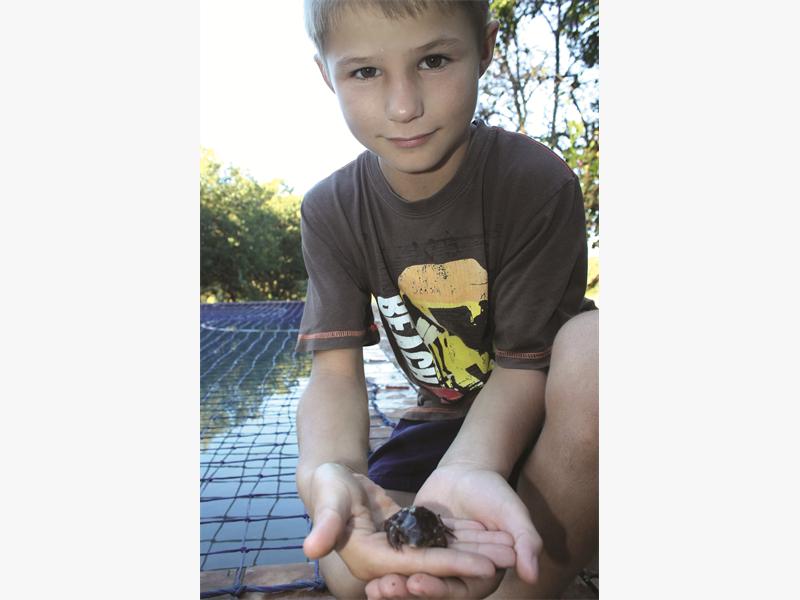
WHITE RIVER – It was after young Brent de Villiers (9) had rescued the fifth strange-looking creature from their swimming pool that Judy’s curiosity drove her to find out what it was. Little did she know that she would soon be trying to find a lift for a frog to Northwest University, almost 500km away, in order for DNA testing to be performed.
“We find these frogs in our pool after heavy or prolonged rain,” she explained. Its pointy features and round little body prompted her to buy a book on frogs and identify the species. What she found, however, was that the spotted shovelnosedigger (Hemisus guttatus) or “gespikkelde graafneuspadda”, which most closely resembled their frog, did not occur in the Lowveld. In fact, according to all records, it’s only habitat was a small stretch of wetland on the KwaZulu-Natal north coast.

With this information to hand, De Villiers contacted Prof Louis de Preez at UNW, who, upon seeing the photos, remarked, “I almost fell on my back when I saw this!” On Friday, Brent rescued the latest of these frogs from the pool and they kept the specimen at his request.
Du Preez wants to perform DNA tests on the tiny creature to determine whether it is indeed this species, or perhaps even a subspecies or new one.
Until the amphibian can be transported to Potchefstroom, the family have to keep and feed it. “She is kept in moist soil on our kitchen counter and comes out at night to feed,” said De Villiers. Brent and his younger sisters gladly volunteered to take on the role of insect catchers for their frog. “We have a lot of frogs here,” Brent relayed, mentioning the many “frog faces” that peer out of holes in the garden at night.
Their mother concurs, adding that the amphibians are also regular visitors in the house. The family home is bordered by natural wetlands to the north of town, which accounts for the abundance of frog life. And, says De Villiers, they wouldn’t have it any other way.
According to Prof du Preez, a zoologist who holds a PhD in amphibian parasitology, this is a vulnerable species. Lowvelder could not confirm the significance of this find with Du Preez at the time of going to print.
The frog was on its way to Johannesburg on Wednesday afternoon, and should reach Potchefstroom by late Thursday or Friday.
The discovery of this species in this wetlands area may be significant in terms of the proposed road, the P166, a western by-pass around White River.
An Environmental Impact Assessment in terms of this proposed development is currently under way. De Villiers said that she had contacted the environmental consultants involved in the project with news of her discovery. Lowvelder will notify residents of the next opportunity to comment on this matter as an interested or affected party.
https://youtu.be/QAdR1-HZcBo