Organisations, stakeholders and the community came together to fight against Gender Based Violence
Women and girls cannot continue to be abused and killed for no reason
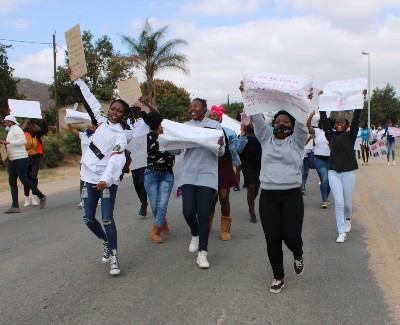
Having had enough of gender-based violence (GBV), young men and women made their voices heard as they took to the streets on Friday in a bid to raise awareness about this scourge.
Organised by the Touch a Million organisation and Sentamehluko Foundation, this peaceful march attracted the attention of young men who sang revolutionary songs and waived placards bearing different messages such as, “Enough is enough” and “A woman is no punching bag”.
The march kicked off at Maphakama High School to the BBC Church where the dialogue was hosted.
Prince Hlatshwayo, founder of Sentamehluko Foundation, started off the dialogue by encouraging men to become more involved in the fight against GBV.
“Women no longer feel safe around us. They see us as animals because of all the brutal killings and abuse going on around the country. Every one of us here today needs to do our part to help alleviate the scourge. If you know of a friend, brother or an uncle who is abusing women and children, do not be afraid to speak out and report them. The cycle needs to be stopped,” Hlatshwayo said.
ALSO READ: Lowveld runners run in aid of GBV
Shirley Khoza of Touch a Million encouraged young girls and women to speak out against it. “As women it is important to speak out against GBV. Silence is not an option.
“The perpetrators need to be punished. Women and girls cannot continue to be abused and killed for no reason,” she said.
Community members engaged in a dialogue in which they discussed how men can be involved in the prevention of violence against women and children and how to mobilise social change and implement community-based interventions.
A forum was established which will comprise Touch a Million, Sentamehluko Foundation, GRIP, Laapeng Foundation, Sanca, the Government Communication and Information System and general
members of the community.
“This forum is to strengthen the collaboration between government institutions, civil society, the private
sector and development partners to prevent and respond to violence against women and children,” Khoza concluded.