
Baby measles: What’s that spot you’ve got?
When it comes to baby measles, all symptoms of the rash and irritability should clear within about five to seven days of eruption of the rash.
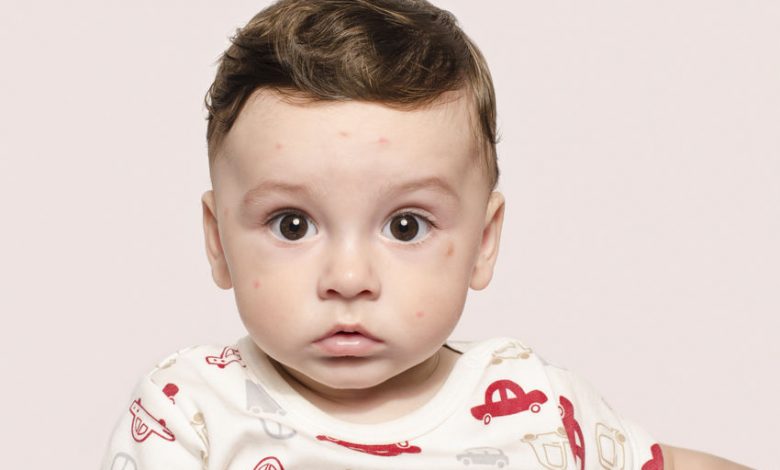
Hearing your baby has measles sounds scary, but it’s not as bad as you may think. In fact, roseola infantum – also known as baby measles – is harmless and parents don’t need to be concerned, says clinic nurse and childcare expert, Sister Lilian.
What is baby measles?
Baby measles is a contagious viral baby illness, a bit like the other contagious childhood illnesses, and is often mistaken for either measles (Rubeola) or German measles (Rubella). Babies usually contract it between six months and two years (more commonly in the first year), whereas measles and German measles are more likely to occur in older toddlers, pre-schoolers or pre-adolescent children.
Not sure if your little one has baby measles? Look out for the following symptoms:
4 Signs of baby measles
- Baby measles starts quite suddenly with a high temperature which usually lasts for about three days. Strangely though, there seems to be nothing really wrong with your baby.
- Your little one’s temperature peaks to very high levels with Roseola, often tipping the mercury at 39°C and 39.5°C. After about three days, the fever suddenly breaks and at about the same time, a fine pink rash erupts over your baby’s torso and just encroaches onto the upper arms and thighs.
- During this time, your baby is usually very irritable and his behaviour and appetite are far more likely to be disturbed than during the fever stage.
- All symptoms of the rash and irritability should clear within about five to seven days of eruption of the rash.
How to treat baby measles
There’s no real treatment for baby measles, but use these tips to keep your child’s fever under control:
- Undress your baby and keep only his vest and nappy on.
- Cool the room by opening all the windows and switch a fan on. Don’t put your little one in a draft though.
- Wrap cool wet linen cloths around your baby’s legs and arms, changing them every couple of minutes.
- Place a face flannel with ice blocks on the nape of your baby’s neck or forehead.
- Bath your baby in tepid water – not cold.
- Increase your baby’s liquid intake.
- Use a homoeopathic fever support treatment like Fever drops or the tissue salt remedy called Ferrum phos during the day. This will not break his fever but will help the body deal with the underlying infection more rapidly and often prevents the need for other medicine.
- Avoid giving small babies and children aspirin. Paracetamol-based medication is safer.
- To help baby through the itchy phase, add a pot of Rooibos tea and a handful of bicarbonate of soda to his bathwater and apply a calendula-based cream to soothe the itch. Keep up your baby’s fluid intake but don’t force him, to eat if he doesn’t want to.
Rubella, Rubeola and Roseola
What is Rubella (German measles)?
Rubella is a highly infectious viral disease which mostly affects children, adolescents, and young adults, and is spread by airborne droplets. It is a fairly mild disease and only a slight risk of secondary encephalitis exists. Your child will feel a bit under the weather for 10 days to two weeks before the rash appears. Many outbreaks are so mild as to go unnoticed. The tiny pinkish-red spots of Rubella look more like a patch than individual spots, and they can first be detected behind the ears and on the forehead, thereafter spreading to the rest of the body. The rash passes after two to three days. Swollen lymph glands can be detected in the nape of the neck. A rise in temperature of up to 38¡C is common, but consult your doctor should it increase. Be on the lookout for signs of a headache and a stiff neck, then seek medical help immediately.
What is Rubeola (Measles)?
Measles is a highly contagious viral disease, mostly without serious complications. The measles virus spreads by small droplets from the nose, throat or mouth of an infected person. Symptoms like a runny nose and coughs occur during the incubation period, which is between eight and 12 days. Your child’s temperature can rise to 40°C, and he might complain of a headache at this stage. Small, white spots on the inside of the cheeks, called Koplik spots, will confirm the diagnosis of measles. Your child will probably also experience sensitivity to bright light and the eyes will be painful and red. After about three days, a brownish-red rash begins behind the ears, which soon spreads to cover the face and the whole trunk.