
Five rescued baobabs travel to Timbavati reserve
After months on hot harbour tar in Durban, five uprooted baobabs are making the long journey home on abnormal-load trucks.
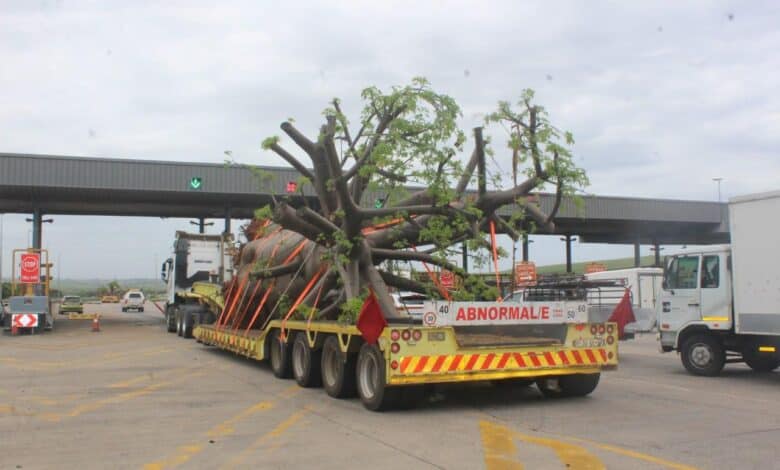
Five baobab trees removed from the Waterberg region of Limpopo and later found in Durban are being transported to a Timbavati reserve on November 17.
The trucks transporting the trees left on time yesterday morning. En route to Limpopo, the trucks are arriving in Lydenburg to get transport permits. However, there have been some delays and the trucks are now expected to pass through Lydenburg later today.
The trees have been at the centre of an investigation into their removal from their natural environment and an attempted export. The exact circumstances surrounding their removal remain under investigation by the Department of Forestry, Fisheries and the Environment (DFFE).
Authorities allege illegal export plot
According to authorities, the baobabs were allegedly planned to be exported to Georgia. A horticulturalist and exporter from Pretoria, Corné Maré, allegedly aided in the operation. Maré appeared in Durban Magistrate’s Court in September and the case has been postponed to January 2027.
DFFE was notified of the five baobabs at Durban harbour, where they have been lying on the hot tar in a parking lot at the Africa Global Logistics warehouse in Mobeni. According to the DFFE, the five baobabs were ‘intercepted’ on July 17 when Maré allegedly failed to produce a valid licence for their removal, possession, transport or export.
ALSO READ: Kruger National Park hosts symposium to spotlight ancient cultural heritage
Baobabs show signs of recovery
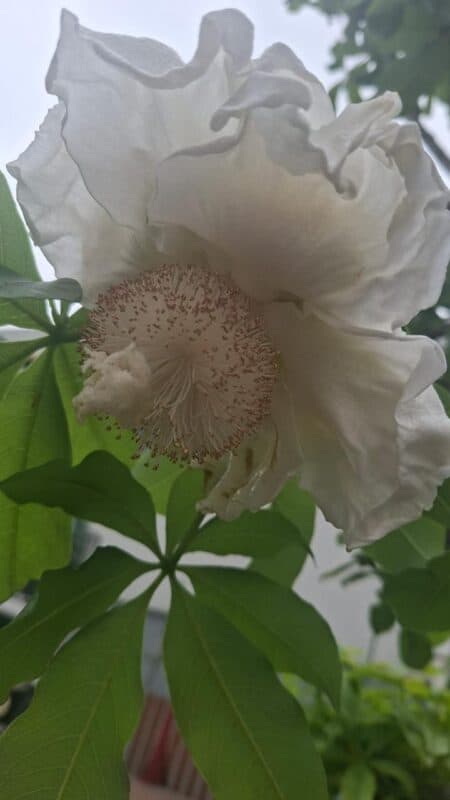
The tree roots were cut their removal. While waiting at Durban harbour, the trees began budding. The day that the trucks left the harbour, the trees began blossoming, signalling hope for their journey ahead.
Dr Sarah Venter, founder of the Baobab Foundation, is overseeing the operation along with many experts, ensuring that the baobabs receive the correct care on the road. Dr Venter said the transportation costs are expected to amount to more than one million rand, as all five trees have to be transported on abnormal-load trucks. Mark Read, chairperson of the Everard Read Gallery, secured the funding for the operation. Read previously served on the WWF International Board from 2004 to 2010.
Until the trees are safely returned, their well-being remains a top priority.
“These trees have already been through an extraordinary ordeal, and while we appreciate that there are challenges ahead, the thought of allowing them to recover and hopefully continue growing for hundreds of years within a protected natural environment is something quite special,” said Edwin Pierce, warden of the Timbavati Nature Reserve.
The Timbavati Nature Reserve conservation team assisted with identifying suitable planting locations, taking into consideration the environmental conditions, ecological suitability and long-term protection of the trees. The holes for the trees have already been dug.
Although their survival is not guaranteed, the reserve’s conservationists believe that every reasonable effort will be made to give the baobabs the best chance of recovery. At the time of publication, the exact reserve and location have not been released.
The route to the reserve is determined each day, depending on road conditions.
Ordeal draws public support
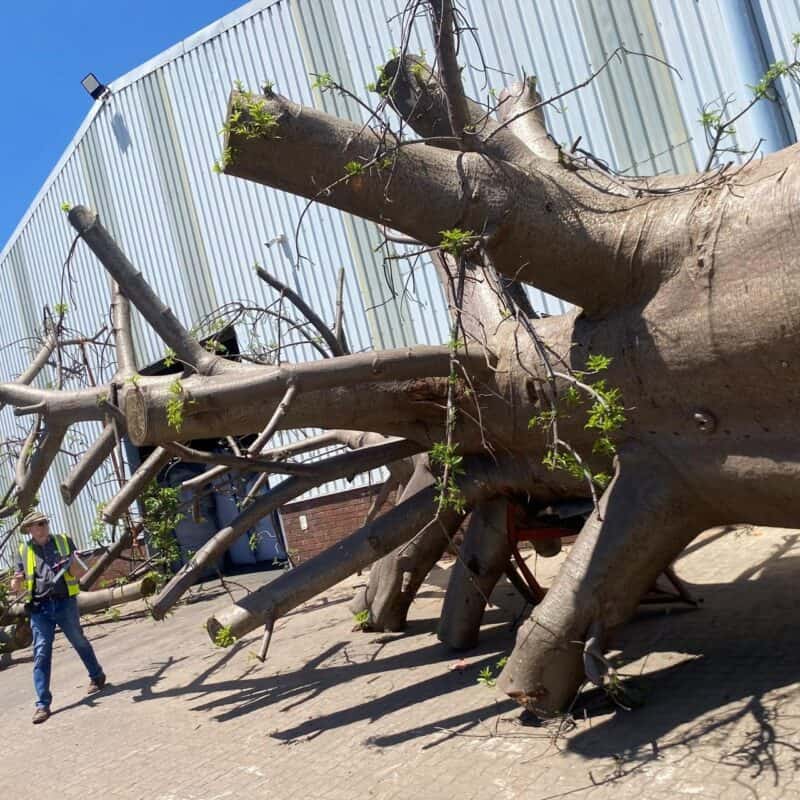
The ordeal has gathered nationwide attention and will be featured on Carte Blanche. Dr Venter said that South Africans have come together, sending a clear message out to the world that foreign nationals will not be allowed to remove protected fauna and flora from the country and that hefty fines will be imposed.
The Baobab Foundation is dedicated to the protection of baobab trees all over Africa, with Venter having multiple projects to educate people on protecting the indigenous species. This includes writing books for school learners and employing female guardians who keep watch over trees.