
Households are buckling under soaring transport, electricity and food costs.
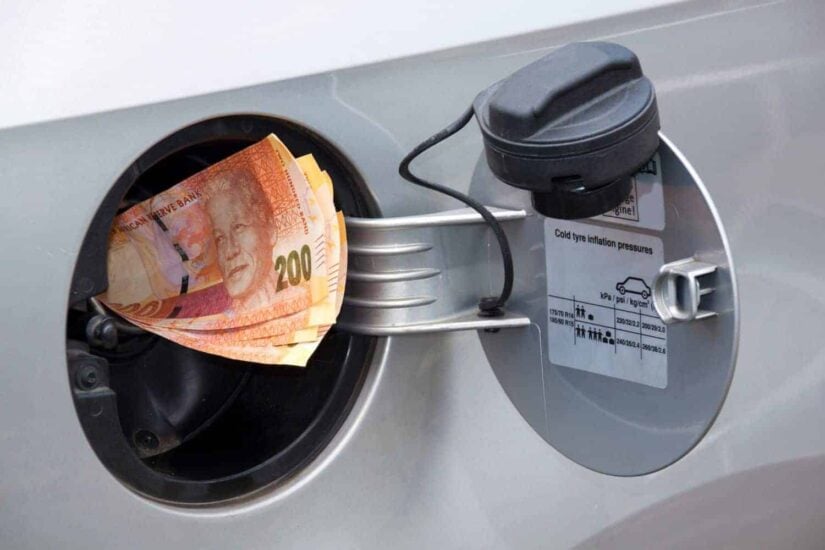
More pain at the pumps for motorists. Picture: iStock


South African motorists will pay more than R30 a litre for petrol from Wednesday, prompting fresh calls for the government to slash fuel levies as households buckle under soaring transport, electricity and food costs.
The Department of Mineral Resources and Energy (DMRE) on Monday announced that 93-octane petrol will increase by R3.12 per litre and 95-octane petrol by R3.33 per litre.
How much will fuel cost?
When the adjustment takes effect, 93 unleaded petrol will cost R29.88 per litre, while 95 unleaded petrol will breach the R30 mark at R30.25 per litre.
The price of diesel with 0.05% (500ppm) sulphur will increase by R2.84 per litre, while 0.005% (50ppm) sulphur will rise by R3.24 per litre. The wholesale price of 0.05% diesel will increase to R31.95 per litre and 0.005% diesel to R33.29 per litre.
Meanwhile, illuminating paraffin will cost R3.58 more per litre, while LP gas will increase by 42c per kilogramme nationally and by 48c per kg in the Western Cape.
Fuel levy
Misa, the Motor Industry Staff Association, has called on government to urgently reinstate a temporary General Fuel Levy reduction as fuel prices hit record levels.
“Just a month ago, Misa warned that fuel prices were driving workers below the survival line, with transport and electricity already consuming 65.8% of a minimum wage before food is even bought, as confirmed by the Pietermaritzburg Economic Justice and Dignity Group (PMBEJD). This latest increase lands on households with nothing left to absorb it.”
Government acted before
Misa noted that government had acted before. In April, after organised labour pushed for relief through Nedlac, Treasury cut the General Fuel Levy by R3 a litre and reduced the diesel levy to zero.
That relief has since lapsed, leaving motorists exposed to the full levy of R4.10 on petrol and R3.93 on diesel.
“Government has already proven that fuel levy relief is possible, and the conditions that justified it in April are worse today,” says Martlé Keyter, Chief Executive Officer: Operations at Misa.
“Workers cannot pay R30 a litre to get to work while the state takes more than R4 of every litre. We are asking government to do again what it has already shown it can do.”
Reduction
Misa has called for a temporary reduction of the General Fuel Levy of at least R3 a litre on petrol and diesel while oil prices remain at current levels, alongside targeted relief for households reliant on paraffin that were excluded from April’s measures.
The association is also demanding urgent engagement at Nedlac to review the levies and margins built into every litre of fuel.
“Workers are being crushed between fuel, electricity and food costs. Relief is not optional. It is a matter of survival.”