


Most affordable 'four-door' Ranger with four-wheel drive comes as a purist's delight for offering three pedals as standard, which will be retained next year.
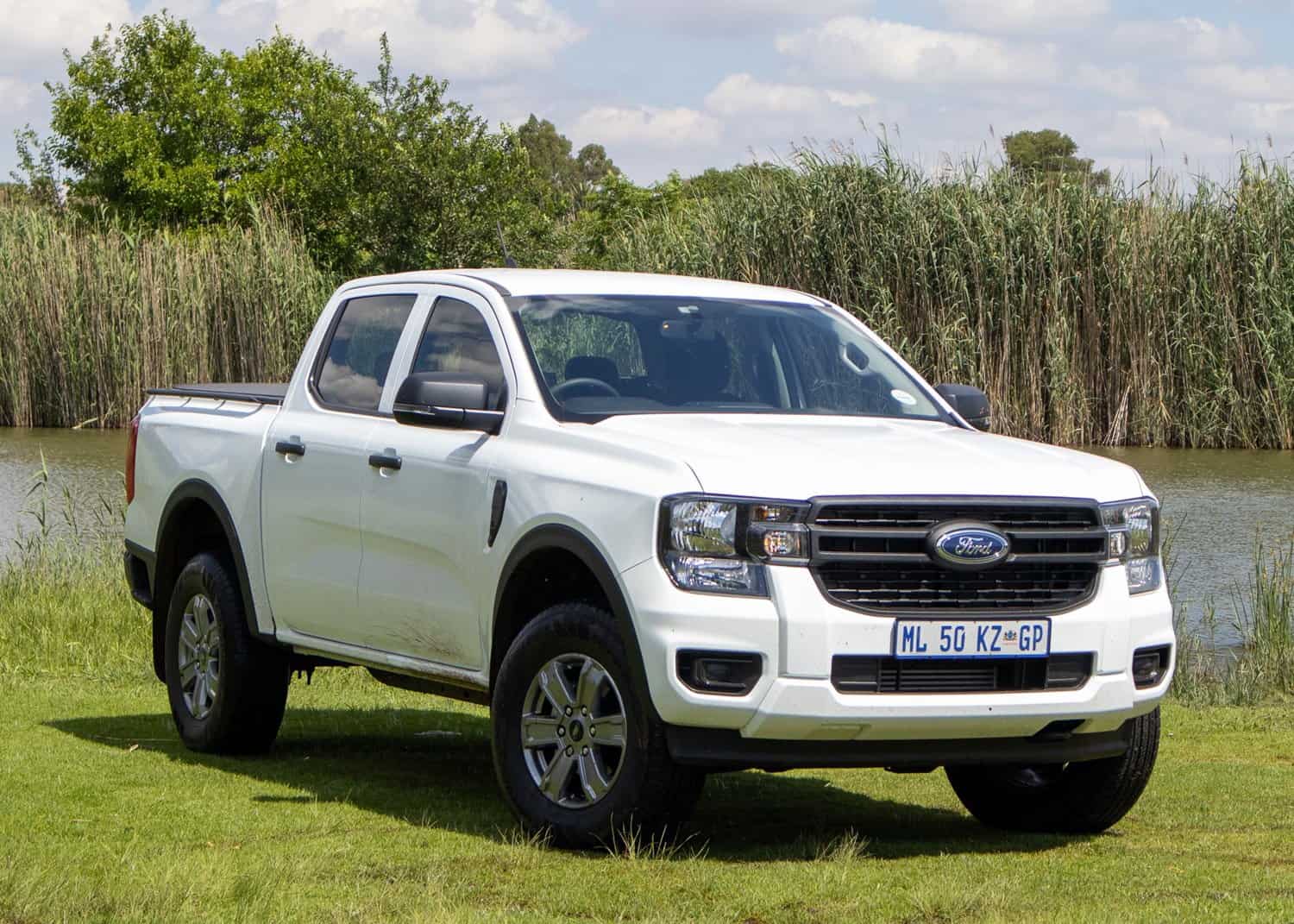
XL opens the double cab Ranger as evident by the black door handles and mirror caps, plus the lack of the C-shaped LED headlight clusters. Image: Rynhardt Steenkamp


The early part of 2026 will yield the biggest revisions yet to the Ford Ranger since sales of the internally named P703 started three years ago.
New for 2026
Of these, the locally made bi-turbo version of the 2.0-litre Panther diesel will be dropped and replaced by the 2.3-litre EcoBoost petrol sourced from Spain.
ALSO READ: Updated Ford Ranger line-up revealed ahead of 2026 launch
At the same time, the 3.0-litre Lion V6 turbodiesel will be expanded to more derivatives, and the single-turbo 2.0-litre Panther upgraded with a timing chain instead of a belt to improve durability.
While no power upgrades will take place, leaving the engine’s outputs at 125kW/405Nm, the six-speed automatic gearbox will be replaced by the General Motors co-developed 10-speed that had been the sole option for the bi-turbo and V6.
Manual saved
Not being dropped, though, is the combination of the single-turbo and six-speed manual gearbox, which will remain exclusive to base XL grade single and double cab models.
A move likely to please purists, the manual, which reportedly received a fair chunk of the Blue Oval’s research and development funds, counts as something of a unicorn in a segment where most buyers have gravitated towards automatic transmissions.
In double cab guise, the manual Ranger is offered with rear-wheel drive, or in the case of the model tested here, part-time four-wheel drive – both continuing into the “facelift generation”.
Worth its premium?
Identical to the single-turbo XL that formed part of our long-term fleet two years ago, albeit with two pedals and minus the all-paw gripping system, the manual came as a welcome departure from the almost obligatory automatic-equipped double cabs upon its arrival for the weeklong stay.
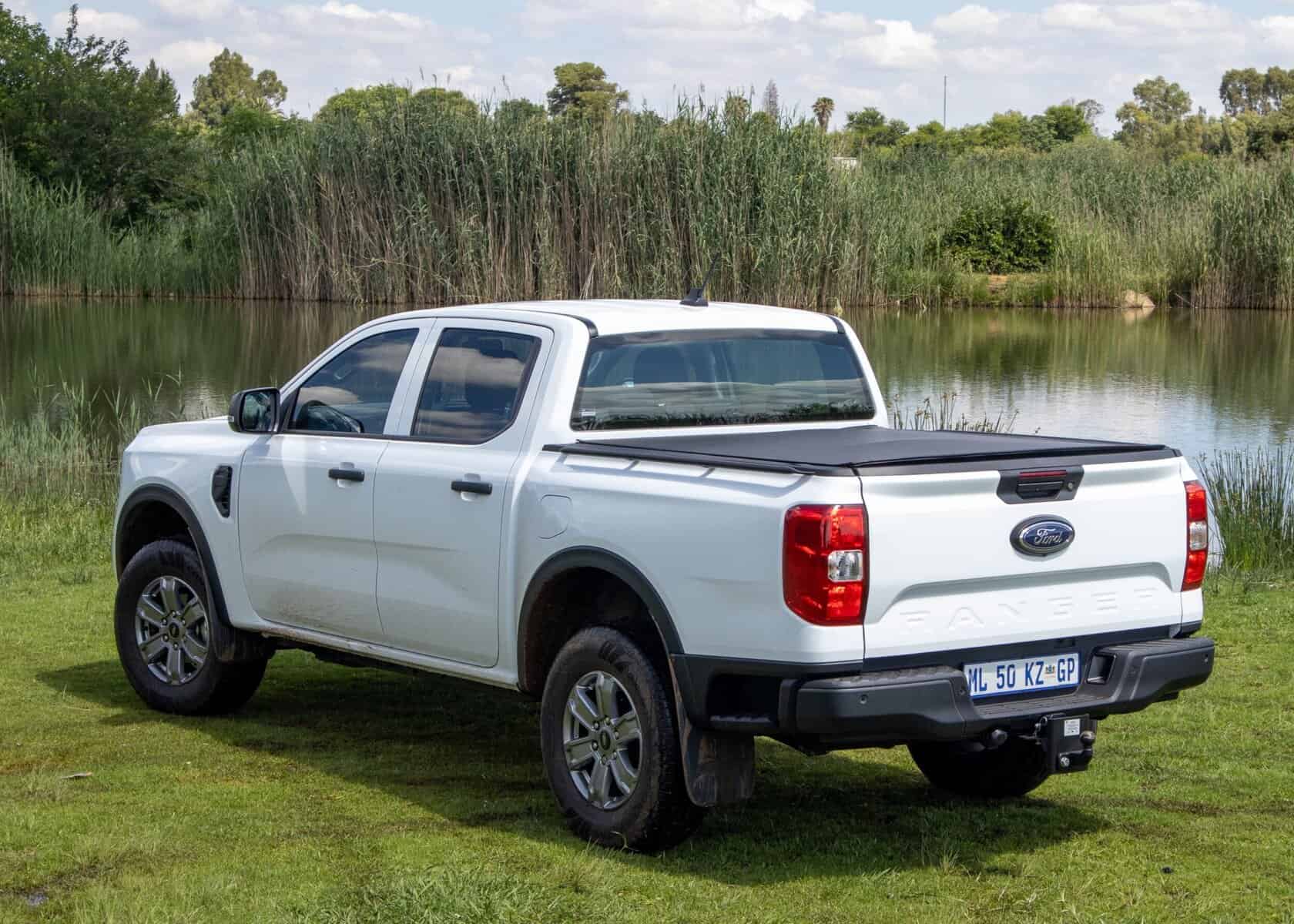
As basic in appearance as the XL grade is on first glance, it also provided a better feel as to what buyers at the lower-end could expect from the most basic double cab four-wheel drive Ranger.
The priciest though at R703 000, compared to the Isuzu D-Max 1.9 L’s R670 800 and the Toyota Hilux 2.4 GD-6 SR’s R657 900, the Ranger’s better equipment levels and more powerful engine add some substance, yet at a price that will increase further once the mentioned updates come into force next year.
Taking the base
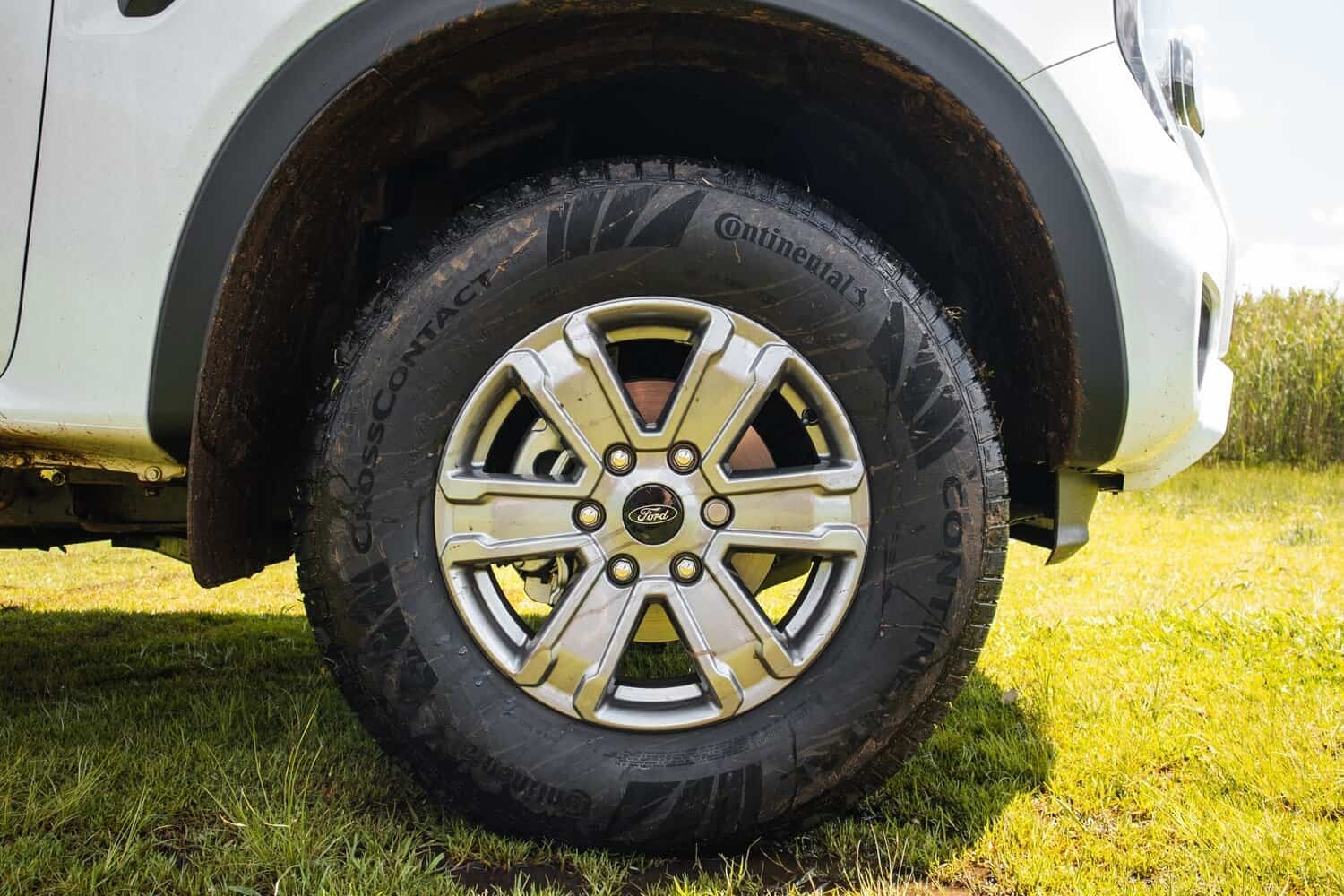
Clad in Frozen White, and mounted on the optional 17-inch alloy wheels, the XL’s basicness comes with a different kind of appeal, even without the chrome highlights or the more visually appealing alloy wheels of the more upmarket derivatives.
As explained when sampling the four-wheel drive XL SuperCab last year, base models often emerge as the surprise in a manufacturer’s range the media tend to miss out on as they are deliberately omitted from a test fleet due to lacking the latest features and tech.
In the case of the double cab, the same applies as it comes with a black rear bumper, black door handles and mirror caps, and a plain grey grille.
Equipped with further options in the shape of the tow bar and soft tonneau cover, the XL is unapologetic for what it is, but, as with the SuperCab, can be visually upgraded with a number of packs called XL Packages.
Unfortunately, this continues to exclude LED headlights, which only come on XLT and above trim levels.
While likely to be part of the updated model, the use of halogen bulbs looks out of place, and can even be seen as a cheeky omission on a vehicle priced above R700 000.
Simplicity inside
More expected is the interior where the XL loses the leather upholstery, electric front seats and the 12-inch infotainment system offered on XLT and above models.
In their places are manually adjustable fabric seats that are, the 10.1-inch infotainment system, no wireless smartphone charger and rather bizarrely, a single glovebox versus the double setup of the SuperCab.
While basic by Ranger standards, the layout is easy to grasp, though first-hand buyers will take a few moments familiarising with the infotainment system.
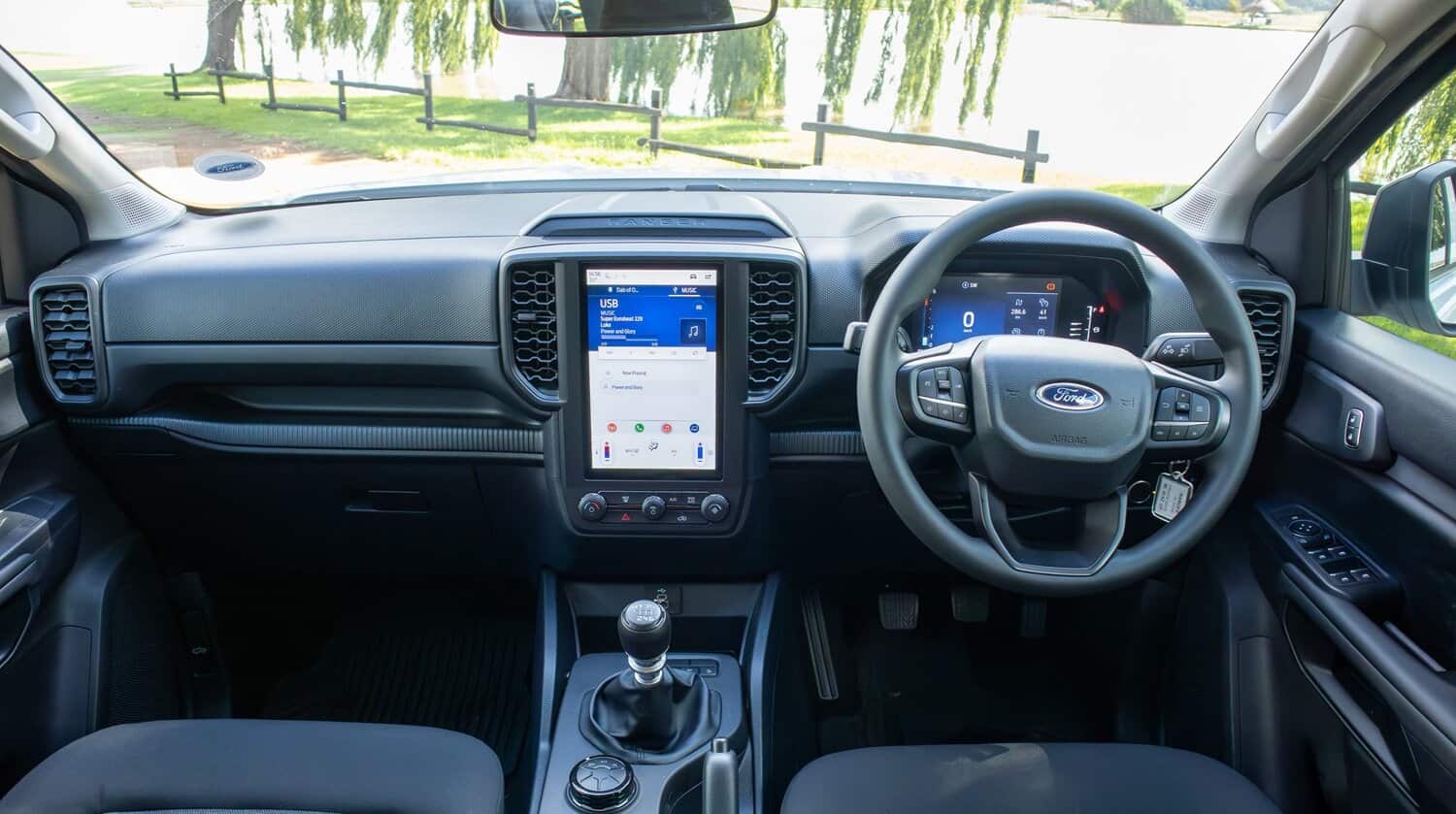
Lacking certain functions of the 12-inch, the smallest system available on the Ranger still comes with voice command, Apple CarPlay and Android Auto, a single USB port, and is offset by the eight-inch digital instrument cluster.
The rest of the interior is otherwise straightforward, with physical buttons for the manual air-conditioning and switches on the steering wheel, and a key inserted into the ignition barrel rather than a push start/off button.
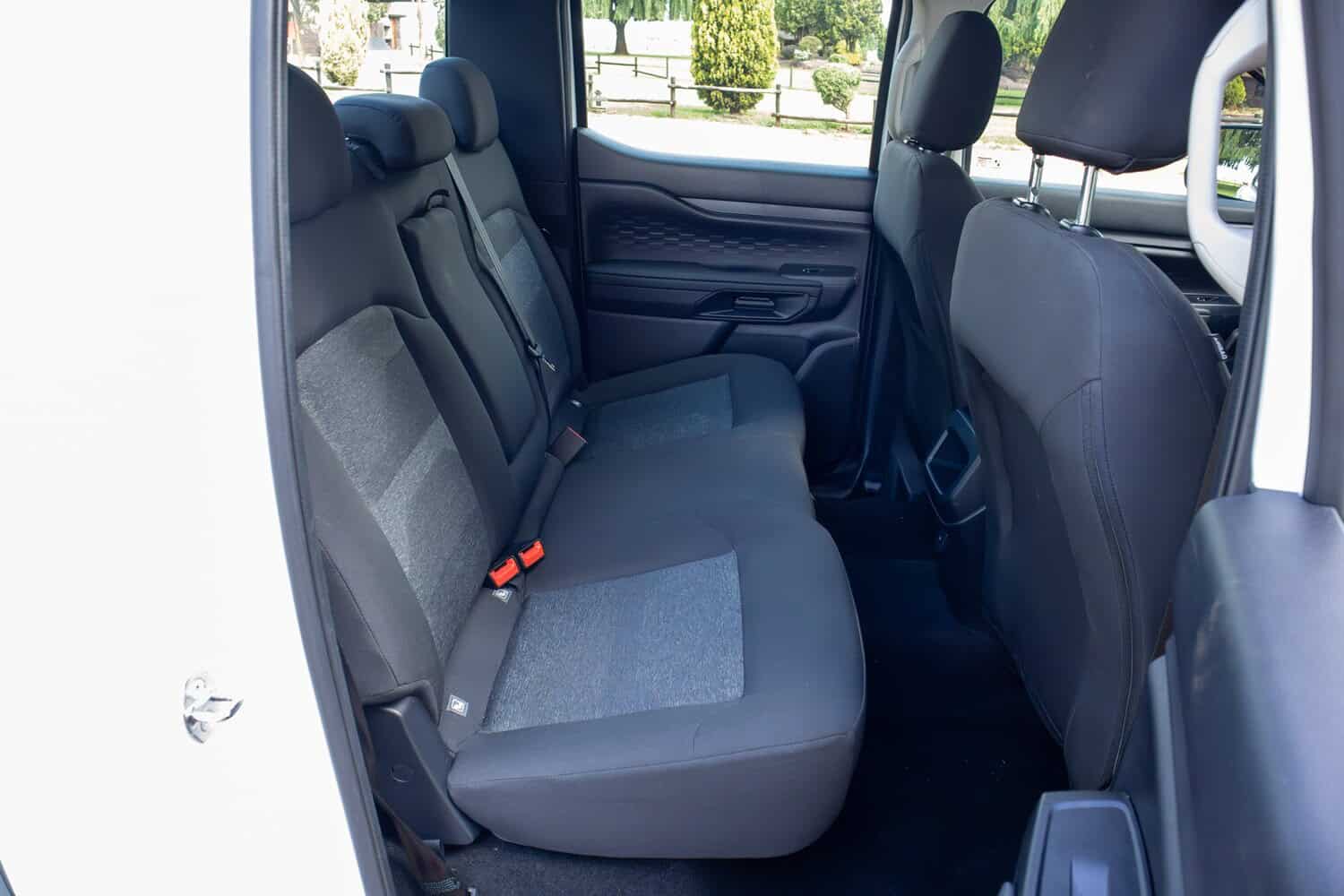
While the lack of rear vents will be of some discomfort for those seated at the rear, the Ranger’s rear quarters are spacious with little to complain about both hand-and-legroom wise.
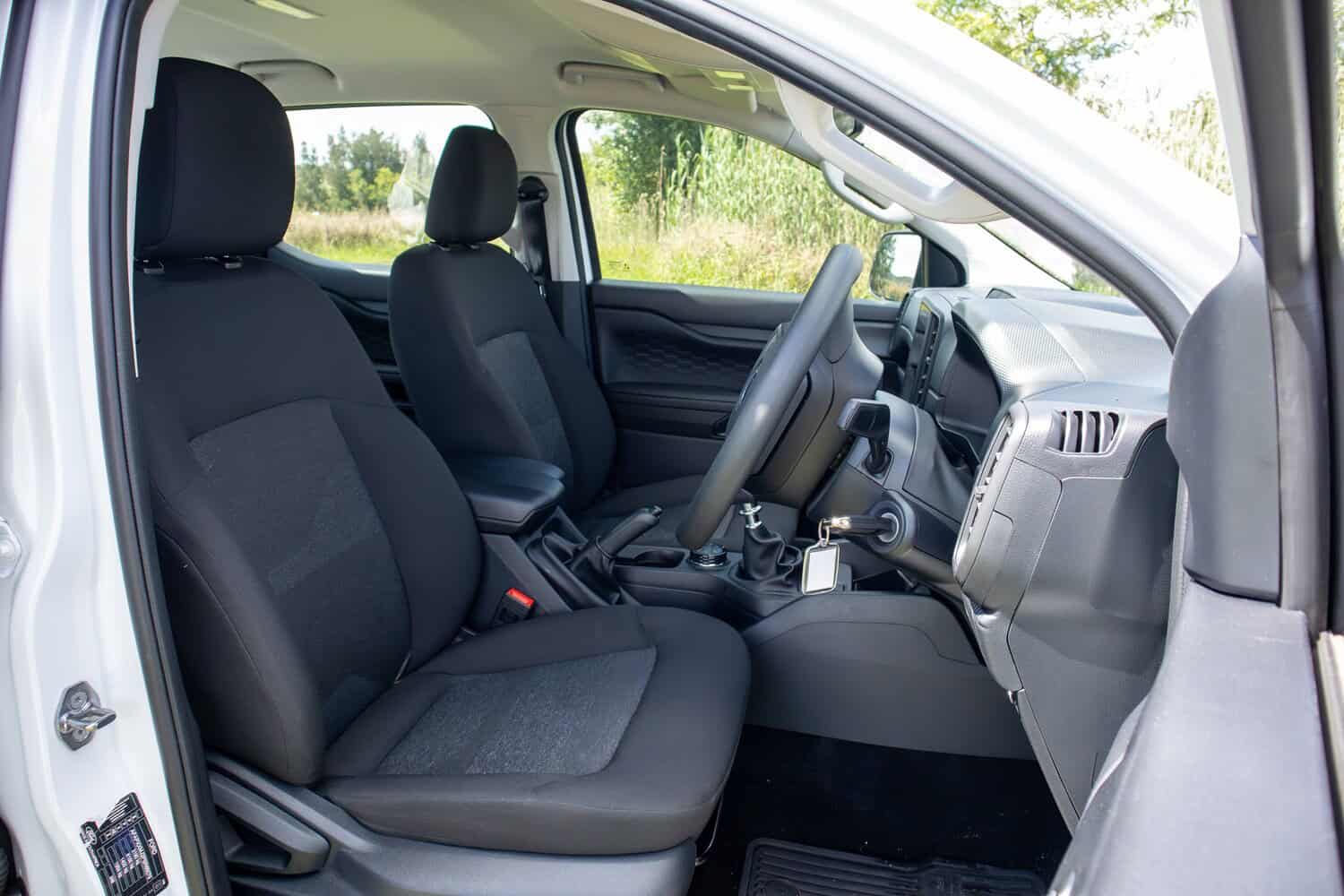
In fact, the only gripe is the somewhat firm cushions of the seats, though admittedly, this won’t trouble the majority of buyers.
As expected, fit-and-finish isn’t on the plush side as hard plastics feature throughout the interior.
However, given what the XL stands for, the built quality felt solid, durable and, arguably, a better representation of what the Ranger offers without the usual leather and decorative detailing.
The centrepiece
The centre of attention, though, is the drivetrain and more specifically, that manual gearbox.
As proven as the single-turbo and automatic has been, the manual offers a level of engagement almost alien to modern bakkies an auto simply cannot match.
Relatively slick, it is, however, saddled with too short ratios for first and second gears, and will require a lot of rowing to keep momentum up as the engine tends to run out of puff much quicker than the automatic – this despite the same 1 750 and 2 500 rpm torque band.
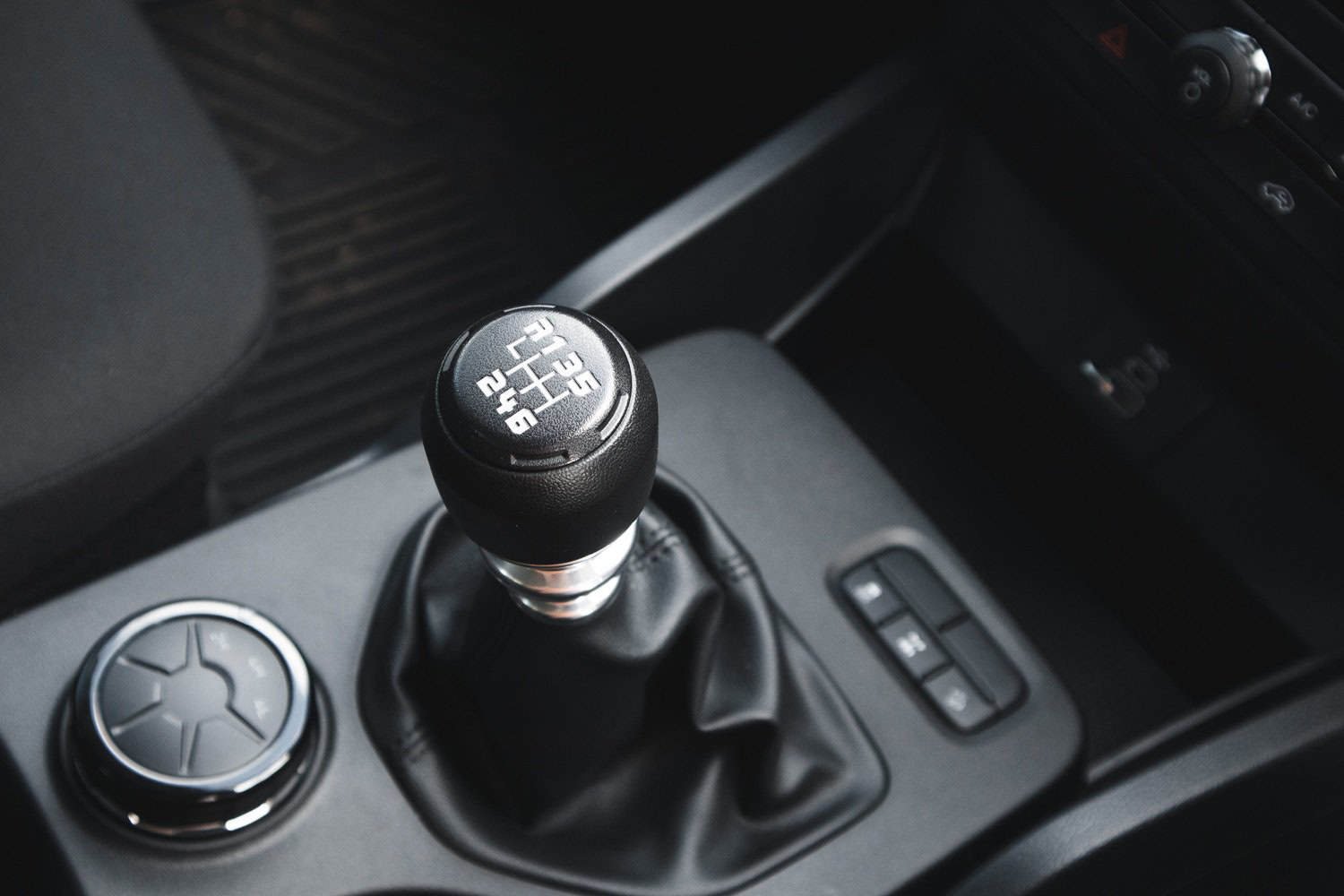
The biggest annoyance is the clutch pedal itself, which has a highly strung tensioned feel when trying to set off.
As such, stalling is easy and requires careful modulation to avoid this or dialling in too many revs when pulling away.
In what has become the standard for bakkies, ride quality is impeccable and on-road refinement good.
Teaching of an almost lost art
Still a workhorse, the XL will likely experience a few jaunts off-road in its time, and while no hardcore bundu-bashing was undertaken during its weeks’ tenure, gravel driving did take place.
This included a thick mud-laced route around a dam on the outskirts of Alberton, which called for high range four-wheel drive (4L) and the 237 mm ground clearance to be tested.
A conventional part-time system with a locking rear differential and added Hill Descent Control, the XL easily escaped the mud pit, but still required some now that shifting gears no longer happens automatically.
An almost art form that can be seen as lost given how self-shifting transmissions have made off-roading easy, the need to keep momentum up whilst knowing the ‘box won’t assist without the driver’s input, made the excursion even more of an enjoyment.
Single-turbo’s keep justified
Where the perceivable advantage of the manual didn’t count as much was fuel consumption as it weighs the same 2 200 kg as the automatic XL.
However, the eventual 446 km stint still netted a more than creditable best of 7.8 L/100 km – again proving Ford’s reasoning for keeping the single-turbo rather than the more powerful but also thirstier bi-turbo.
Conclusion
As much as Ford deserves credit for still offering a manual gearbox, the simple truth is that its appeal will be limited as the majority of buyers are likely to pay the premium that comes with the convenience of the automatic.
Those opting for the manual, though, won’t be disappointed as it has more driving involvement than the auto will ever be able to replicate.
It, therefore, warrants its place in the Ranger range not only for being a well-balanced package the XL provides, but also for representing what a back-to-basics workhorse represents: surprise simplicity.
NOW READ: Ford Ranger XL might be a Plain Jane, but it’s a keeper
Support Local Journalism
Add The Citizen as a Preferred Source on Google and follow us on Google News to see more of our trusted reporting in Google News and Top Stories.

