Tekton enters one of the toughest and most congested segments of the local market.
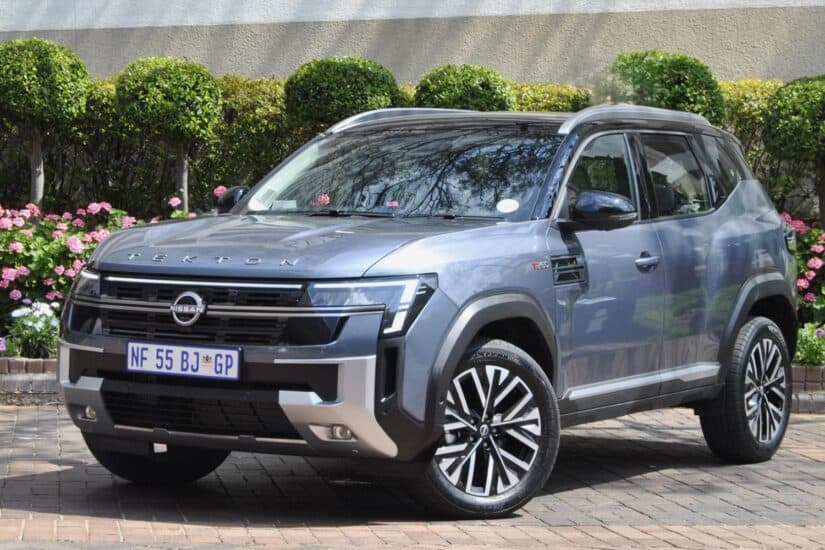
Tekton’s frontal design is said to be have been inspired by that of the Patrol. Picture: Charl Bosch


Described as one of its most important new models to date well before its global launch in India in July, the Tekton arrives in South Africa at a crucial time for Nissan.
A key new arrival
The first model to arrive on local soil as part of its RE:NISSAN restructuring plan, South Africa also becomes the first export nation to receive the Tekton, which Nissan says emphasis Republic’s standing as one of its most important markets.
Set to be exported to 50 countries in both right-and-left-hand drive, the Tekton is the result of Nissan’s alliance with Renault in that is essentially a badge-engineered version of the Indian-produced Duster that went on sale last month in place of the previous Romanian sourced model.
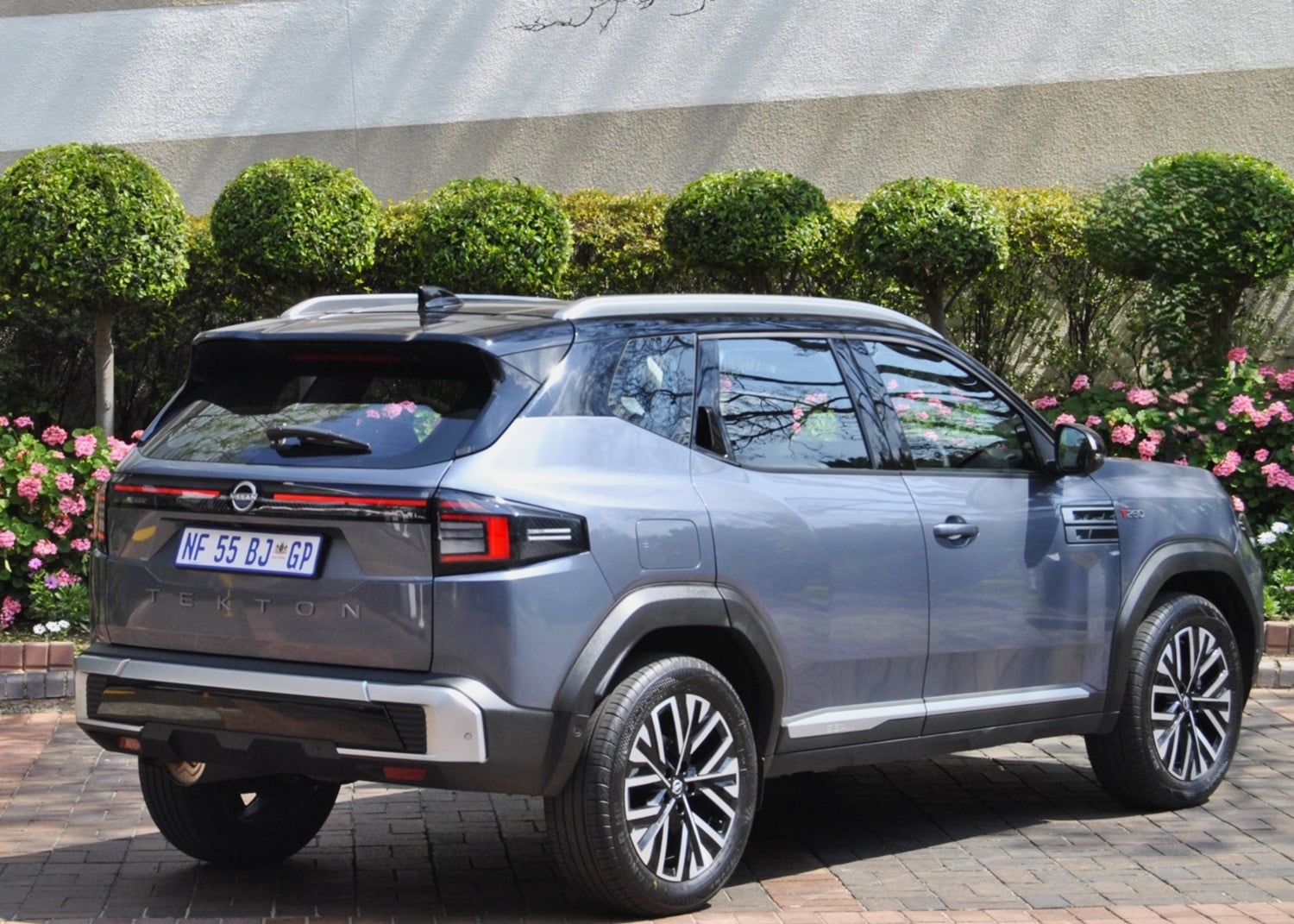
While based on the same CMF-B platform, the Tekton is said to have undergone a number of changes dynamically, to differentiate itself from its siblings.
At the same time, it also said to be more premium with a Nissan-specific interior and an expanded array of features, some not available on any version of the Renault.
Assembled at Renault’s Chennai plant, the Tekton’s launch in Midrand this week represents Nissan’s commitment to the local market in spite of claims alleging its imminent departure, following the end of more than six decades of local production earlier this year.
The obvious comparison
Identical dimensionally to the Duster, the Tekton’s main differences involve an exterior design said to have been inspired by the Y63 Patrol that South Africa will be privy to next year.
As such, the restyling consists of new headlights with inverted L-shaped LEDs, a new grille complete with an illuminated strip underneath the bonnet line, a model specific front bumper and imitation skidplate, and a new lower air intake.
The Tekton also receives a new bonnet, complete with block letter TEKTON badging, and at the rear, a new bumper and faux skidplate, block letter Tekton badging at the base of the tailgate, a revised bumper and new LED light clusters connected by a central LED strip.
Its dimension similarities with the Duster translate to the same 212mm of ground clearance and a boot capacity of between 700 and 1 789-litres.
Colours
In total, six colours have been made available:
- Pearl White;
- Onyx Black;
- Blade Silver;
- Moonbow Grey;
- Indigo Blue;
- Flare Garnet Red.
On higher-end versions, five two-tone hues can be selected from, the exception being Onyx Black as all of the other choices are contrasted by a black roof.
Inside
Compared to the Duster, opening the door reveals a Nissan specific steering wheel, a restyled centre console and air vents, the same gear lever as the Magnite on manual versions, paddle shifters on all automatic variants and upgraded materials.
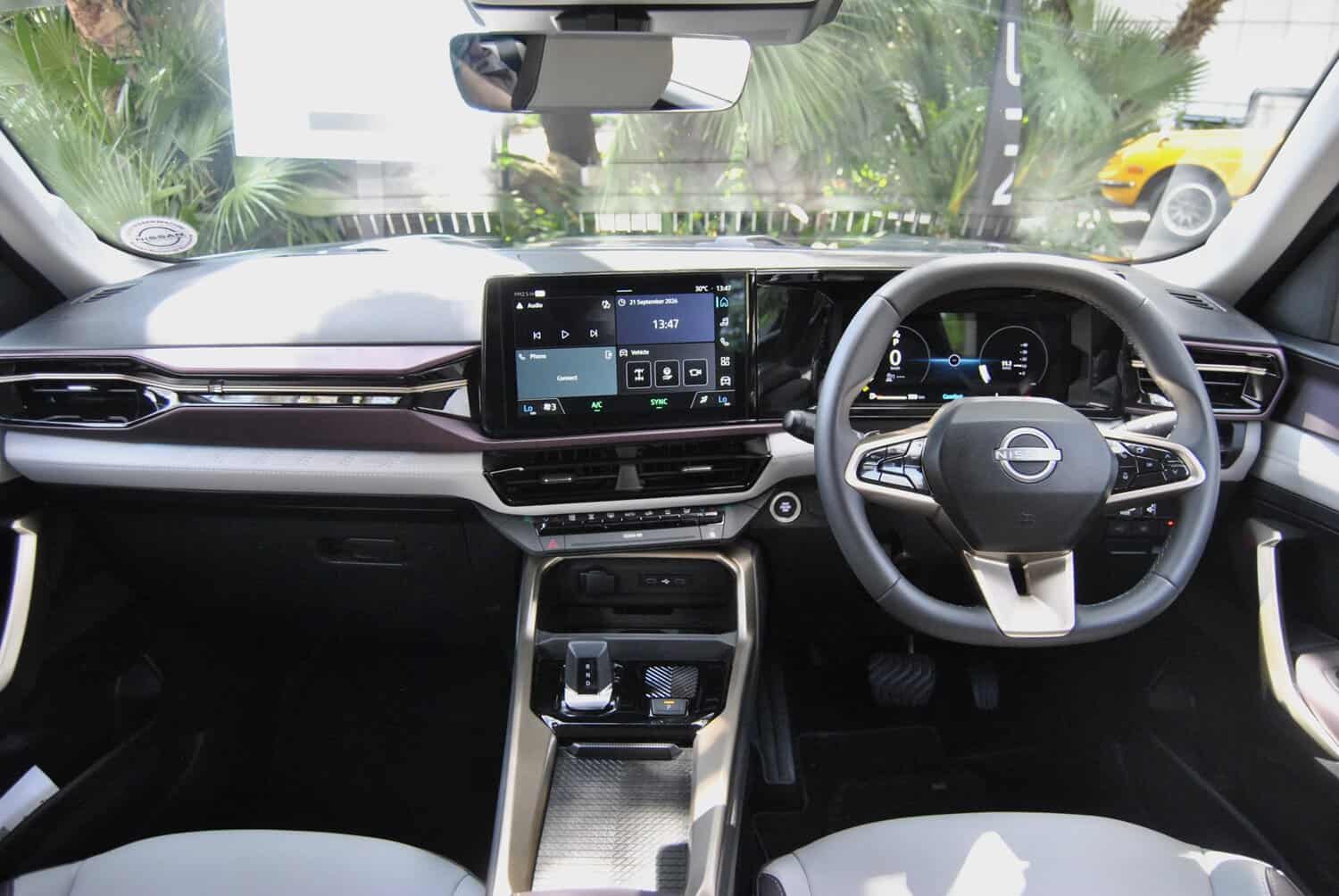
As in India, four interior colours have been made available, though each is dependent on the selected trim level.
Up front
Arriving with a five-model line-up, the Tekton follows its Duster sibling by offering the same pair of drivetrain options.
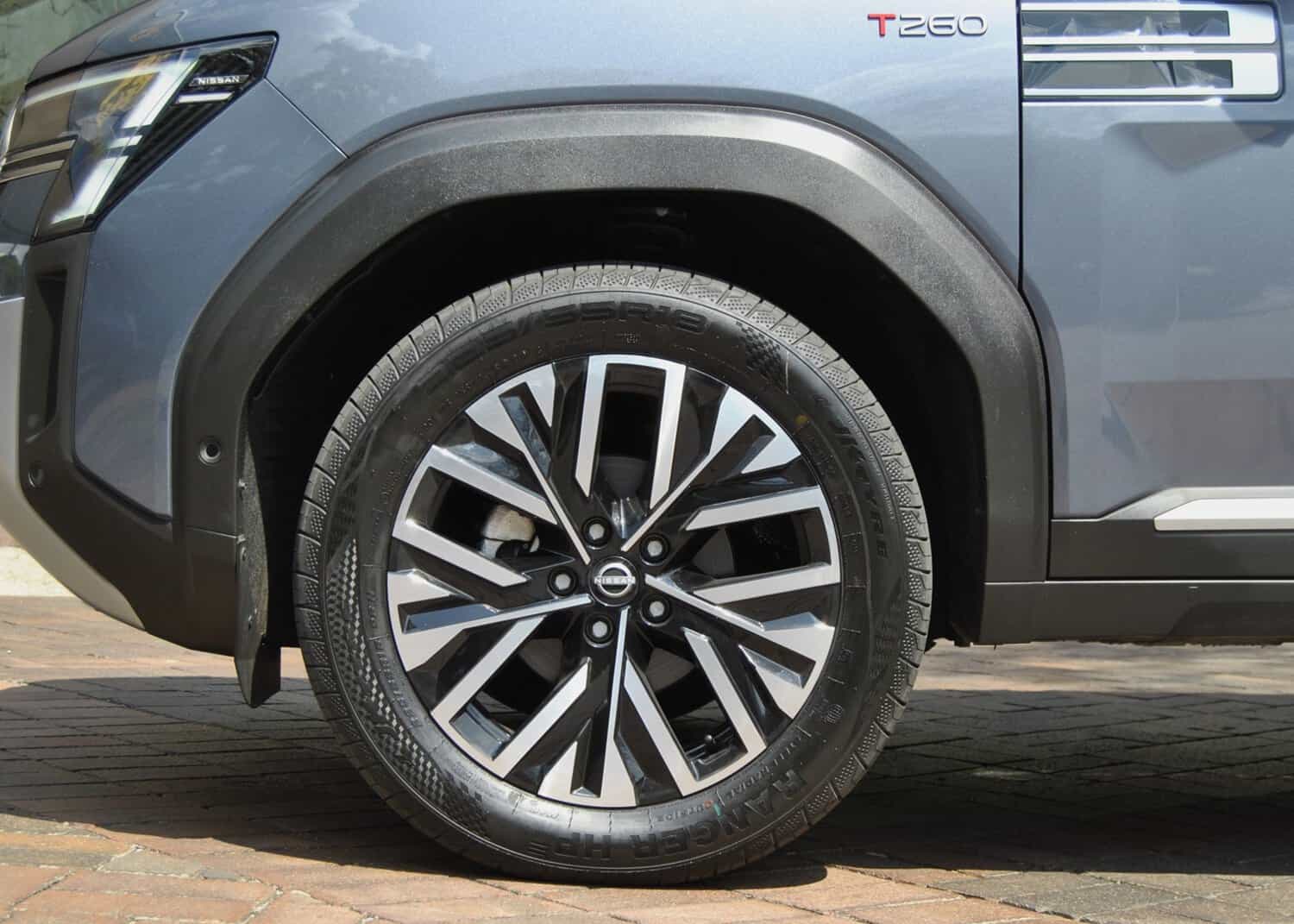
Opening the range, the T160 uses the turbocharged 1.0-litre three-cylinder that makes 74kW and, as indicated by its nomenclature and the badges on the front wings, 160Nm of torque.
Paired to a six-speed manual gearbox, the T160 will get from 0-100km/h in 12.4 seconds and hit a top speed of 170km/h. The claimed fuel consumption is 5.9L/100km.
Carrying the T260 designation, the second option comes by way of the 1.3-litre turbocharged petrol four-cylinder, which differs from the Indian-spec Tekton as both its power and torque figures drop, presumably due to South Africa’s poor quality.
As such, the unit loses five kilowatts for a total of 115kW, while torque drops from 280Nm to 260Nm, hence the T260 badges.
In addition, the six-speed manual gearbox has been decided against, leaving the six-speed dual-clutch as the sole option.
Accordingly, the setup results in a top speed of 198km/h and 0-100km/h in 9.8 seconds. The claimed fuel consumption is 6.3L/100km.
As with the Duster, drive in the Tekton is routed to the front wheels only. However, while four-wheel drive has not been ruled entirely, its inclusion ultimately hinges on viability and eventual pricing. A definite no-no, though, is the availability of a diesel engine.
Spec
On the specification front, the Tekton offers a choice of four trim levels with the range-opening Visia having the following as standard:
- 17-inch steel wheels;
- LED headlights;
- electric mirrors;
- black-and-grey fabric upholstery;
- push-button start;
- seven-inch instrument cluster display;
- four-speaker sound system;
- rear air-conditioning vents;
- 10.1-inch infotainment display;
- wireless Apple CarPlay and Android Auto;
- six airbags;
- rear parking sensors;
- reverse camera;
- tyre pressure monitor;
- Electronic Stability Control;
- Hill Start Assist;
- Front Collison Warning.
Upping the ante, the Visia denominator remains, but with the combination of the 1.3-litre engine and EDC transmission – leaving the 1.0-litre powering a single derivative – incidentally with the same price tag as the comparative Duster Evolution.
Added features for the 1.3-litre Visia over the 1.0-litre include:
- cruise control;
- Blind Spot Warning;
- Auto Hold.
Building further on the Visia, the Acenta, receives:
- 18-inch alloy wheels;
- LED fog lamps;
- folding electric mirrors;
- black fabric seat upholstery;
- dual-zone climate control;
- six-speaker sound system;
- cooled centre storage area;
- 10.25-inch digital instrument cluster;
- wireless smartphone charging pad;
- panoramic sunroof;
- 360-degree camera system.
Moving up to the Tekna adds:
- blue and black imitation leather upholstery;
- electrically adjustable driver’s seat;
- ambient lighting;
- ventilated front seats;
- rain sense wipers;
- Auto High Beam Assist;
- Adaptive Cruise Control;
- Automatic Emergency Braking;
- Lane Keep Assist;
- Traffic Sign Recognition.
Completing the range, the Tekna+ boasts a two-tone beige-and-burgundy interior colour, the dual-tone exterior colour as standard and an electric tailgate.
The drive
Centering around Midrand from the Gallagher Convention Centre to as far as the Mall of Africa, the short launch route only involved the Tekna+ that carries a price premium of R30 000 over the comparable Duster Iconic.
As much as the two-tone burgundy-and-beige with added rose gold inserts proves wholly impractical, especially from a longevity aspect, the rest of the interior presents well if not entirely premium in certain areas.
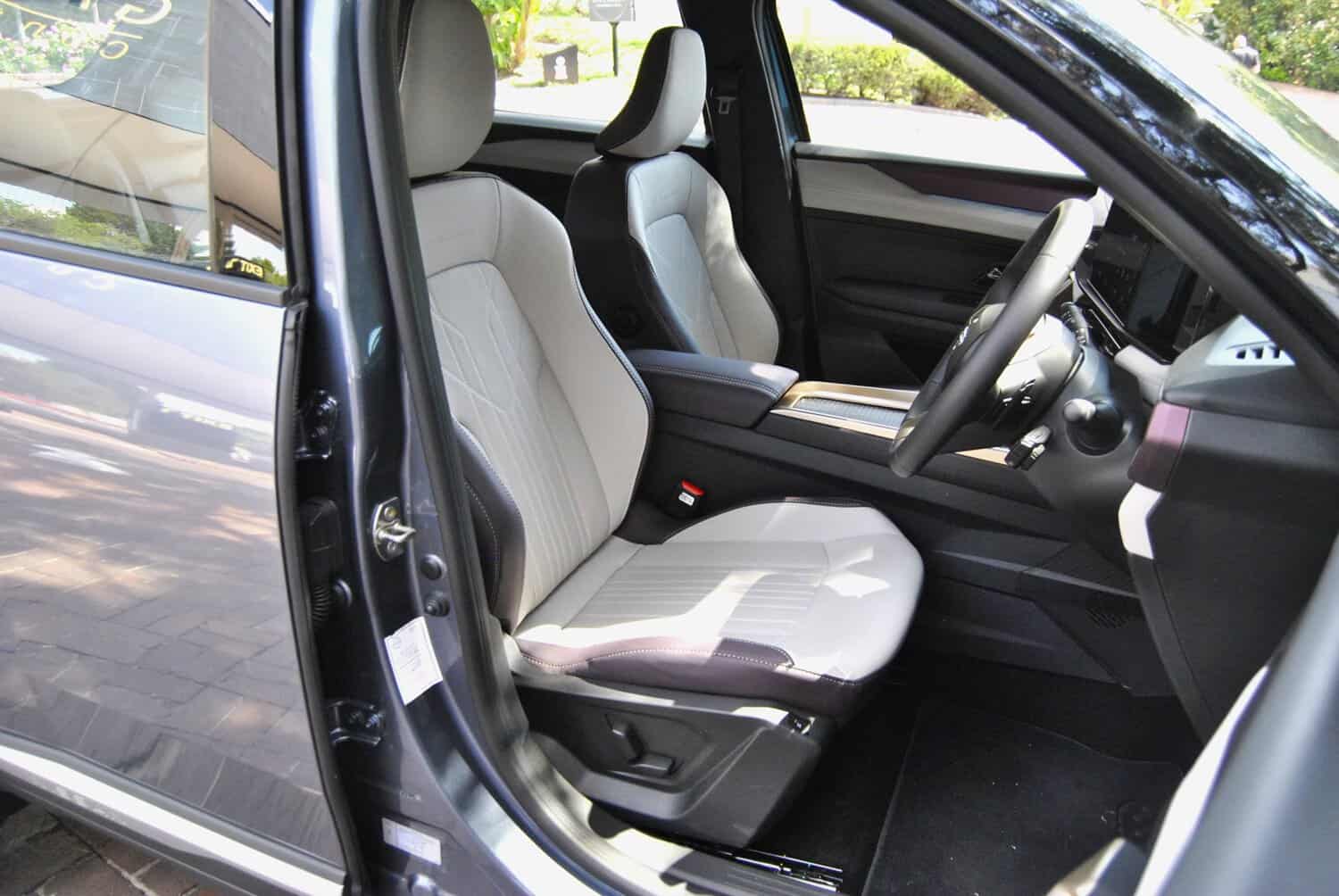
Comfort is, however, good and the workings of the infotainment system relatively slick, though, it will require a bit of familiarisation.
While, unsurprisingly, the Tekton is no fireball, performance is more than adequate and the dual-clutch gearbox relatively well calibrated without too much hunting or sudden low-speed judders.
Ride quality, as well as lack of noise filtering into the cabin also impressed, although the steering felt somewhat on the light side – again not surprising considering the Tekton being anything but a Z or GT-R.
Conclusion
The indirect replacement for the Qashqai, the Nissan Tekton finds itself in a tough and congested segment of the market frequented not only by its sibling, but by a myriad of Chinese options, plus legacy offerings from Kia, Hyundai and to a lesser extent, Mazda and Mitsubishi.
While its standing as a rebadged and pricier Duster won’t disappear soon, the short drive still proved promising to warrant the Tekton a realistic opportunity of establishing itself in the local market.
As such, its arrival for the weeklong stay is awaited with interest to determine whether its price premium of between R20 000 and R30 000 over the Duster is money well spent.
Price
Included in the Tekton’s price tag is a six-year/150 000km warranty and a four-year/60 000km service plan.
- Tekton 1.0T Visia – R339 999
- Tekton 1.3T Visia DCT – R399 999
- Tekton 1.3T Acenta DCT – R459 999
- Tekton 1.3T Tekna DCT – R499 999
- Tekton 1.3T Tekna+ DCT – R529 999