Explore the award-winning images from Wildlife Photographer of the Year 2026, featuring extraordinary wildlife encounters.
The Wildlife Photographer of the Year 2026 competition attracted more than 65 000 entries from 121 countries and territories, showcasing the beauty and diversity of wildlife around the world.
The overall winner and 19 category winners were announced at an awards ceremony at the Natural History Museum in London on 13 October.
Judged anonymously by a panel of seven experts, the entries were assessed on creativity, technical excellence and originality.
Wildlife Photographer of the Year is developed and produced by the Natural History Museum, London, and highlights both the wonders of the natural world and the growing challenges facing wildlife.
(For best view, click on image for fullscreen)
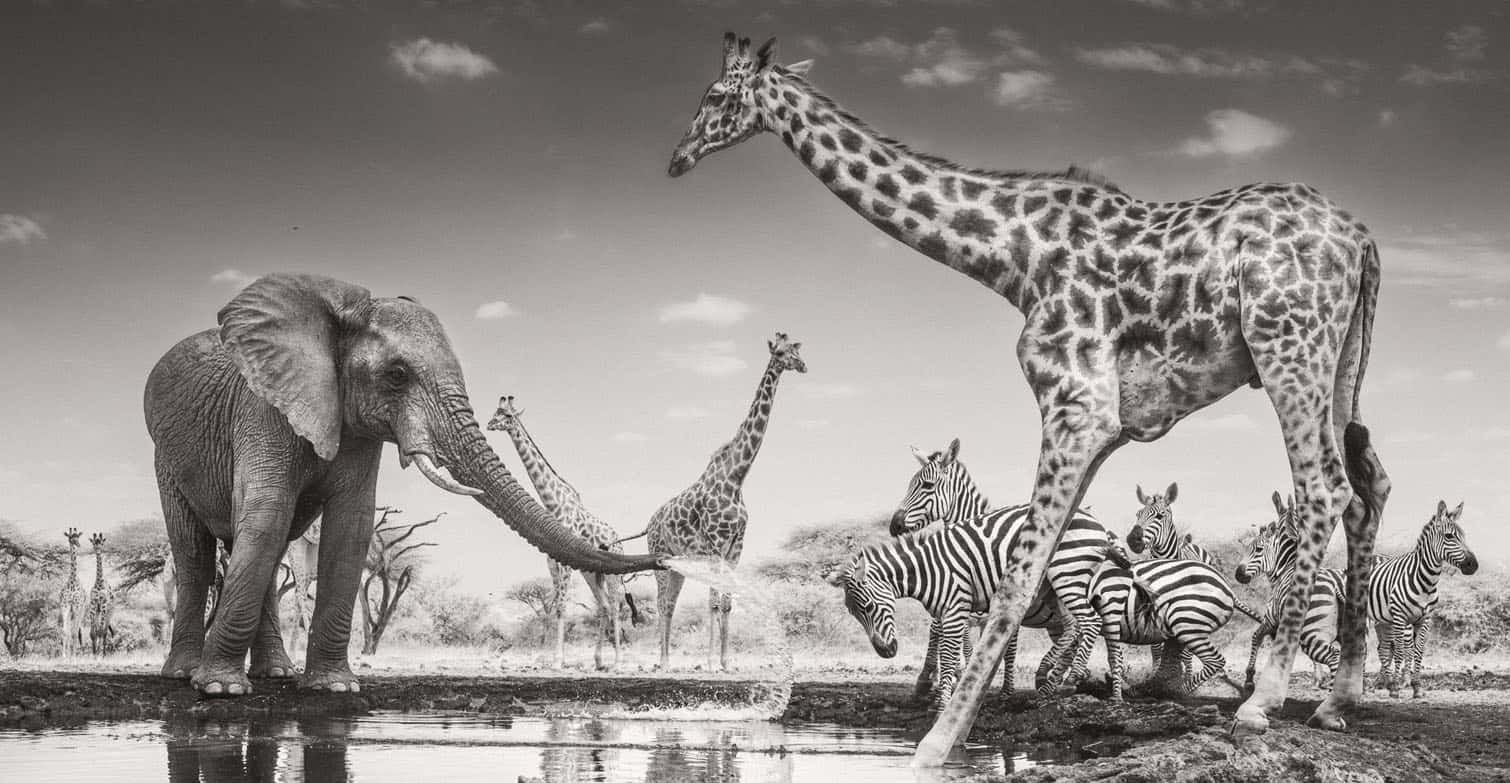
James Lewin from the UK won the Animals in their Environment category with his photograph The Meeting Place, capturing a young bull elephant spraying a group of zebras gathered at a waterhole in the Chyulu Hills of Kenya. To soften the harsh sunlight, Lewin used a camera converted to infrared, creating a dreamlike scene at ol Donyo Lodge in Chyulu Hills National Park. Waterholes are vital lifelines during droughts, providing essential drinking spots for wildlife. Picture: James Lewin

South African photographer Isak Pretorius won the Behaviour: Birds category with his photograph Scenes from the Swamp, capturing two elusive shoebill birds among wetland vegetation in Mabamba Swamp, Uganda. Exploring the swamp in a narrow canoe with a guide, Pretorius was fortunate to encounter the pair pulling out vegetation and dropping it repeatedly, possibly gathering nesting material. Despite often being called shoebill storks, the birds are more closely related to pelicans, herons and ibises. Fewer than 5,300 mature shoebills remain in the wild, and their numbers are declining. Picture: Isak Pretorius

Amelie Davis from the UK won the 10 Years and Under category with her photograph, Flight of the Bumblebee. Taken in a garden in Surrey, southern England, on an afternoon in August, the image captures a common carder bee suspended mid-air as it prepares to land on a flower. Amelie had been photographing bees for several months and borrowed her father’s smartphone to capture the delicate detail of a single wingbeat. Picture: Amelie Davis

Kutub Uddin (Bangladesh/UK) won the Portfolio Award for Secret Worlds, showcasing the tiny, often surreal forms of slime moulds. This image, titled Tiny Dancers, captures fine threads emerging from yellow-green bodies, which help disperse reproductive spores. Taken in West Sussex, England, the subjects measure just one to two millimetres tall. Uddin uses macro photography and focus stacking to reveal details invisible to the naked eye. Picture: Kutub Uddin

Alexis Tinker-Tsavalas from Germany won the Rising Star Award for Hidden Depths, a portfolio revealing the intricate details of tiny creatures. In this image, titled Afternoon Snack, a robber fly feeds on a flesh fly, injecting digestive enzymes to liquefy its prey’s internal tissues before consuming them. Alexis uses macro photography and focus stacking, combining multiple images to bring often-overlooked species into sharp detail. Picture: Alexis Tinker-Tsavalas

Loren Elliott from the USA won the Photojournalist Story Award for Wily Coyotes of San Francisco, documenting the lives of coyotes living alongside people in the California city. In this image, a coyote walks along a trail in Bernal Heights Park, overlooking San Francisco and its bay. Around 100 coyotes live in the city, where they help control rodent populations but sometimes prey on domestic animals. Picture: Loren Elliott

Francisco Negroni from Chile won the Photojournalism category with Warning Sign, showing a dead puma tied to a fence as a hunting trophy along Route 40 in Argentina’s Patagonia region. Although Santa Cruz banned puma hunting in 2025, illegal persecution continues. Livestock losses are a major source of conflict between farmers and pumas, but measures such as keeping sheep in enclosures at night and using guard dogs can help reduce attacks. Picture: Francisco Negroni

Alex Visbal from Colombia won the Wetlands: The Bigger Picture category with The Great Divide, showing an engineered barrier cutting across Stansbury Bay at Utah’s Great Salt Lake in the US. The pink colour is caused by microbes thriving in highly saline water where freshwater supplies have been cut off. Industrial activity, water diversions and climate change have contributed to the lake’s declining ecology. Picture: Alex Visbal

Tony Wu (USA/Japan) won the Under Water category with his photograph Making Morays, offering a rare glimpse into the mating behaviour of Abbott’s moray eels in Kagoshima Prefecture, Japan. Working with biologists, Wu has been studying a male eel since 2024 as it visits females sheltering in reef crevices. Using a customised fisheye lens and dim red lighting to minimise disturbance, he documented what is believed to be the first recorded observation of courtship and spawning in this species. His findings are also contributing to scientific research into the eels’ behaviour. Picture: Tony Wu

Anton Sorokin from the USA won the Behaviour: Amphibians and Reptiles category with his photograph Protective Pose, showing a California newt laying eggs while clasping vegetation that already holds another newt’s egg clutch. Taken in Contra Costa County, California, Sorokin waded along the edge of a pond and carefully lowered his camera and lighting beneath the water to capture the unusual behaviour. California newts interlock their hind feet to protect their eggs from being eaten by other newts, remaining in this position until the gelatinous egg mass swells and hardens around the vegetation. Picture: Anton Sorokin

Federico Veronesi from Italy won the Behaviour: Mammals category with his photograph The Aftermath, capturing a female elephant carrying her dead calf in the Huab River Valley in Namibia’s Damaraland region. Veronesi was tracking elephants when he noticed unusual drag marks in a dry riverbed, leading him to a family group where the female carried the calf with one of its legs wedged between her tusk and trunk. Elephants have been observed handling and carrying their dead, behaviours that researchers believe may offer insight into how they respond to death and possible grief. Picture: Federico Veronesi

Oscar Whitfield (Zimbabwe/UK) won the 11–14 Years category with his photograph Labour of Love, capturing a dung beetle pushing its ball of dung across the dusty ground. He lay flat on the ground to photograph the beetle at eye level, using a fast shutter speed and high light sensitivity in the sunshine and heat of Zambezi National Park in Zimbabwe. Dung beetles play an important role in the environment by helping break down dung, reducing greenhouse gas emissions and limiting pests. Picture: Oscar Whitfield
Pictures courtesy of the Wildlife Photographer of the Year 2026.