
International Women’s Day: Building gender equity, not charity
Eve Banda, a Hollard executive, says the modern workplace must be reimagined to accommodate the non-linear nature of women’s careers.
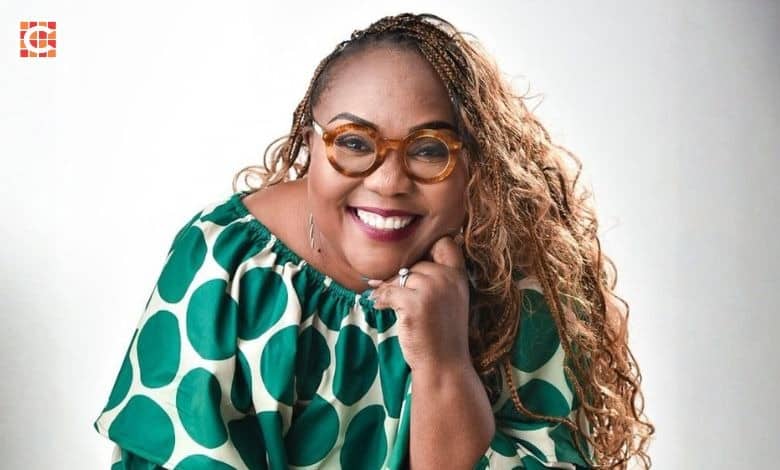
For Eve Banda, executive head of people and marketing at Hollard International, the 2026 United Nations International Women’s Day theme: ‘Rights. Justice. Action. For All Women and Girls’ is a reminder that the conversation has moved.
It is no longer just about getting women through the door; it is about what they do once they are inside.
Banda views rights through the lens of voice, influence and decision-making power. It’s a perspective rooted in her upbringing in the early 80s.
One of five girls in a family of six children, Banda recalls her father’s intentionality in celebrating his daughters at a time when doing so was far from popular.
“My father gave us the opportunity to be seen and heard,” Banda says.
“But that was about entry. Now that we have a seat at the table, the question is, now what? Only when that power is supported can we see true justice, pay equity, transparency in promotion, and a zero-tolerance culture in the workspace,” she adds.
Inclusion is an architectural feat
Banda occupies a unique position, wearing both ‘people’ and ‘brand’ hats.
She argues that the modern workplace must be reimagined to accommodate the non-linear nature of women’s careers.
This isn’t just about abstract policy; it’s about lived experience.
“We have to think of reimagining through the lens of life stages,” she explains.
“It’s the simple, structural things, like our Namibia operation creating dignified spaces for breastfeeding mothers, or phased return-to-work programmes and leadership tracks that don’t punish motherhood. These are no longer ‘nice-to-haves’; they should be seen as essential for driving gender equity,” Banda says.
From a brand perspective, Banda is clear that a brand is not what you say, but what your people experience. At Hollard, the brand acts as the advocate that ensures diversity and inclusion remain true to form for employees, brokers and partners alike.
Banda’s definition of inclusive leadership has evolved from a focus on ‘fairness’ to a commitment to intentional design. Having rebuilt and redefined herself throughout her executive journey, she now views inclusion as a system where people feel seen, stretched and significant.
“Inclusion is not charity; it is architecture,” Banda asserts.
“It is how we build growth paths for overlooked talent and how we integrate cultures with dignity after acquisitions. I am less interested in who gets a seat at the table and more preoccupied with what kind of table we are setting and who gets to shape it,” she says.
She emphasises that inclusion should not be treated as a human resources function alone, but as a leadership posture that requires all leaders to drive it with courage and justice in action.
Leadership
Banda notes that over the years her leadership approach has evolved from a purely performance-driven style to one that balances strong performance with a deeper sense of purpose and an awareness of the broader systems that shape outcomes.
She says her leadership blends three core pillars: developmental leadership, focused on spotting and enhancing potential before others see it in themselves; systems thinking aimed at redesigning organisational architectures rather than simply solving isolated people problems; and courageous empathy.
This last trait, influenced by her faith and life transitions, allows her to maintain high standards while holding space for compassion.
Closing the power gap in the financial services sector
While progress has been made in advancing women’s participation in financial services, decision-making power remains uneven.
The World Economic Forum reports that women hold only 18% of C-suite roles globally. In companies valued at $2b or more, women account for 30% of board seats, 22% of executive roles and 27% of senior management positions.
In South Africa, the Commission for Employment Equity finds that women make up just 29.4% of top management in the financial industry.
This imbalance is also reflected in access to finance. Statistics South Africa reports that in 2023, just 4.9% of female informal business owners received formal start-up funding, compared with 12.7% of male owners.
Banda notes that internally, Hollard International has been intentional in addressing this challenge by developing, training and positioning women for more leadership roles.
Financial products redesigned
Across the six countries in which Hollard International operates, two of the group’s CEOs are women, alongside two additional female managing directors. The business is also developing four women as part of a deliberate succession pipeline for future CEO roles.
“The financial services sector requires the structural courage to move beyond mere awareness. This involves closing the power gap, not just reducing the pay gap, but making sure that women sit where capital is allocated and strategy is set,” argues Banda.
She adds that financial products also need redesigning, because many systems in the sector were built around traditional male income patterns.
As a result, women entrepreneurs and caregivers often do not fit conventional collateral models. There is therefore a need to rethink credit scoring and insurance design to recognise different economic journeys.
Creating structure for women
Banda’s vision for Africa’s financial services sector is deeply personal. She remembers her mother in Zambia, who supported a family of six by selling jerseys and ice blocks. Because her business was unstructured, she had no access to credit or financial education. When she passed away in 1989, her business died with her.
“For too many women across Africa, that story hasn’t changed,” Banda reflects.
“The financial services sector bears a profound responsibility to bridge the gap for the informal economy. Informal must no longer mean invisible. The sector now needs to move beyond incremental progress to designing savings and insurance products that respect the reality of irregular incomes, leveraging digital platforms to meet women exactly where they are, in the markets and townships,” she adds.
Breaking news at your fingertips… Follow Caxton Network News on Facebook and join our WhatsApp channel.
Nuus wat saakmaak. Volg Caxton Netwerk-nuus op Facebook en sluit aan by ons WhatsApp-kanaal.
Read original story on www.citizen.co.za

